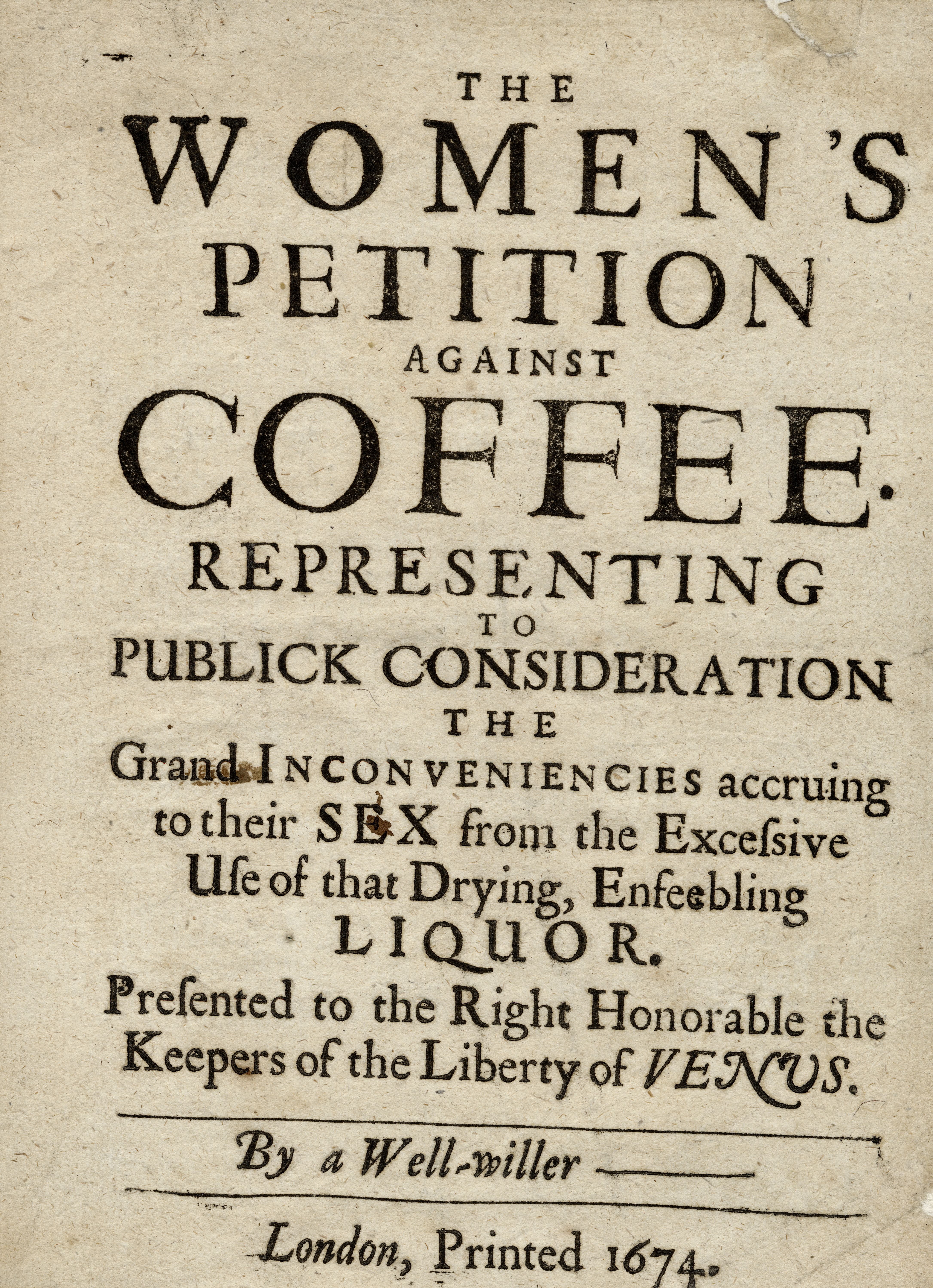
The Women's Petition Against Coffee
Famous 1674 London satirical broadside petition representing to publick consideration 'The Grand Inconveniencies accruing to their Sex from the Excessive Use of that Drying, Enfeebling Liquor'.
17th, 18th & 19th Century Historical Broadsheets, Satirical Pamphlets, and Political Tracts
Curated from the bentcop.biz archival research collections
Famous 1674 London satirical broadside petition representing to publick consideration 'The Grand Inconveniencies accruing to their Sex from the Excessive Use of that Drying, Enfeebling Liquor'.
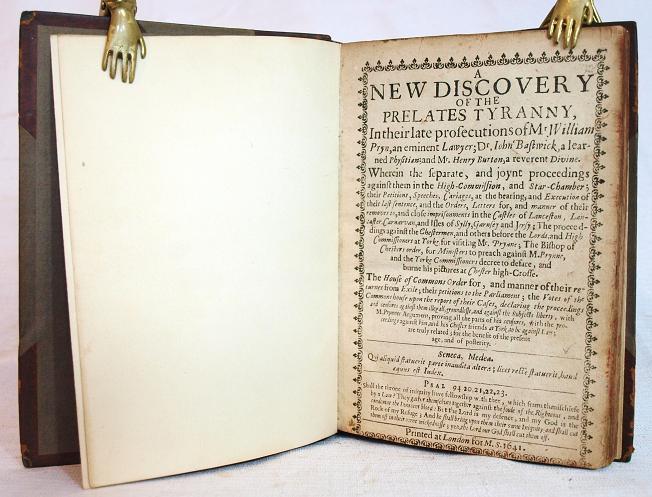
Title page of William Prynne's 1641 account of the Star Chamber and High Commission persecutions and ear-cropping of Prynne, Bastwick, and Burton for seditious libel.
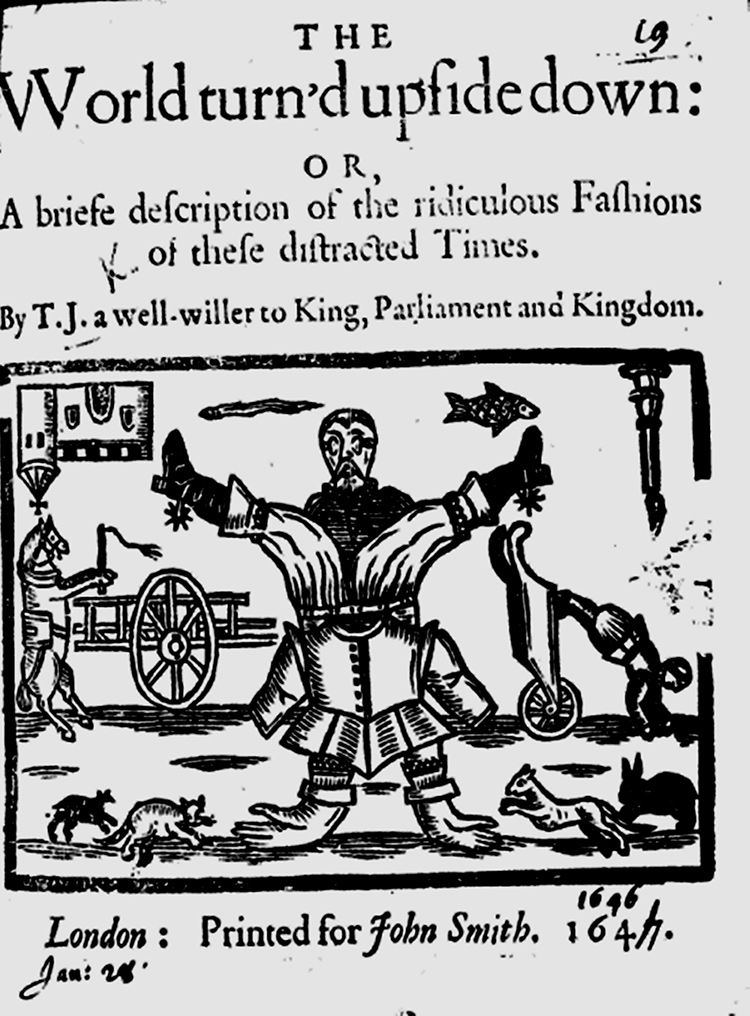
Celebrated 1646 satirical broadside ballad protesting the overturn of church hierarchy, traditional holidays, and social order under parliamentary rule.
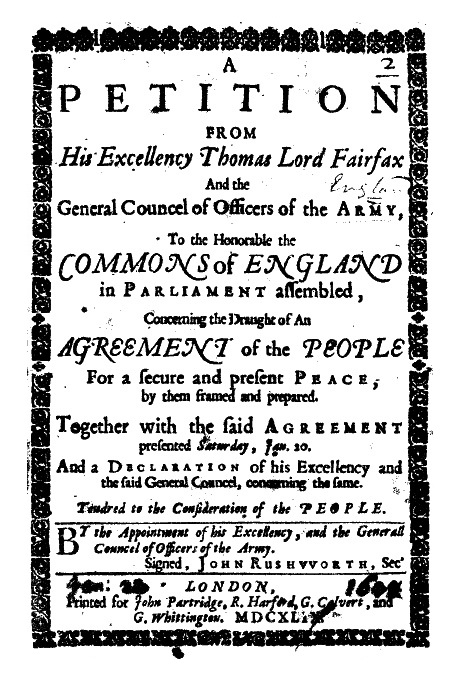
Foundational constitutional tract presented by the Council of Officers to the House of Commons proposing fundamental liberties and representative governance.
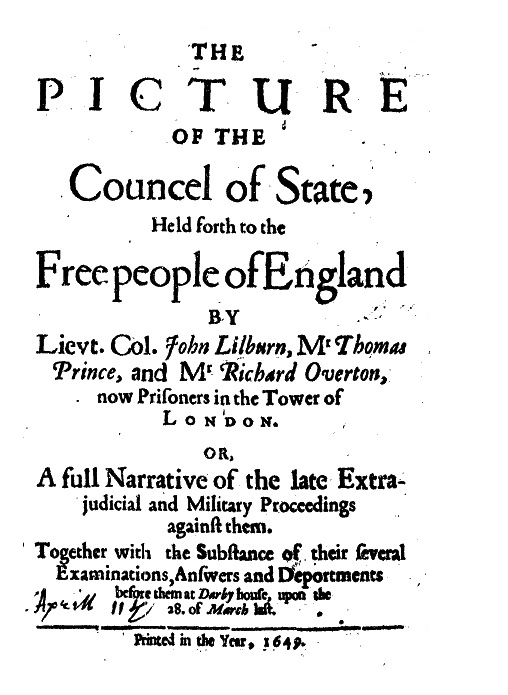
Fiery Leveller narrative by John Lilburne, Richard Overton, and Thomas Prince detailing their unlawful arrest and interrogation in the Tower of London.
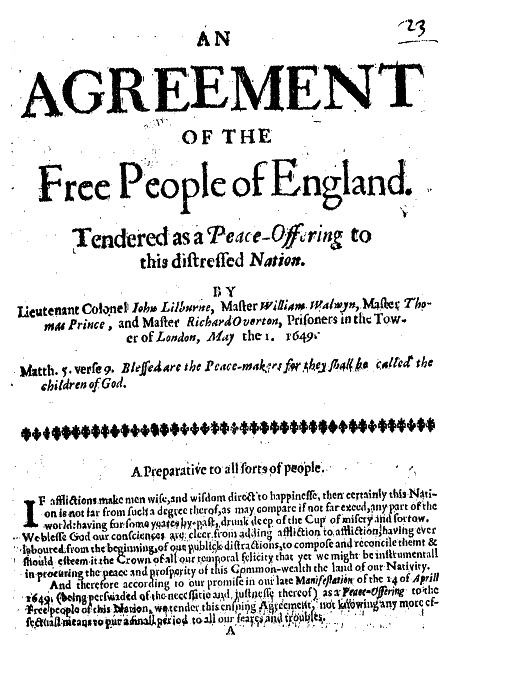
The definitive Leveller manifesto setting forth universal male suffrage, annual parliaments, complete religious liberty, and equality before the law.
Engraved frontispiece and title page depicting 'Freeborn John' Lilburne defending his inherited constitutional liberties before the Commonwealth judges.
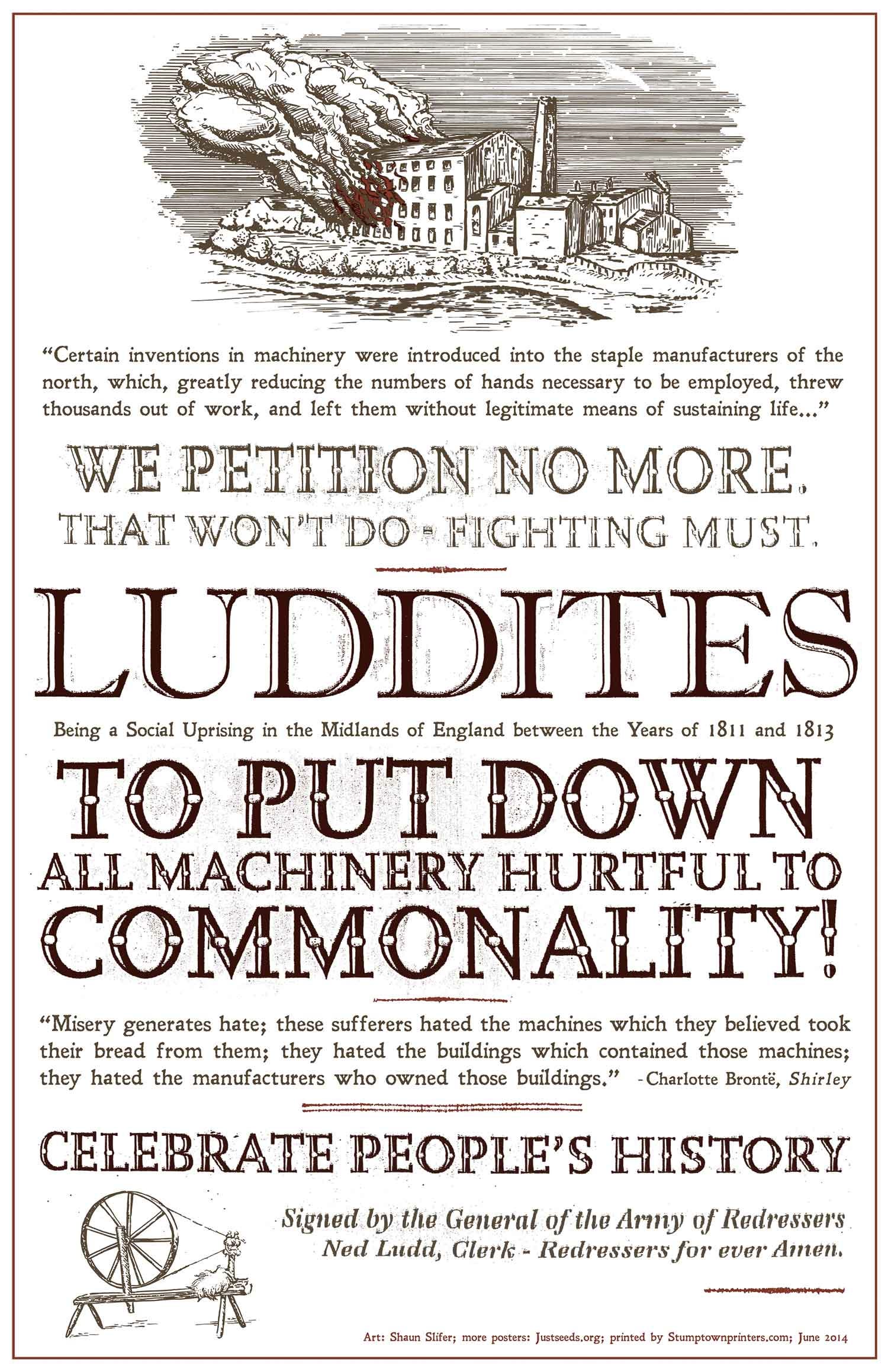
Commemorative historical broadsheet by Shaun Slifer detailing the Midlands textile workers' armed resistance against hunger and wage-depressing shearing frames.
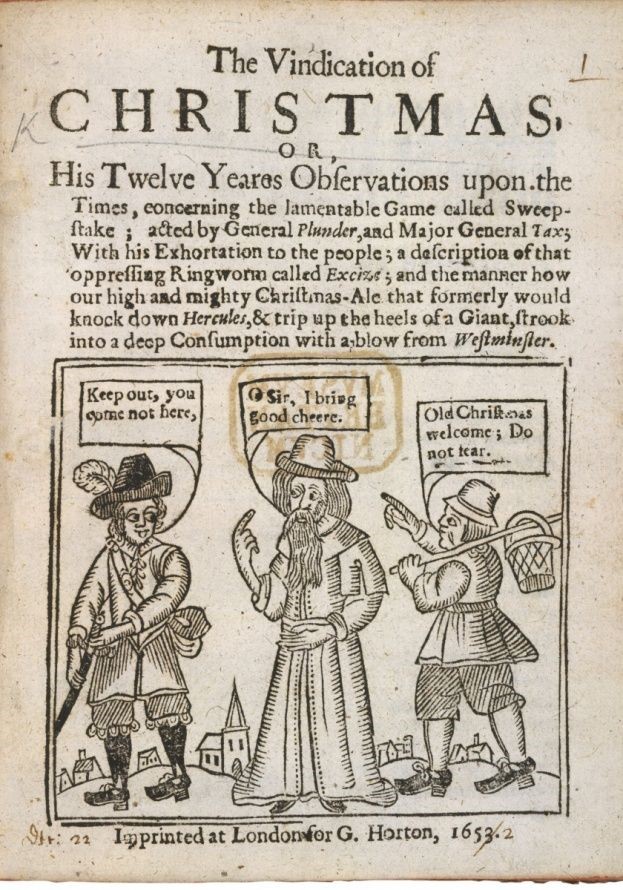
Famous 1653 broadside tract protesting the Puritan Commonwealth's legal ban on Christmas, featuring Old Father Christmas welcoming good cheer against 'General Plunder & Major General Tax'.
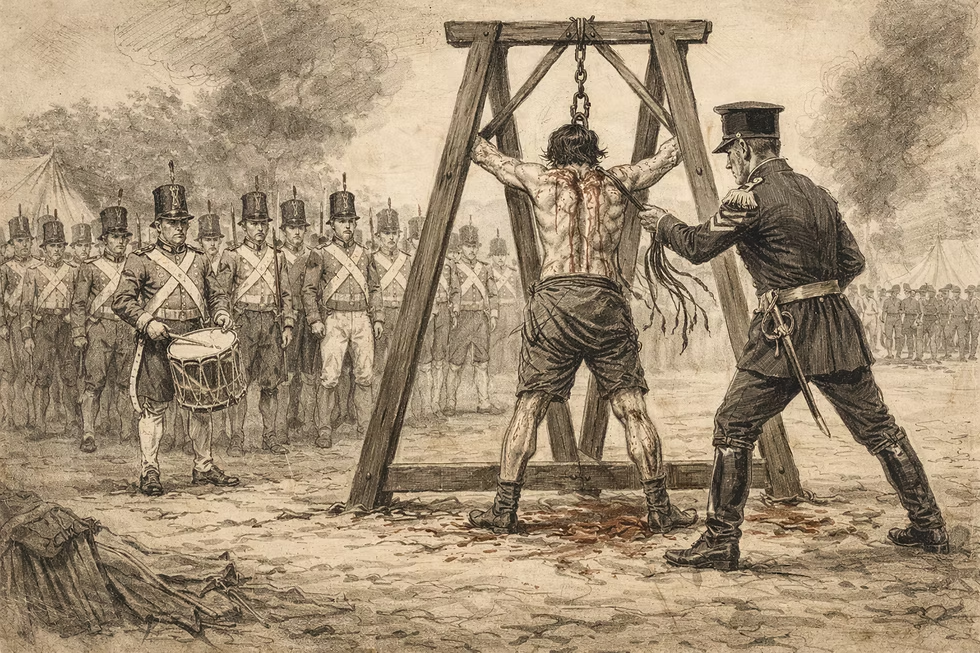
19th-century engraving documenting the brutal disciplinary flogging of a British soldier tied to a wooden tripod triangle before assembled infantry regiments and a drummer—a target of radical broadside reform campaigns.
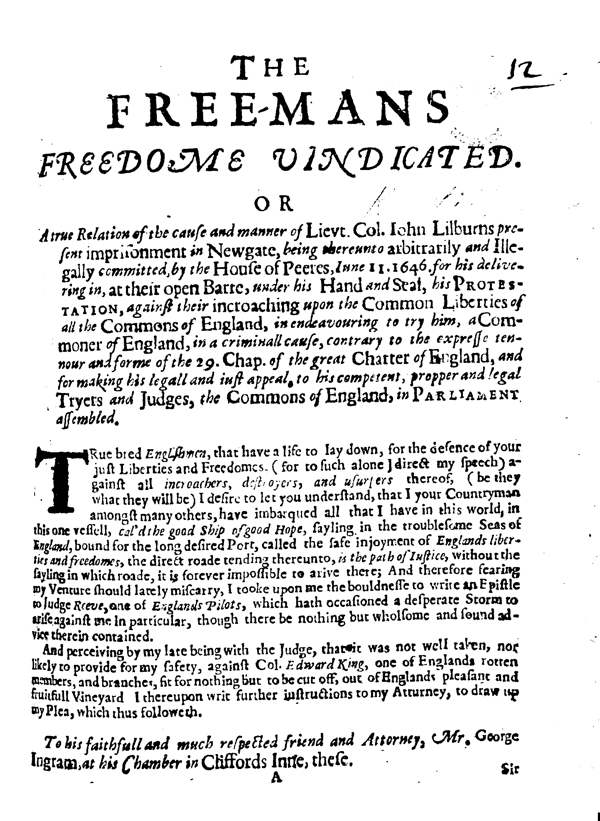
Thomason Tract E.340[12] wherein John Lilburne proclaims natural law, fundamental liberties, and the illegitimacy of arbitrary detention by the House of Lords.
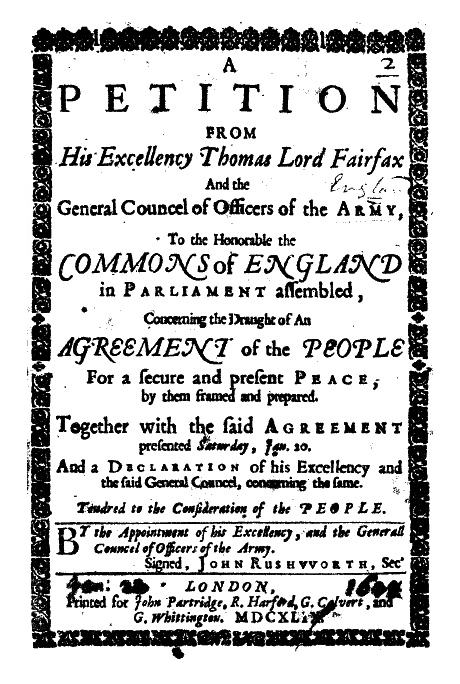
New Model Army officers' constitutional petition presented to Parliament just ten days before the execution of King Charles I.
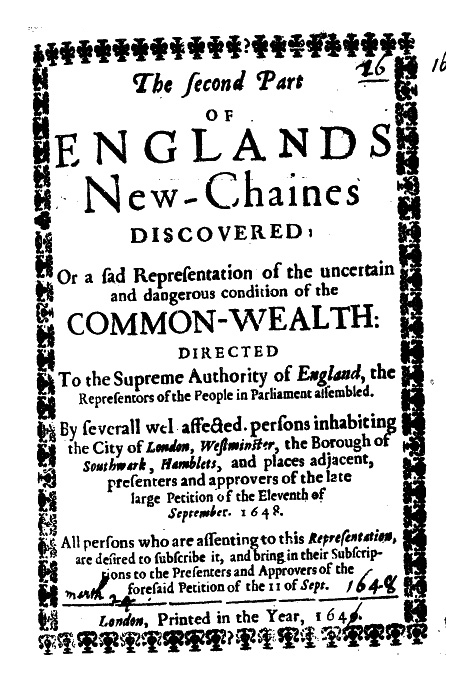
Thomason Tract E.548[16] accusing Oliver Cromwell and the military grandees of establishing an unaccountable martial tyranny over the English Commonwealth.
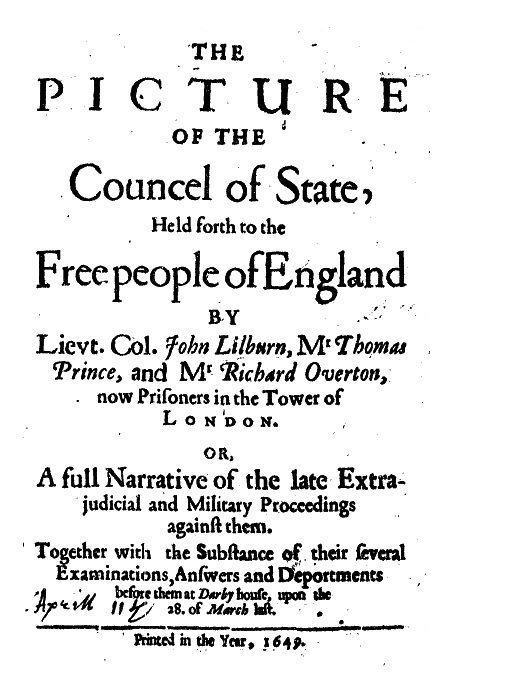
Protest declaration demanding immediate habeas corpus, fair public trial by peers, and strict adherence to Magna Carta guarantees.
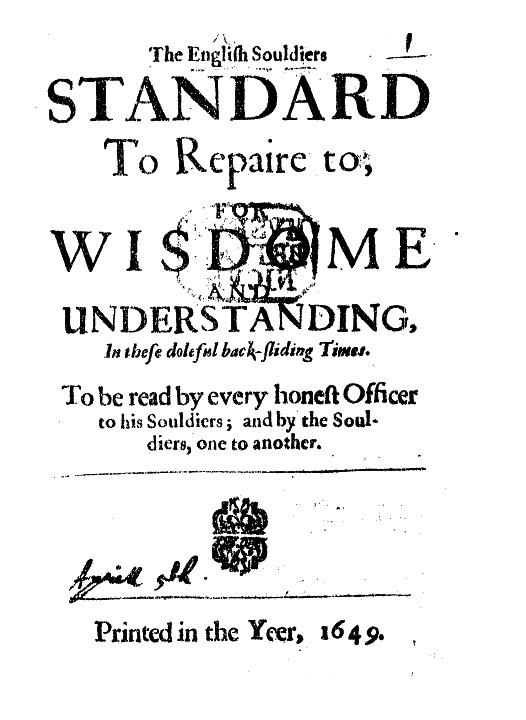
Leveller appeal to the rank-and-file soldiers of the Commonwealth army reminding them they fought for the people's liberties, not military masters.
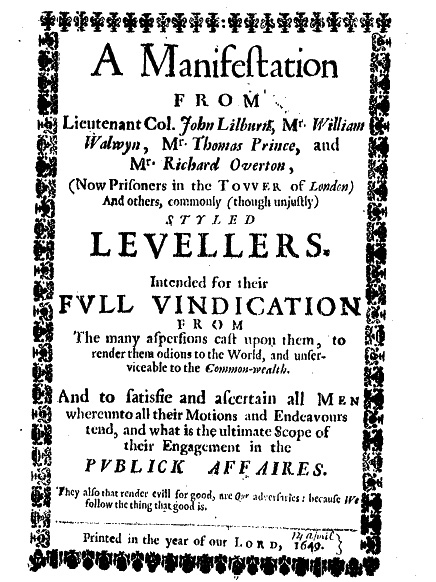
Joint prison manifesto refuting state propaganda, denying accusations of communal property leveling, and affirming democratic constitutionalism.
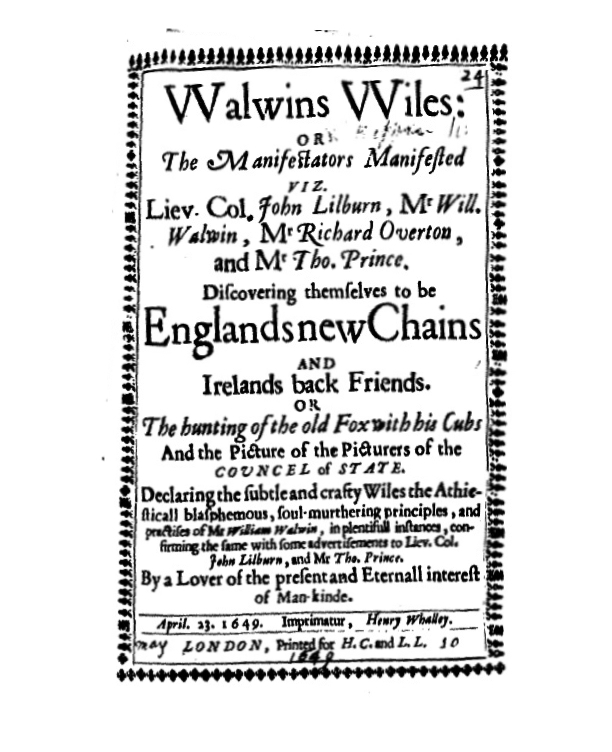
Anti-Leveller polemic commissioned to discredit philosopher William Walwyn and portray democratic reformers as dangerous anarchists.
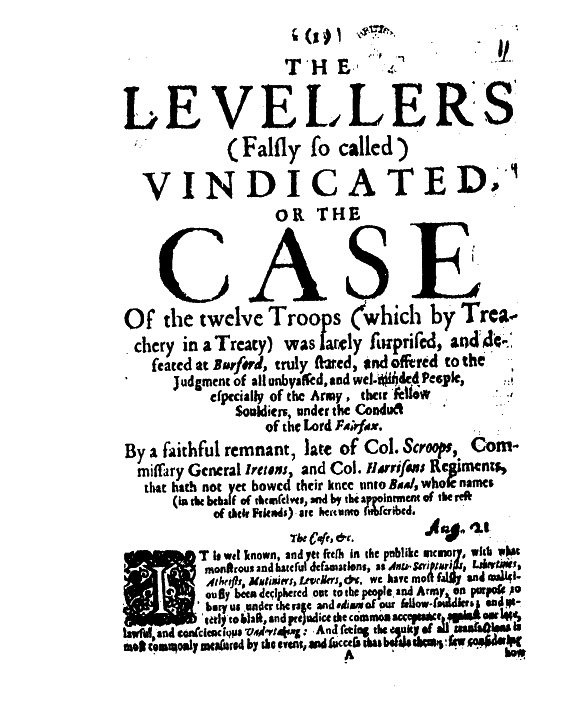
A vigorous defense of the Burford New Model Army mutineers and Leveller principles following Cromwell's suppression of the regiment at Burford church.
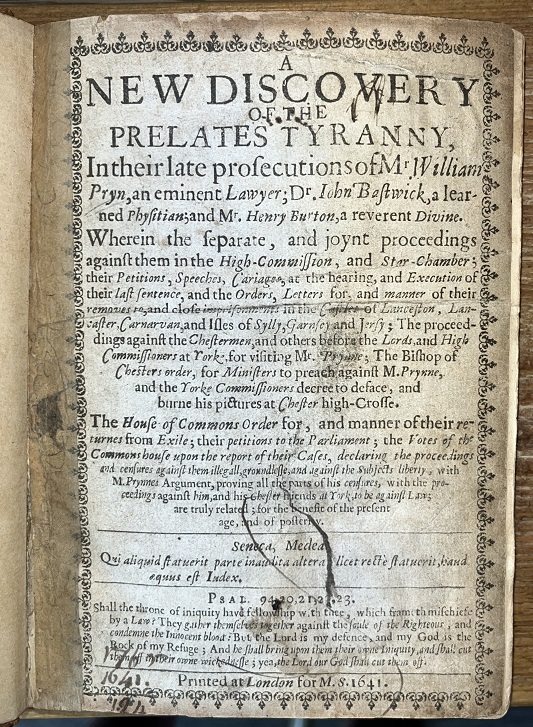
Rare 1641 book copy of Prynne's account detailing the brutal mutilation of puritan polemicists and their triumphant release by the Long Parliament.
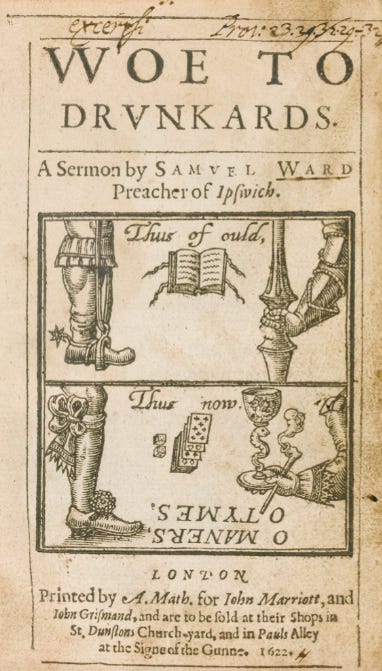
Famous 1622 woodcut sermon contrasting the martial piety of Elizabethan ancestors ('Thus of ould') with the drunken gambling and smoking of Jacobean youth ('Thus now').
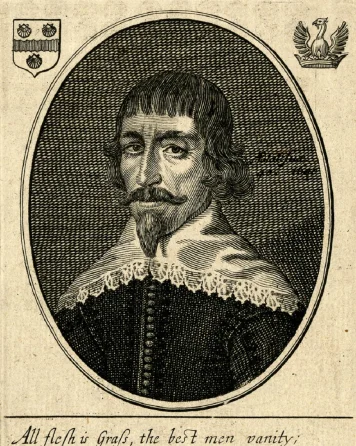
British Museum satirical engraving documenting Puritan pamphleteer William Prynne having his ears cropped in the pillory at Palace Yard, Westminster.
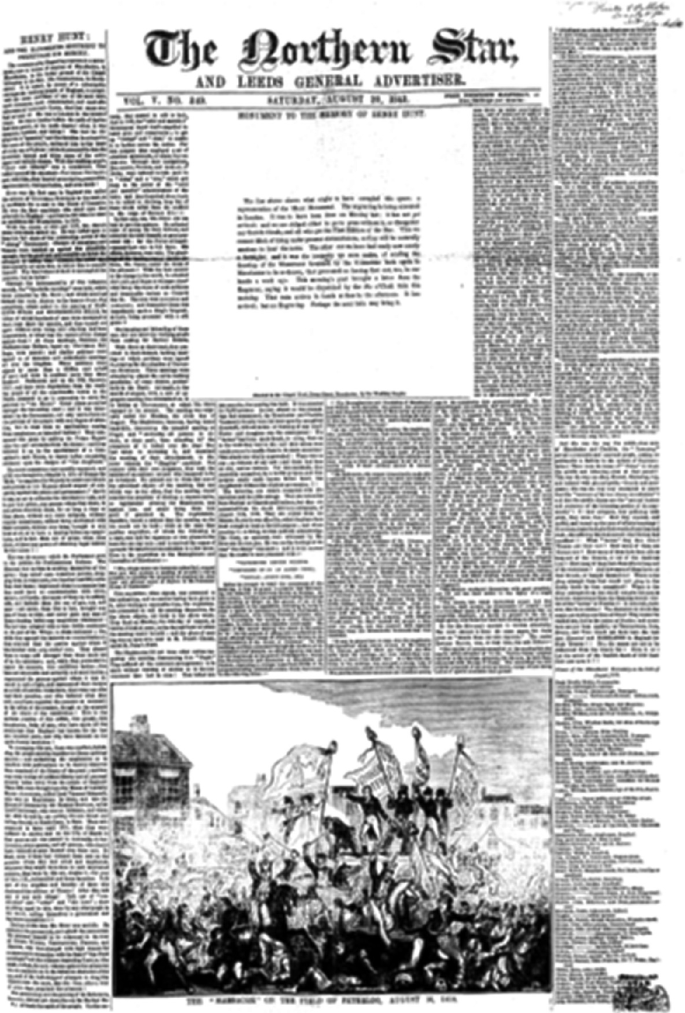
Front-page issue of Feargus O'Connor's Chartist newspaper featuring a grand commemorative engraving of the 1819 Peterloo Massacre in Manchester.
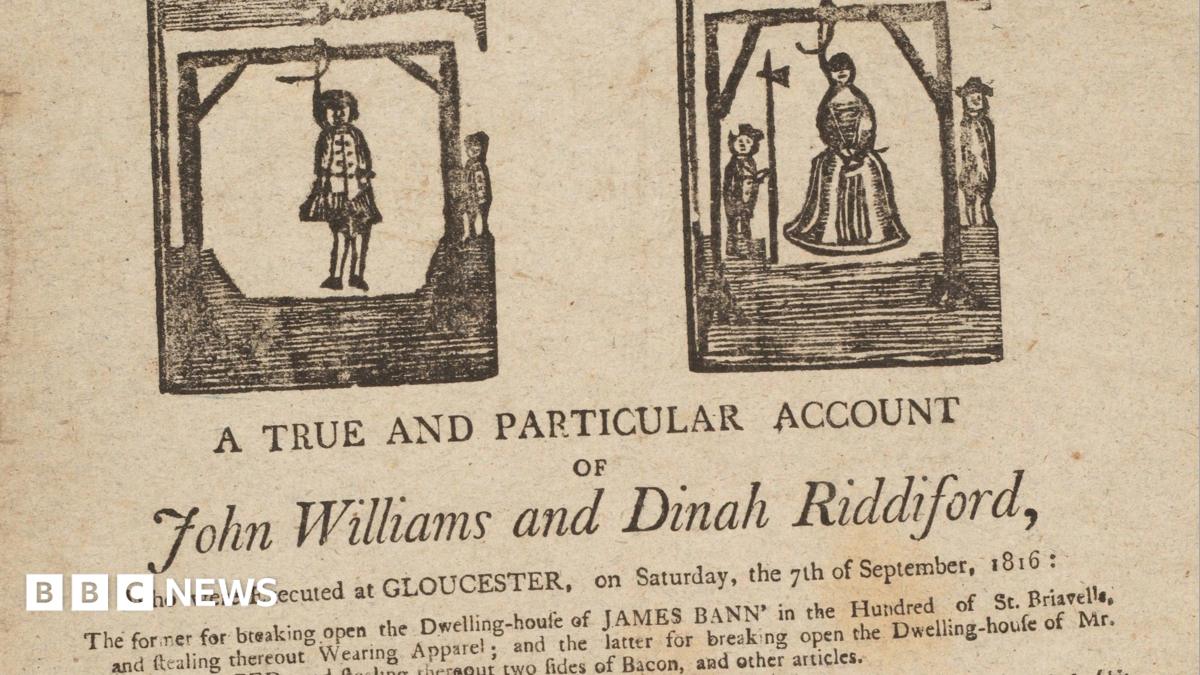
Archival 1816 execution broadside recounting the public hanging of Williams and Riddiford under England's Bloody Code for stealing clothing and sides of bacon.
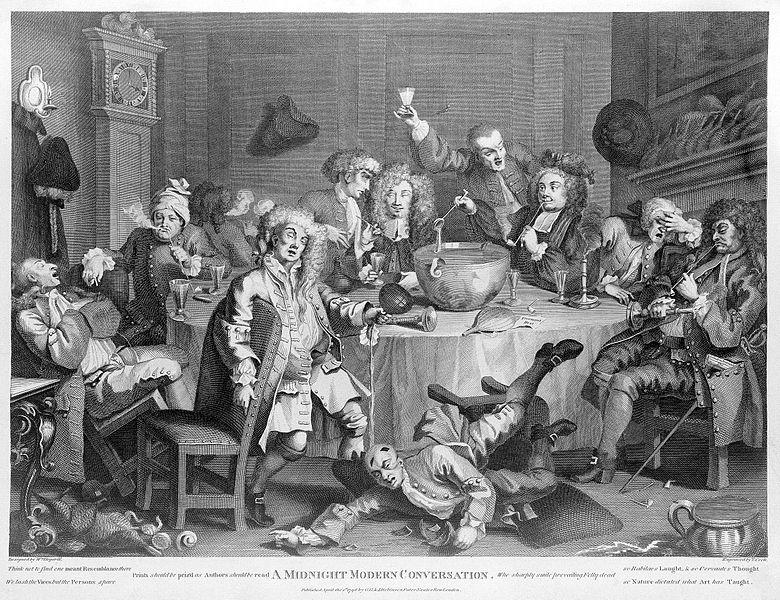
Wellcome Collection print after William Hogarth's celebrated 1732 satire showing London magistrates, parsons, and merchants collapsed in drunken debate around punch.
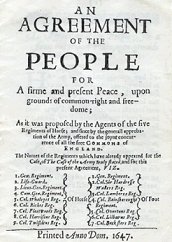
The seminal democratic draft of the Leveller movement, demanding popular sovereignty, decentralization, and an inviolable bill of rights.
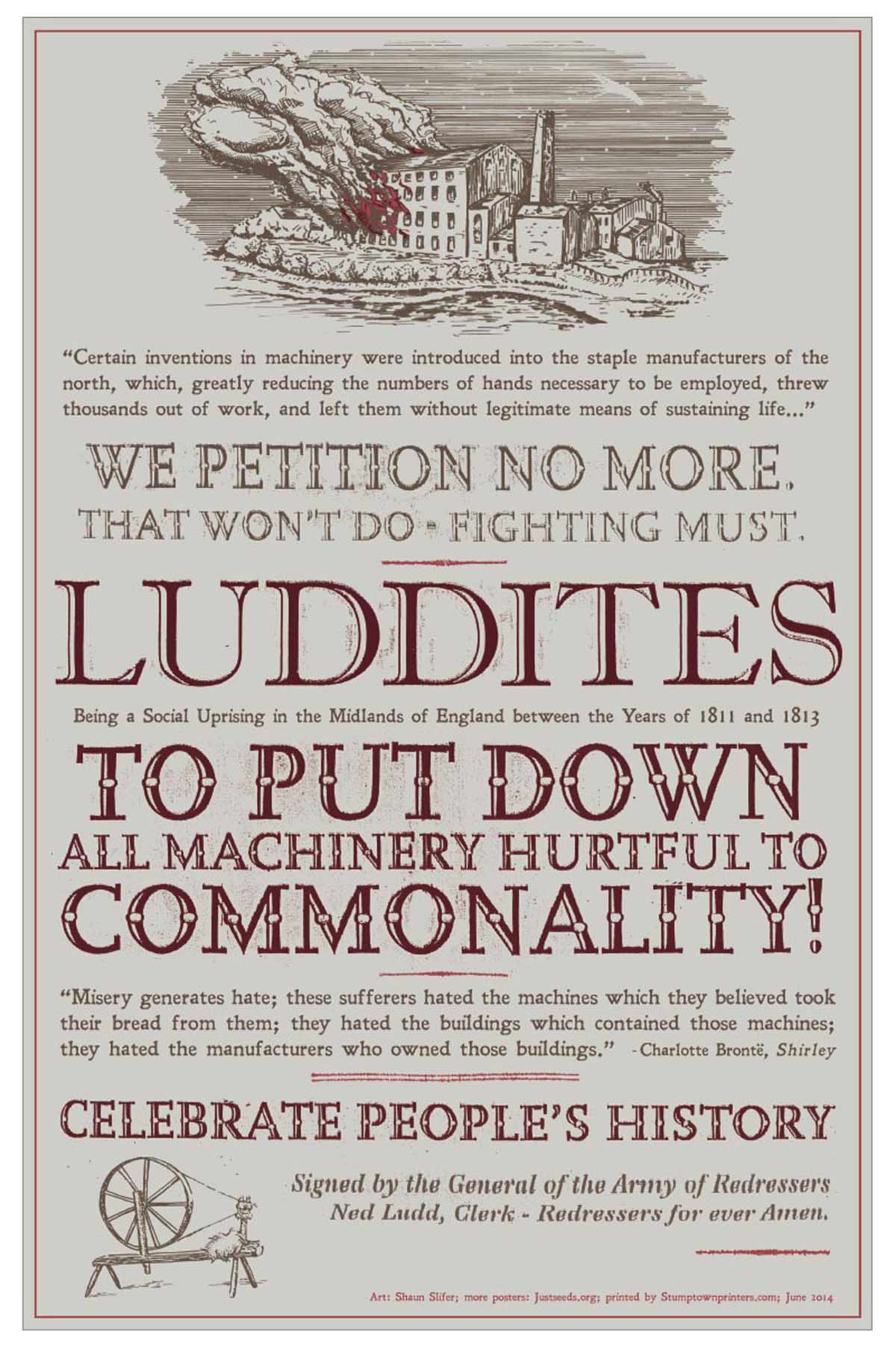
High-contrast archival print of the Luddite declaration invoking General Ned Ludd to put down all automated machinery harmful to the commonality.
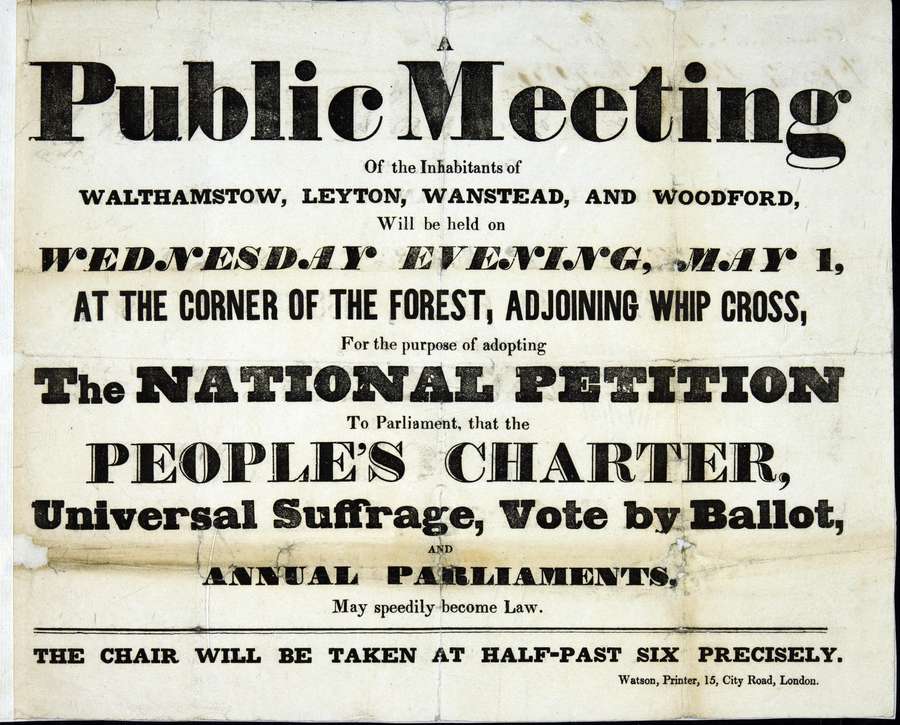
Rare 1839 Chartist forest meeting broadsheet calling the working men of Walthamstow, Leyton, and Wanstead to rally for universal suffrage and the People's Charter.
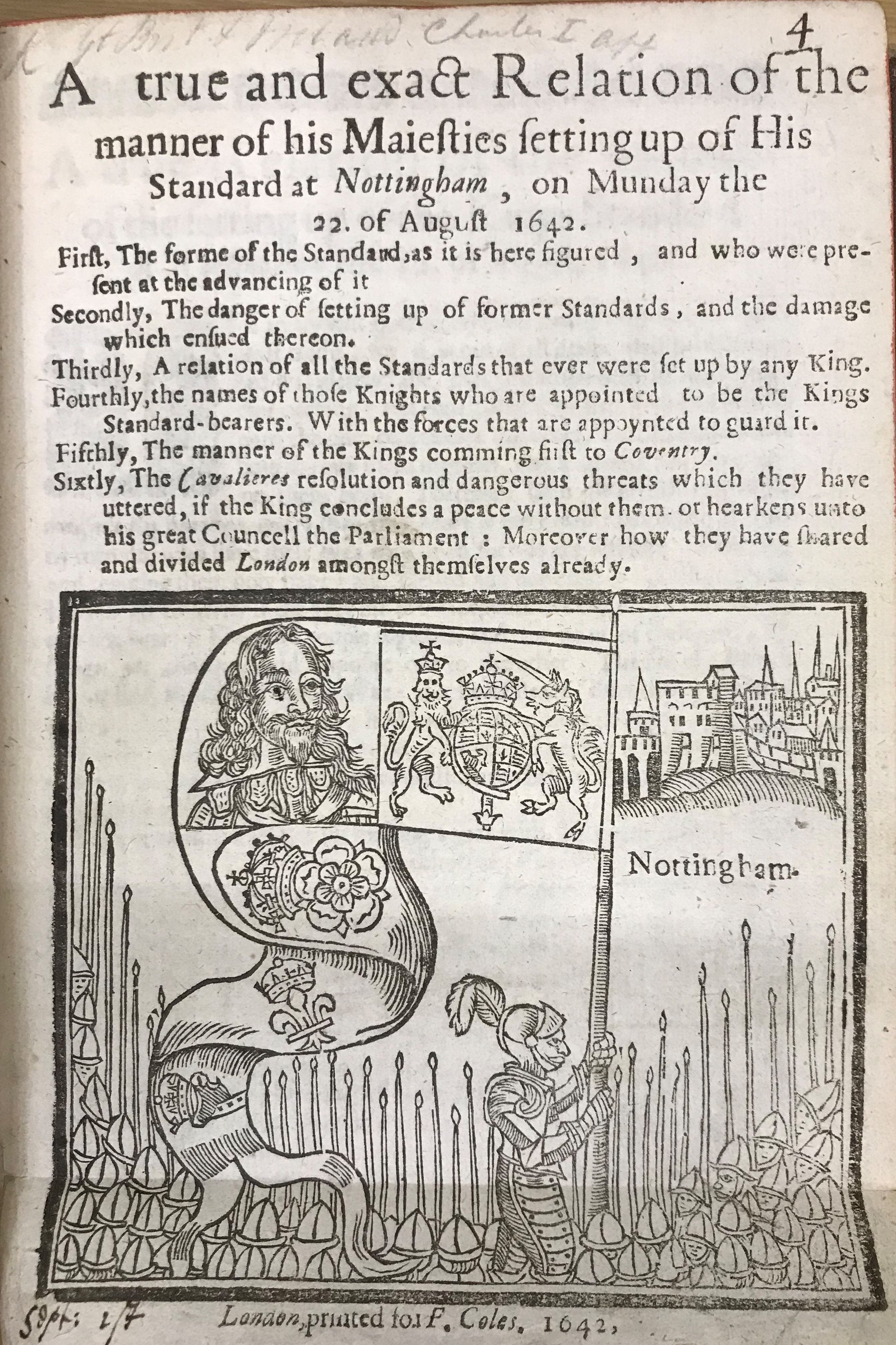
Early wartime ordinance justifying the House of Commons' defensive military mobilization against King Charles I following the attempted arrest of the Five Members.

Iconic satirical woodcut illustrating Prince Rupert's royalist poodle 'Boye' locked in battle with the roundhead parliamentarian dog 'Peper'.
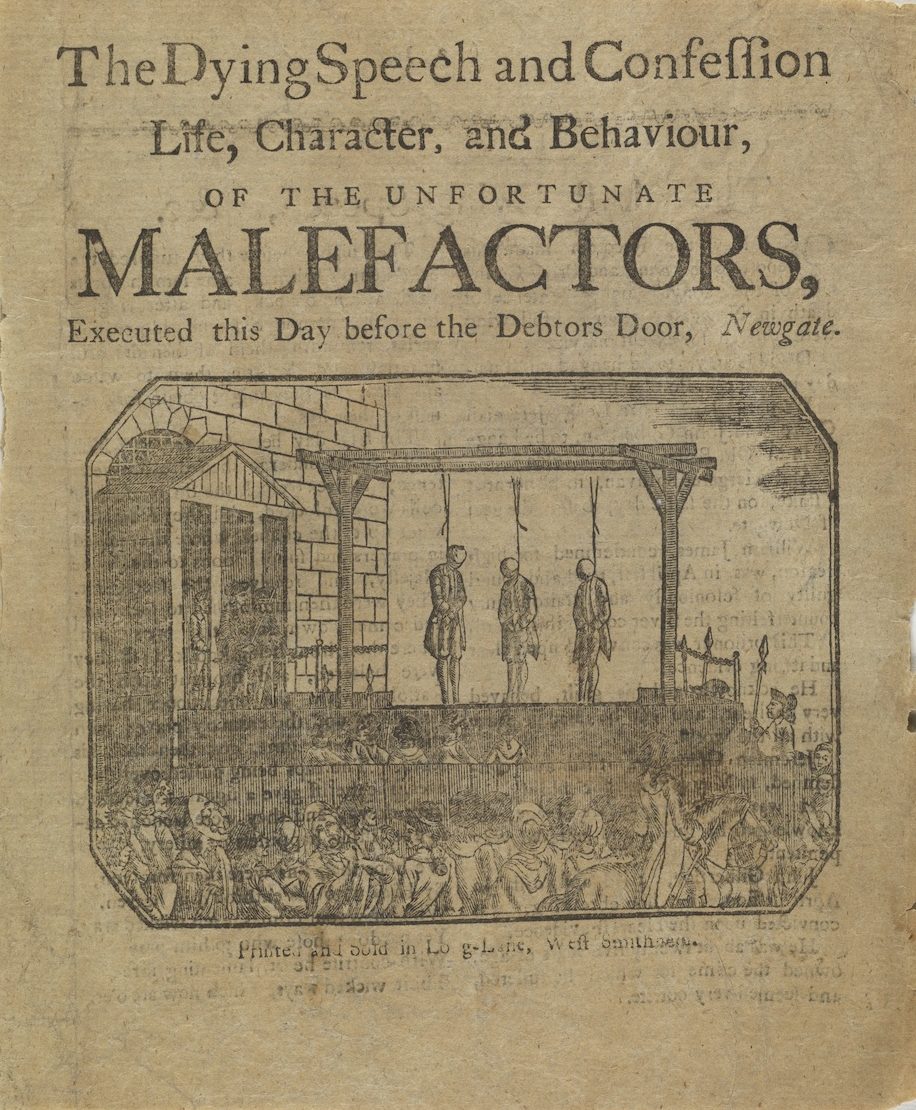
18th-century street literature broadside hawked at Newgate Prison recording convicts' last speeches and repentance prior to execution.
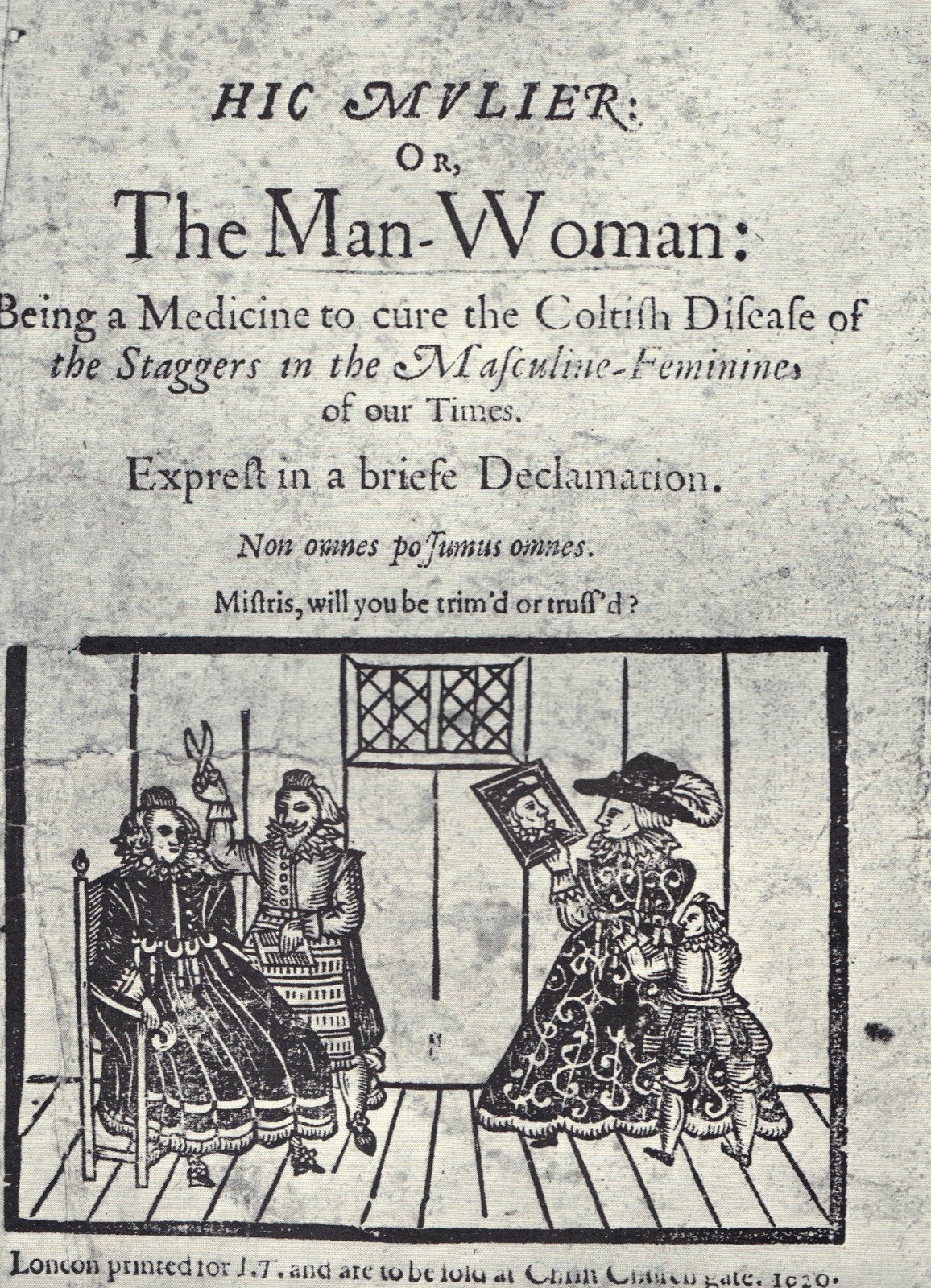
Famous 1620 moralizing pamphlet and woodcut attacking London women for adopting masculine fashions, feathered hats, and carrying daggers.
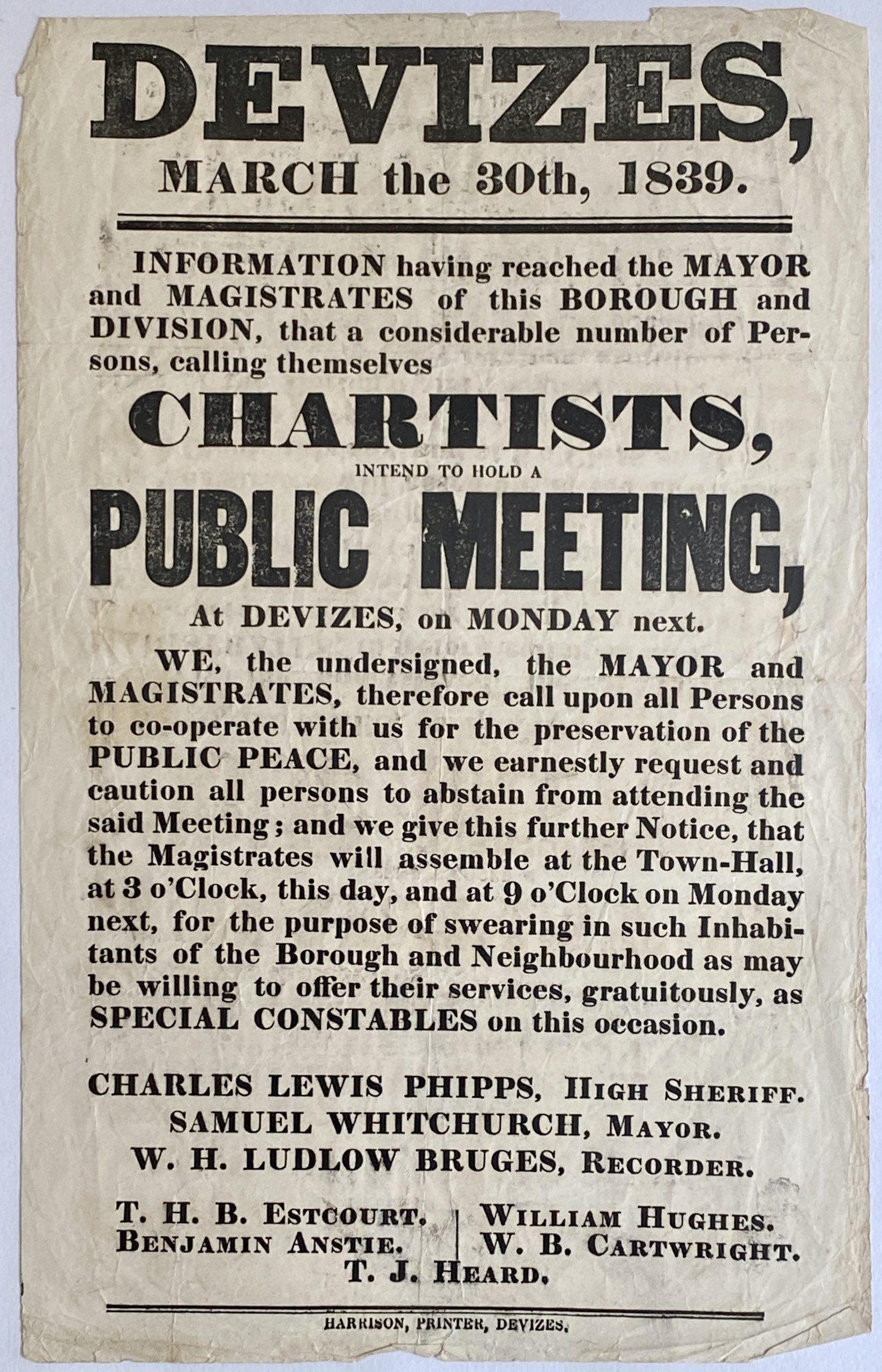
Official town hall proclamation by the Mayor and High Sheriff of Devizes prohibiting Chartist public meetings and swearing in citizens as special constables.

Demonstrative equestrian illustration showing a rider navigating harsh rural roads, exhibited as an alternative visual study of the terrain and journey of William Horsfall before the 1812 Crosland Moor ambush.
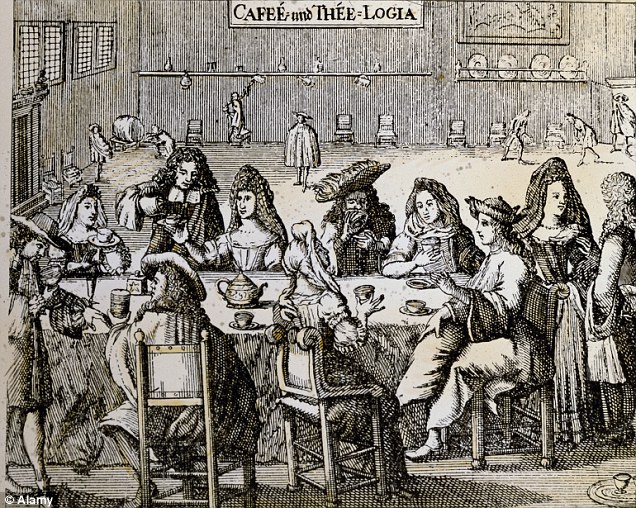
The earliest known coffeehouse advertisement in England, published by Pasqua Rosée in St Michael's Alley, Cornhill, establishing London's coffee culture.
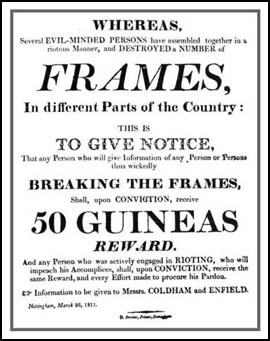
Crown broadside proclamation declaring the breaking of stocking frames a capital felony punishable by death, warning framework knitters in Nottinghamshire.
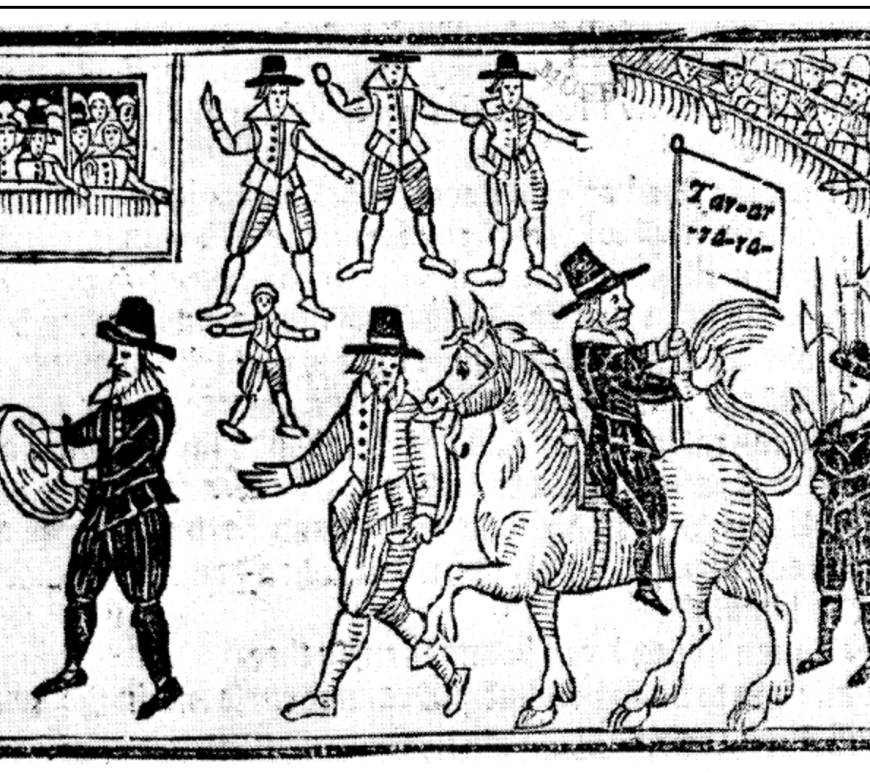
Satirical broadside depicting a corrupt crown patent-holder surrounded by wine pipes, soap barrels, and leather hides that enriched royal cronies.
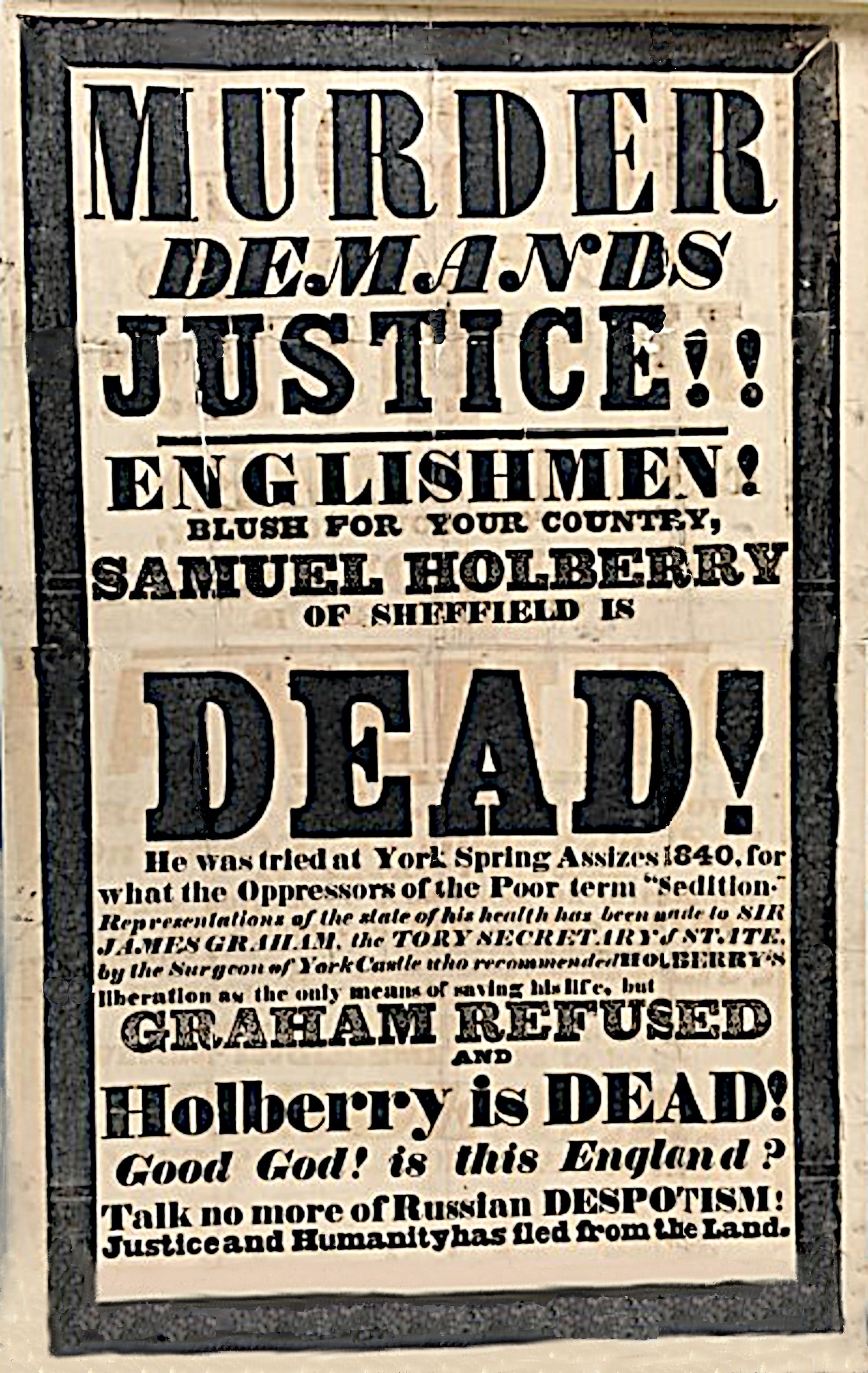
Dramatic reward placard published after the assassination of Yorkshire shearing-frame owner William Horsfall, offering large sums for witness testimony.
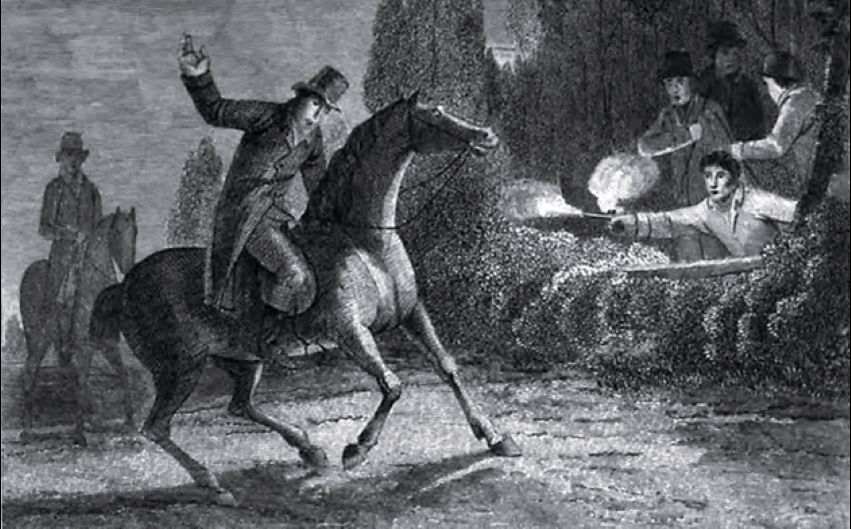
Historical broadsheet engraving recording the ambush of industrialist William Horsfall by Luddites George Mellor, William Thorpe, and Thomas Smith in April 1812.
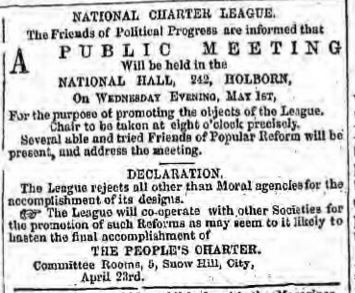
Notice from The Northern Star newspaper coordinating delegates and meetings for the National Charter League across northern industrial towns.
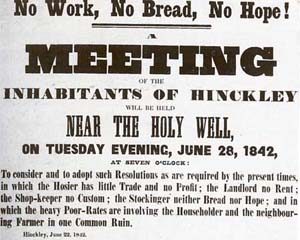
Broadside page detailing parliamentary ordinances for maintaining the army and collecting taxes for the defense of the realm.
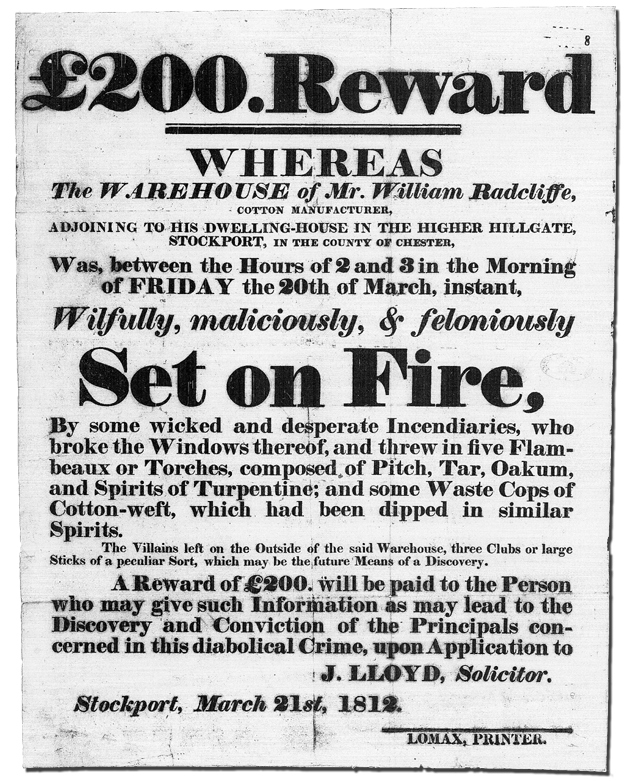
Proclamation issued by solicitor J. Lloyd offering £200 reward for information on incendiarists who torched William Radcliffe's cotton mill in Stockport.
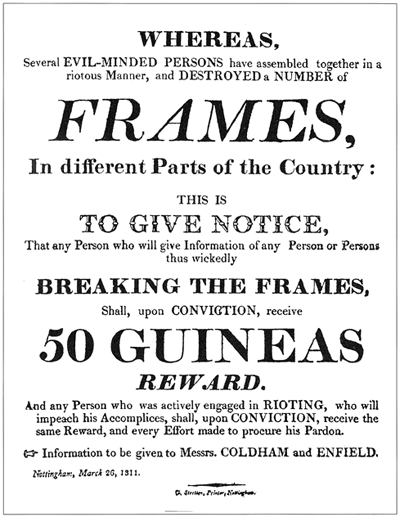
Official town hall handbill offering fifty guineas reward to any accomplice who impeaches his fellows engaged in breaking stocking frames.
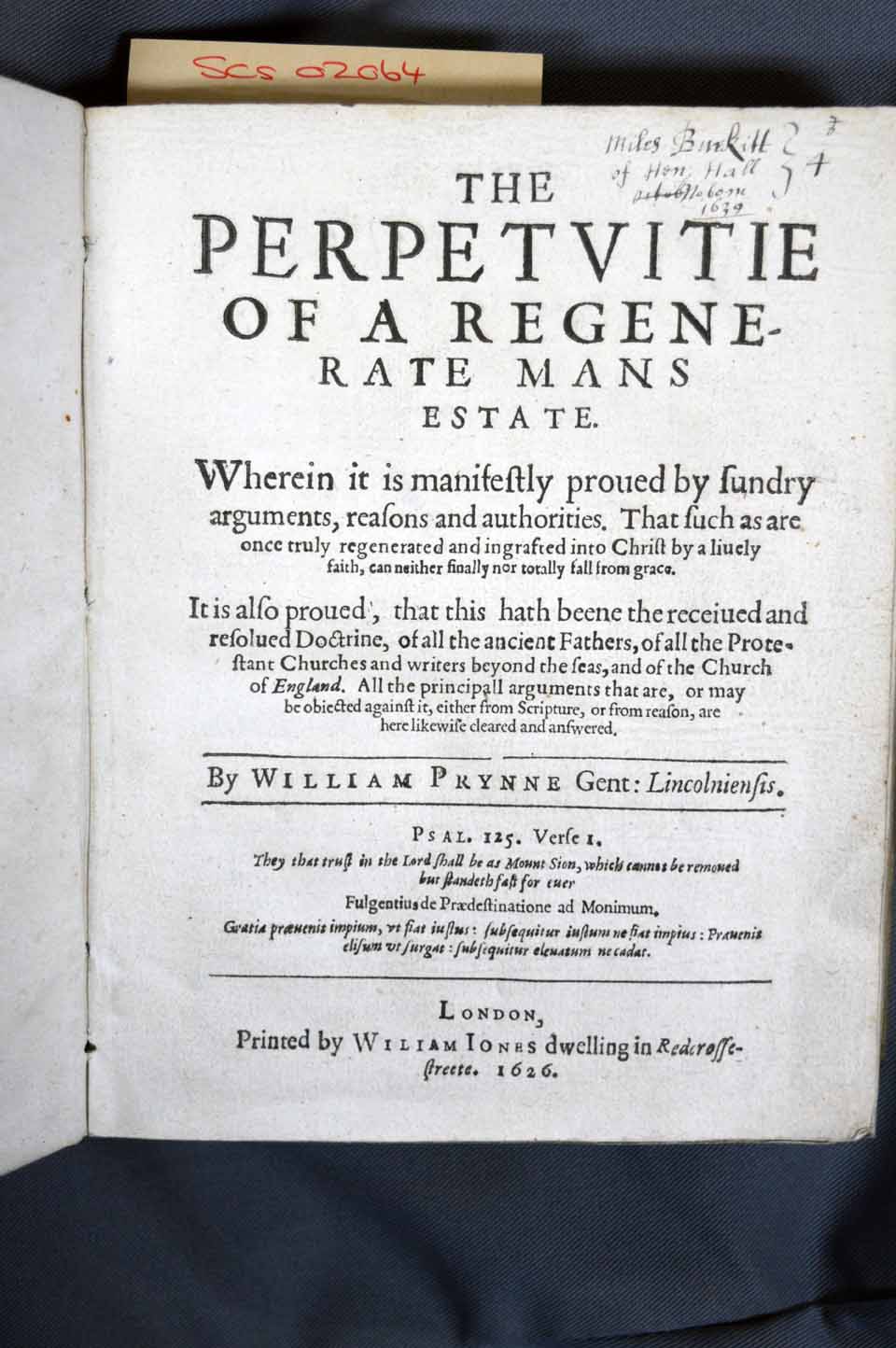
Title page of William Prynne's earliest published theological treatise, printed in London in 1626 defending Calvinist perseverance of the saints.
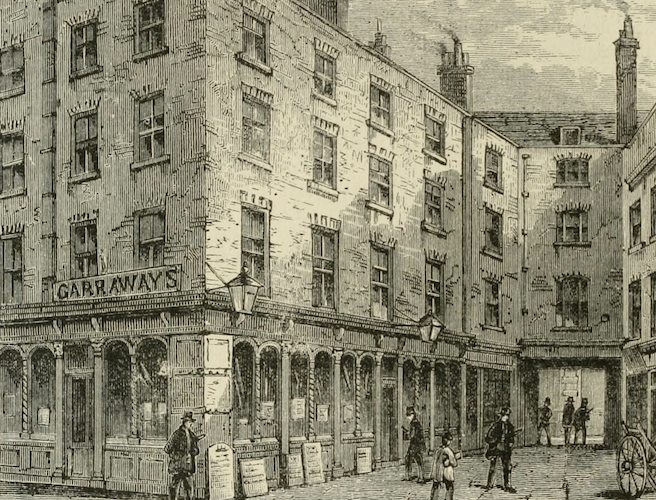
Historical architectural engraving documenting the street facade and entrance of an early London coffeehouse, illustrating what early public houses and coffee establishments looked like from the outside.
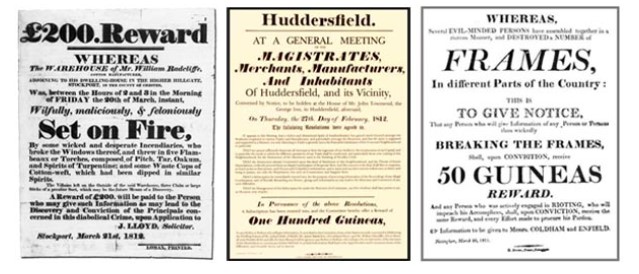
Comparative visual exhibition of three famous crown and magistracy posters offering rewards for information on frame-breaking and industrial arson.
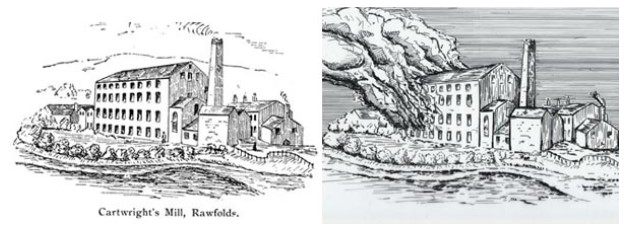
Side-by-side engravings depicting William Cartwright's fortified cloth mill at Rawfolds before and during the fierce night assault by armed Luddites in April 1812.
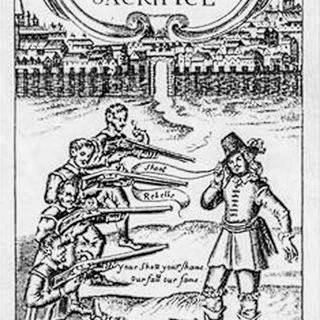
Royalist memorial print portraying the summary military execution of Sir Charles Lucas and Sir George Lisle following the Siege of Colchester.

British Library broadside showing London gentlewomen petitioning the Commons to defend civic trade and send their husbands to war against royalist forces.
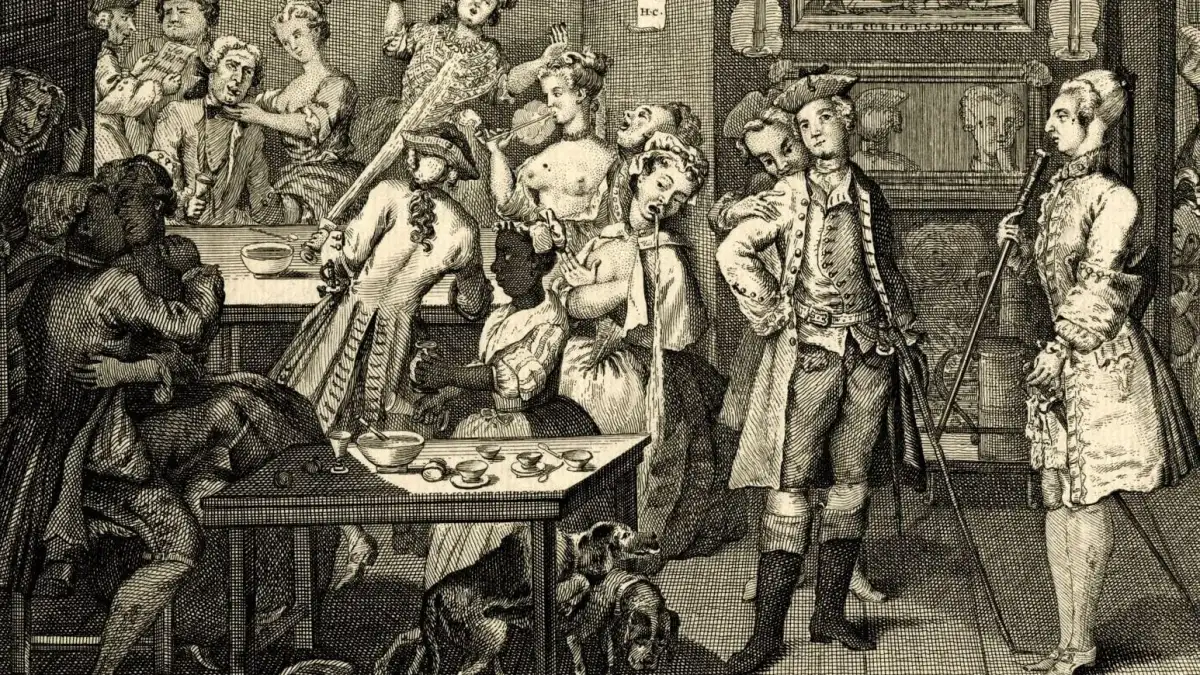
British Museum satirical engraving capturing the riotous nocturnal mix of aristocrats, beggars, gamblers, and ladies of the night in Covent Garden.
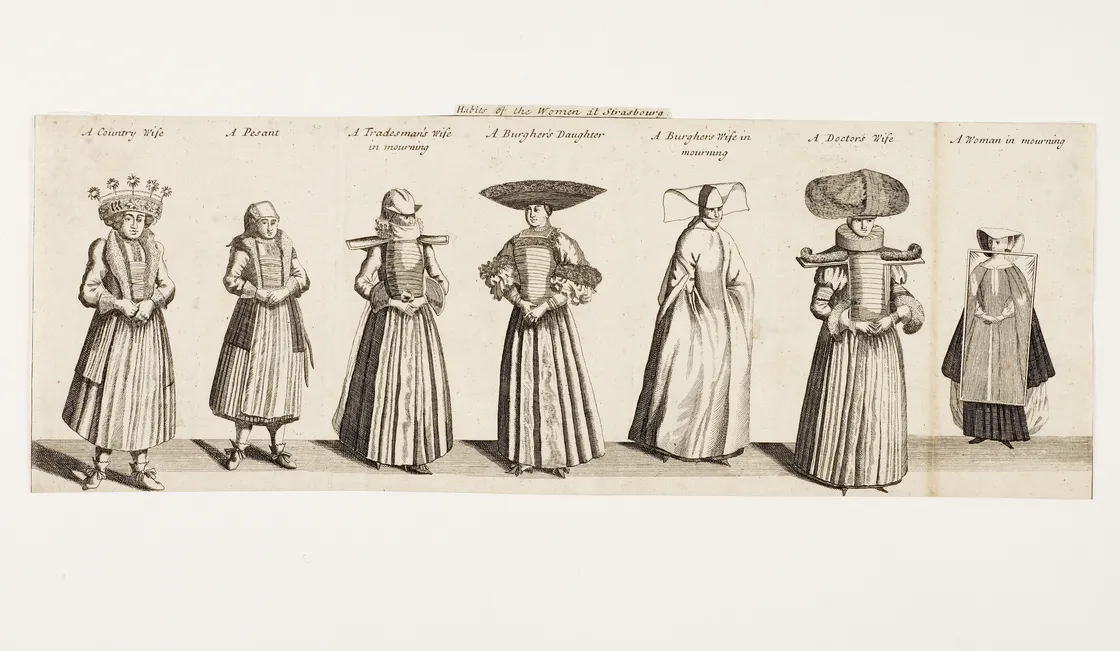
Plate from Wenceslaus Hollar's famous costume series recording the street dress and headwear of English merchant women during the Civil War period.

Title page of Prynne's monumental legal compendium surveying historical parliamentary writs, elections, and privileges from the Norman era to the Commonwealth.

Treatise arguing for the supreme legislative authority of traditional parliaments and the illegality of military councils abolishing the House of Lords.
Classical equestrian composition of a lone gentleman rider traversing moorland, presented as an alternative demonstration of William Horsfall's solitary horseback journey before his assassination.
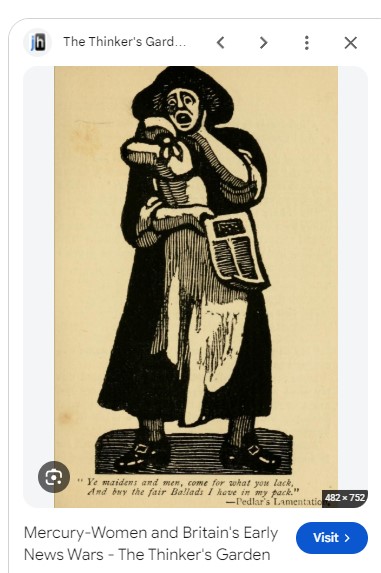
Historical woodcut depicting an itinerant woman carrying an armful of news sheets and ballads, chanting 'Ye maidens and men, come for what you lack'.
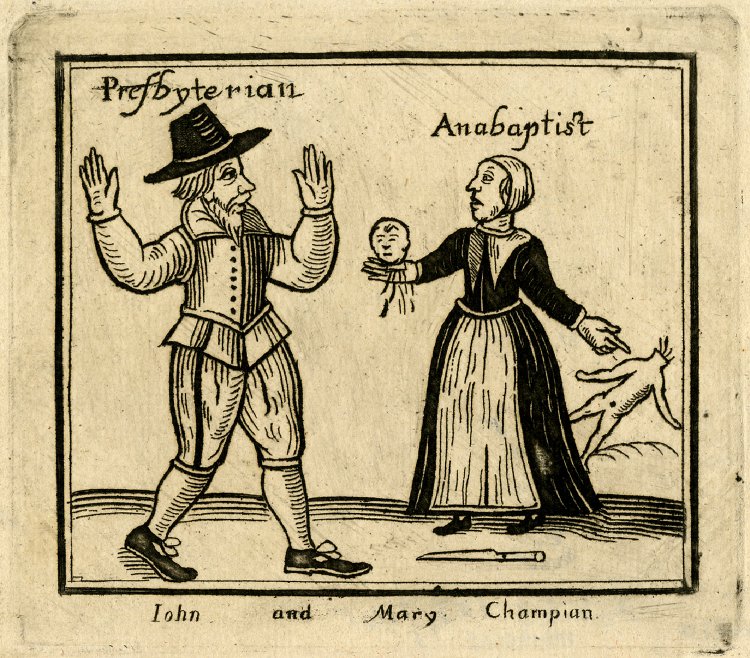
British Museum woodcut print illustrating contemporary religious polemics between Presbyterians and Anabaptists during the explosion of radical sectarians in London.
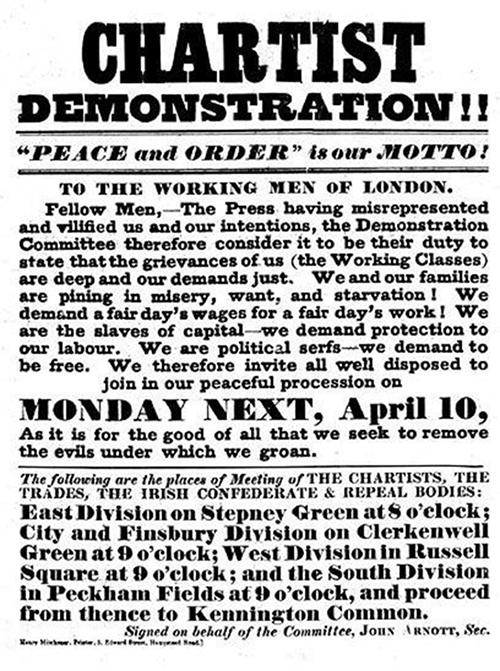
Historic April 10, 1848 handbill signed by John Arnott organizing the peaceful march to Kennington Common for the presentation of the third Monster Petition.
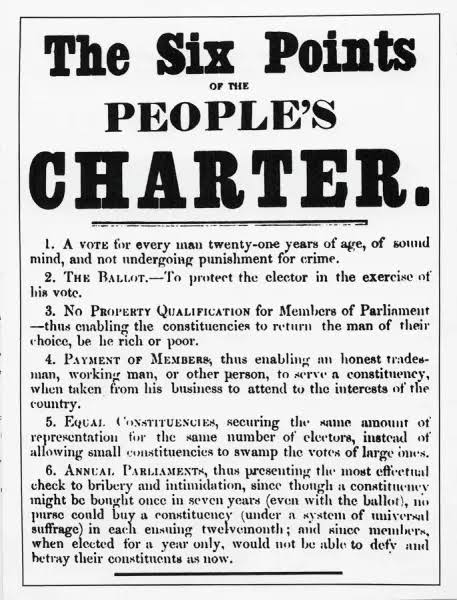
Historic 1838 Chartist broadside published by the Working Men's Association. Top header completed: 'THE PEOPLE'S CHARTER: THE SIX POINTS OF THE PEOPLE'S CHARTER' covering Universal Suffrage, No Property Qualification, Annual Parliaments, Equal Representation, Payment of Members, and Vote by Ballot.
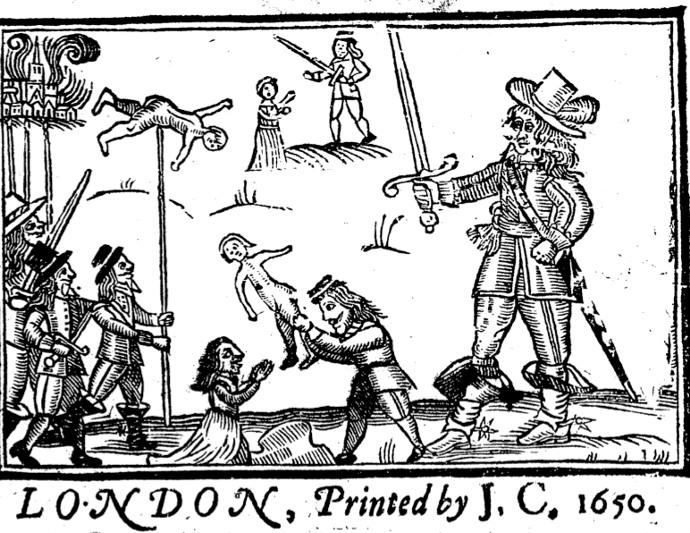
Frontispiece broadside illustrating alleged atrocities committed by Prince Rupert's royalist cavalry against civilian townsfolk at the outbreak of civil war.
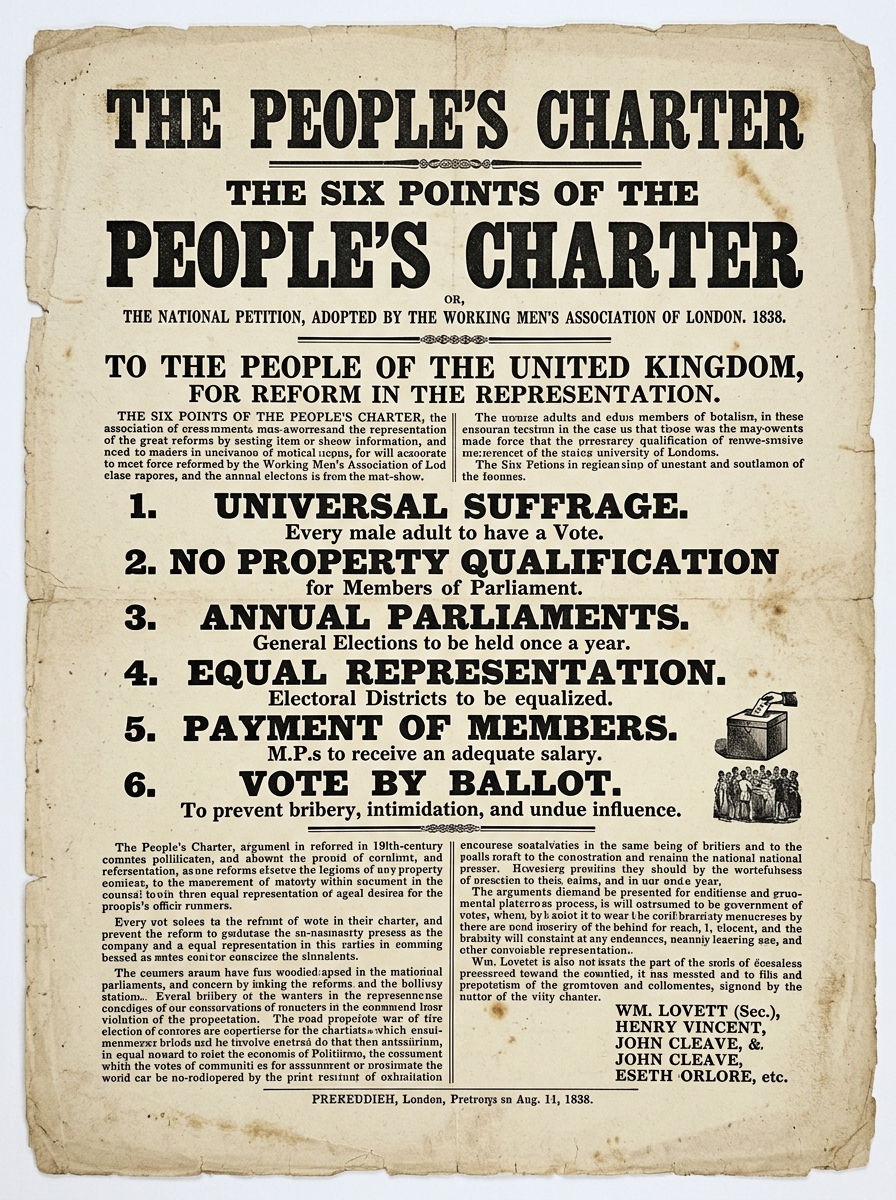
Completed full-text restoration of the historic 1838 Chartist broadside, restoring the clipped top headline 'THE PEOPLE'S CHARTER' and 'THE SIX POINTS OF THE PEOPLE'S CHARTER' with unabridged 19th-century woodblock typography.
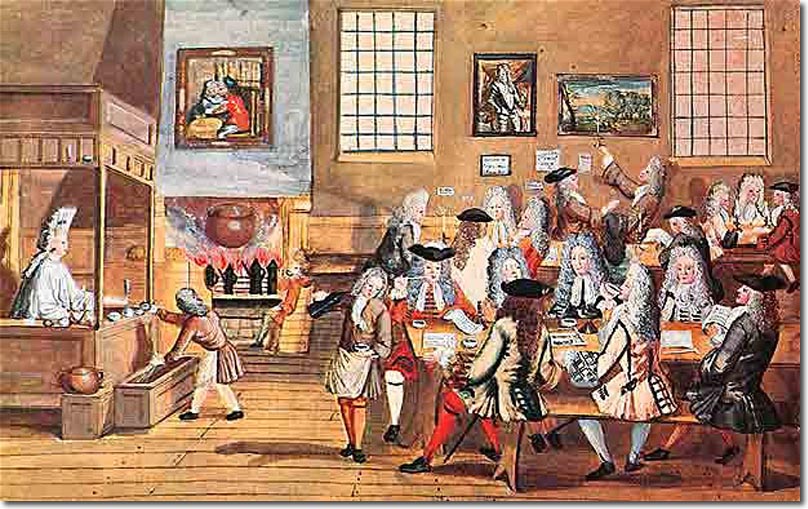
Contemporary engraving depicting citizens gathered in a London coffeehouse around long tables, smoking pipes, reading gazettes, and exchanging political news.
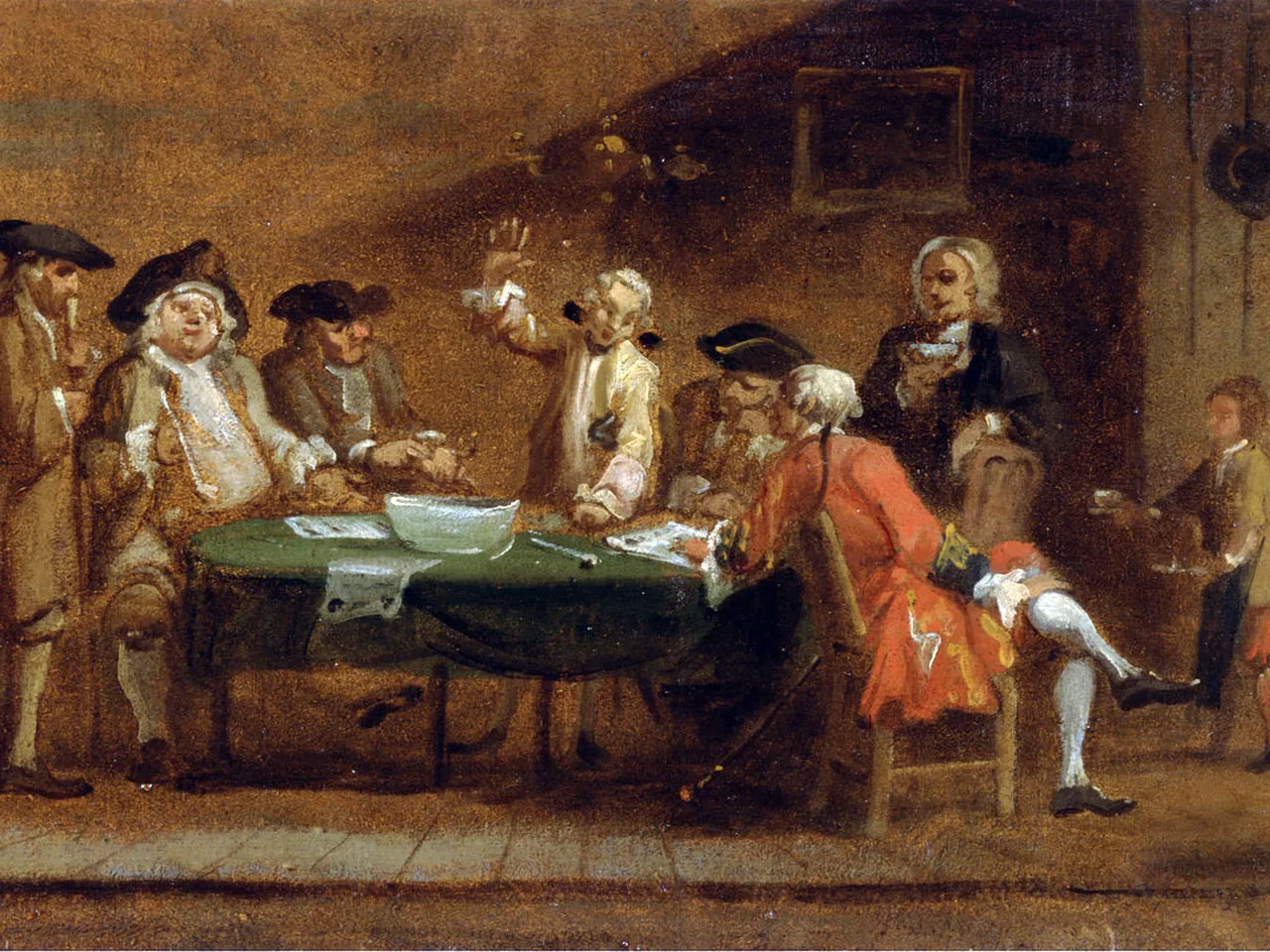
Archival woodcut depicting the egalitarian atmosphere of early coffeehouses where tradesmen, scholars, and politicians conversed over dishes of Turkish coffee.
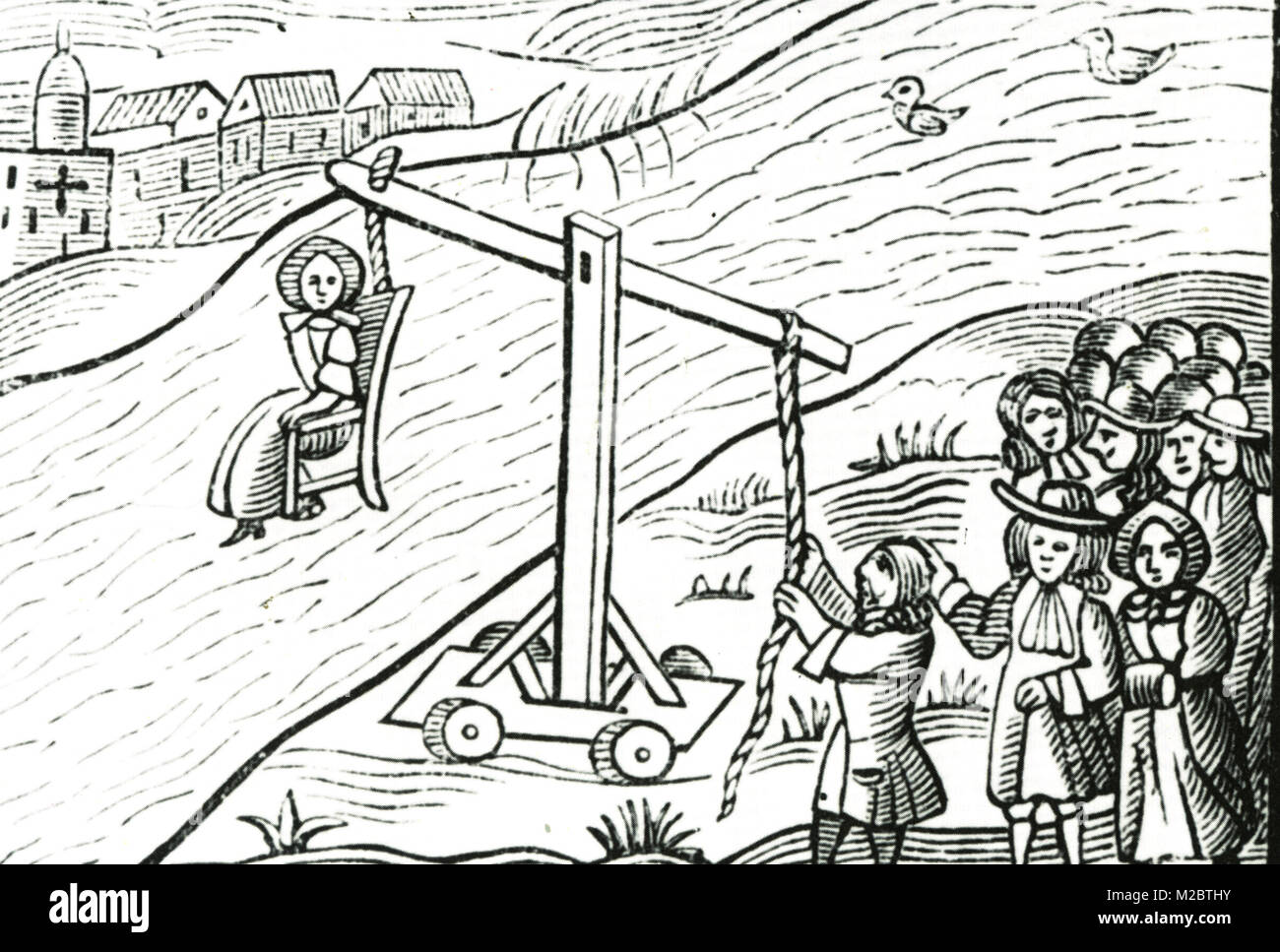
Woodcut from an early modern pamphlet illustrating the customary punishment of outspoken women by immersion in a pond using a pivoted wooden ducking stool.
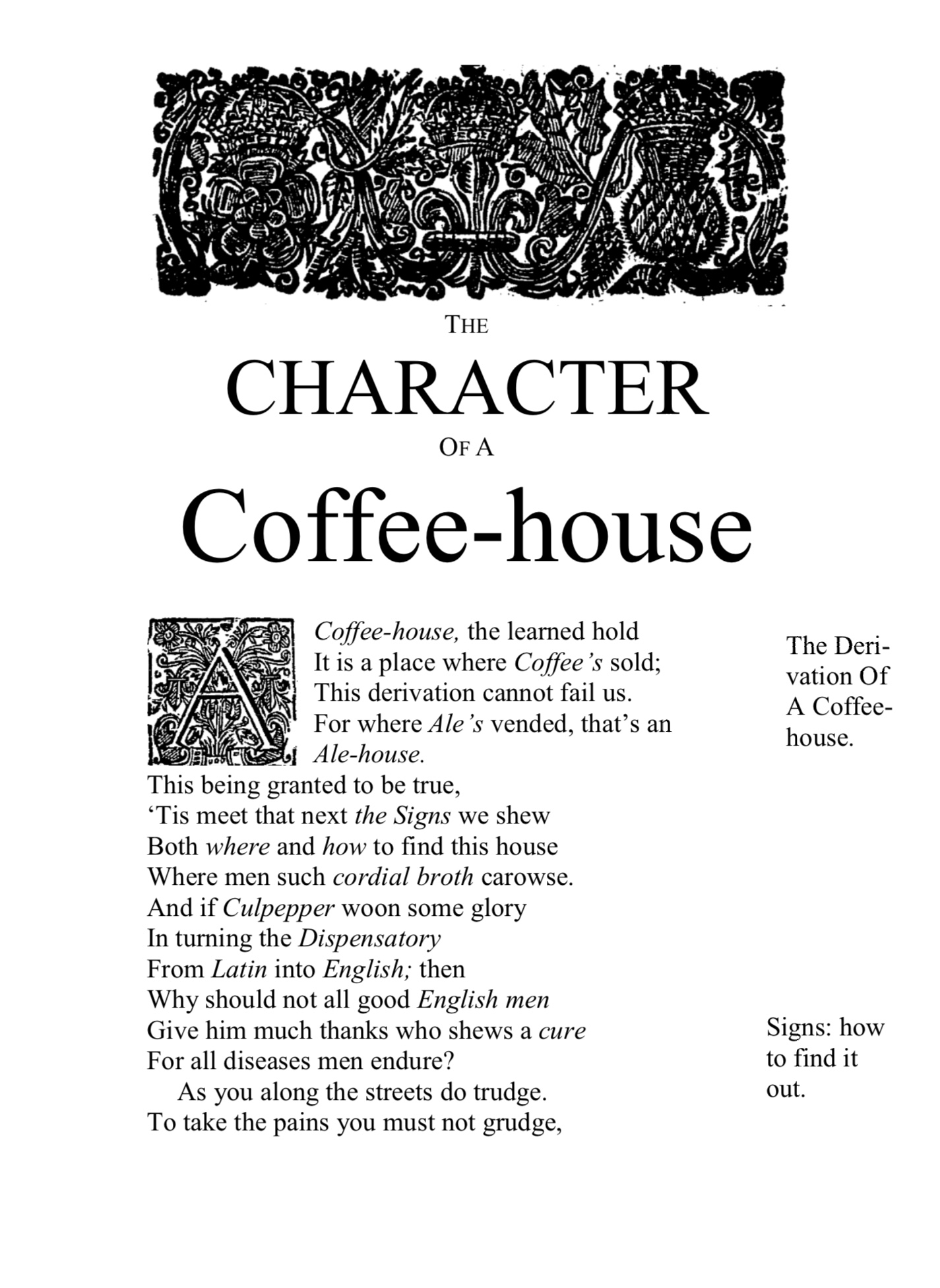
Opening page of the 1673 satirical tract celebrating coffeehouses as places where 'men such cordial broth carowse' and debate foreign wars for the price of a penny.
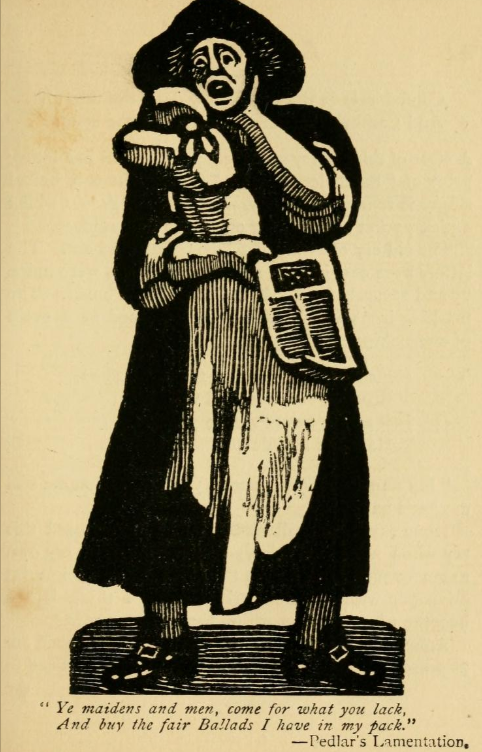
Engraving illustrating the brave itinerant women known as 'Mercury Women' who hawked parliamentary tracts and unlicensed broadsheets through Cheapside.
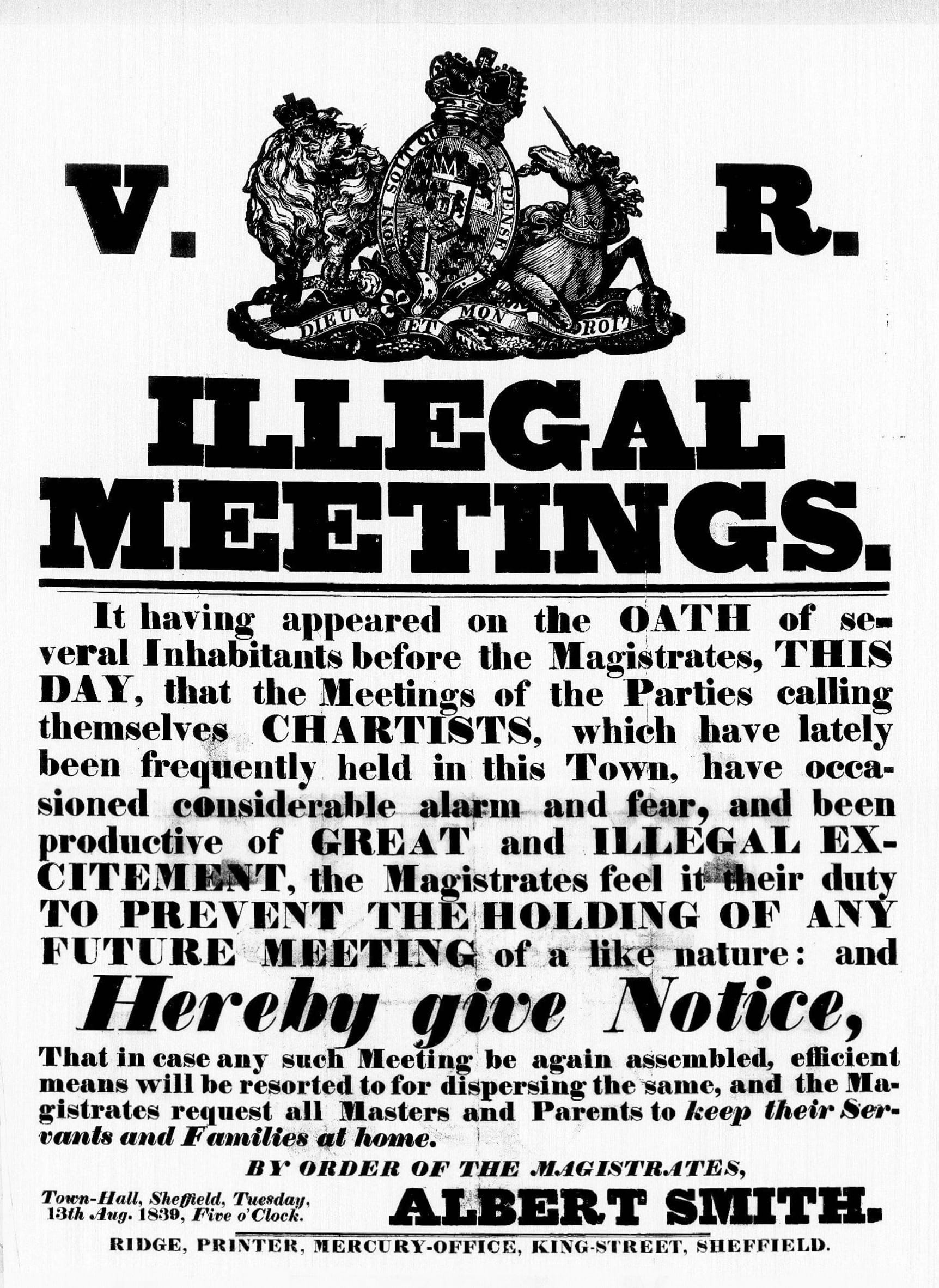
Whitehall proclamation warning subjects that night-time gatherings in defense of the People's Charter are seditious assemblies punishable by imprisonment.
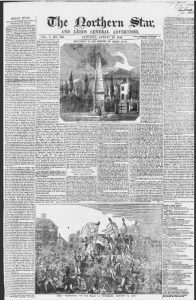
Front-page issue of the leading Chartist newspaper with woodcut engraving commemorating the victims of the 1819 Peterloo Massacre.
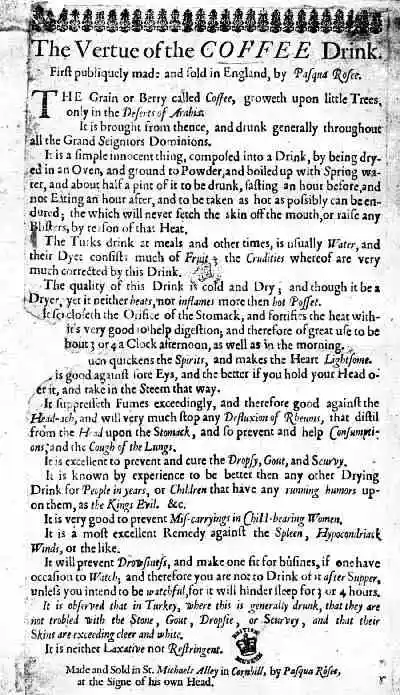
Original 1652 handbill preserved in the British Museum advertising Pasqua Rosée's coffee stall at St Michael's Alley, Cornhill.
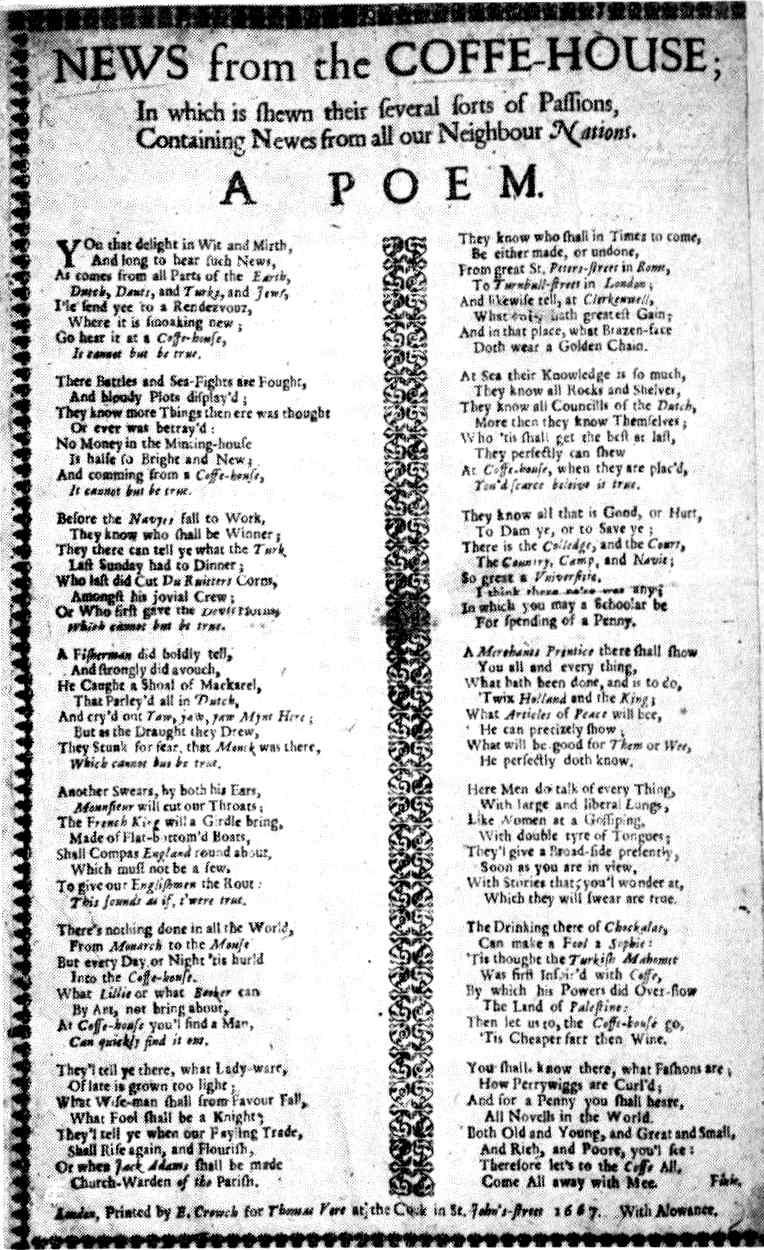
Satirical broadside verse published during the Second Anglo-Dutch War mocking coffeehouse patrons who claim to know state secrets better than the Privy Council.
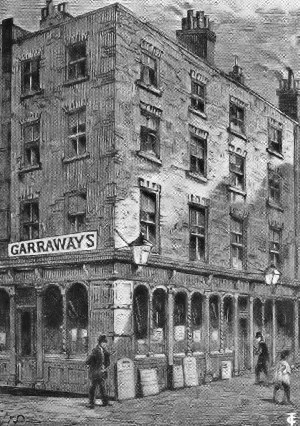
Architectural view of Garraway's Coffee House in Exchange Alley, famed for over two centuries as the center of maritime trade auctions.
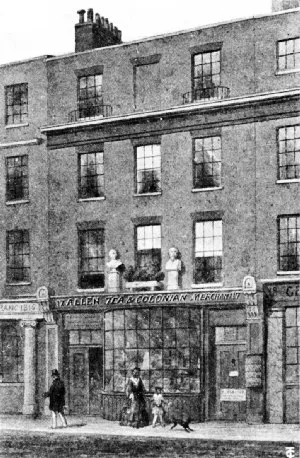
Historic engraving of Devereux Court off the Strand, former site of the celebrated Grecian Coffee House patronized by Sir Isaac Newton and Sir Richard Steele.
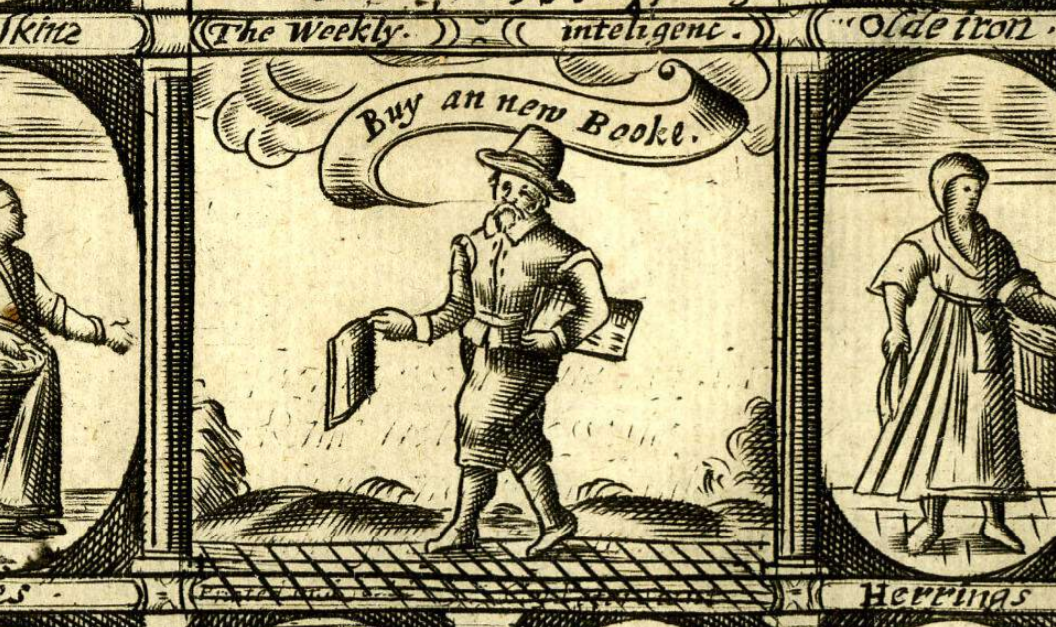
Detail from a 17th-century London street cries engraving depicting an itinerant news hawker carrying parliamentary corantos and shouting 'Buy an new Booke'.
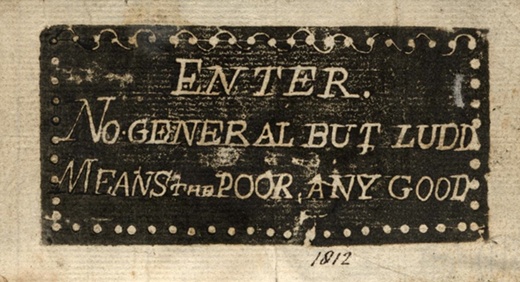
Hand-colored engraving depicting the mythical leader of the Nottinghamshire and Yorkshire textile rebellion dressed in ceremonial attire.
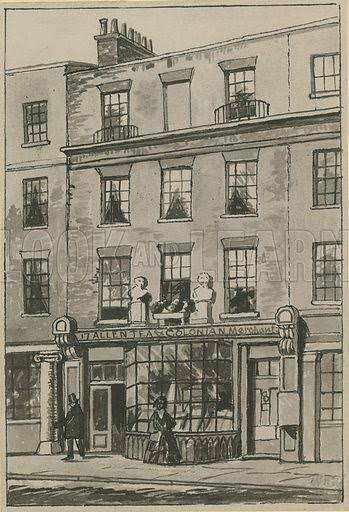
Look and Learn illustration of the Georgian building in Devereux Court that housed the historic Grecian Coffee House.
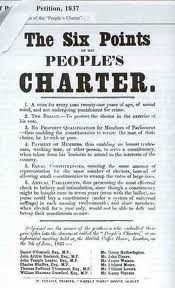
Landmark placard listing the Six Points along with the signatories from the historic meeting at the British Coffee House in Cockspur Street, London.
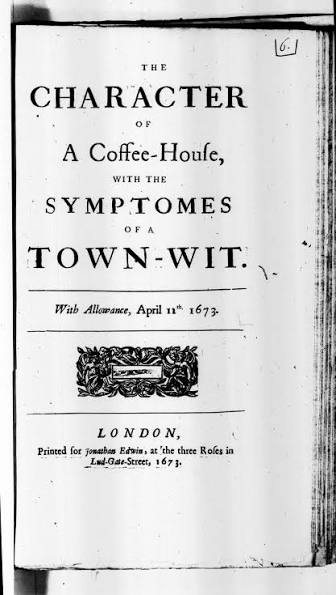
Title page of Jonathan Edwin's 1673 satirical London pamphlet skewering the posturing and gossip of self-styled coffeehouse wits.
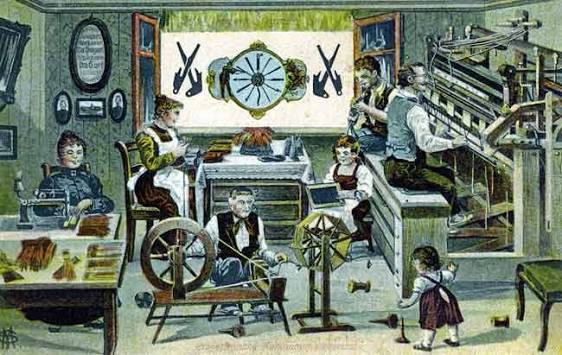
Hand-colored engraving depicting a multi-generational artisan family carding, spinning, and operating a wooden domestic handloom before factory mechanization.
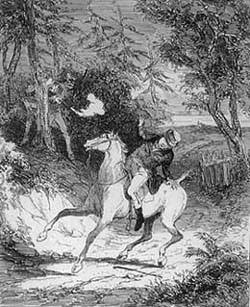
Dramatic illustration of mill owner William Horsfall being shot from plantation woods while riding his horse on Crosland Moor on April 28, 1812.
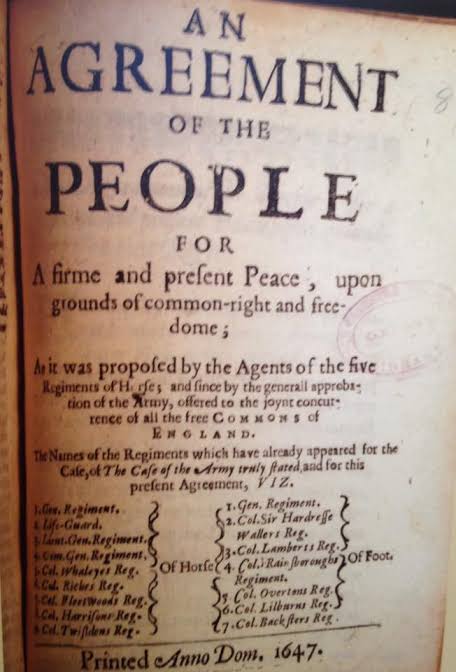
The historic first edition title page of the Leveller Agreement of the People presented by the New Model Army agitators during the Putney Debates.
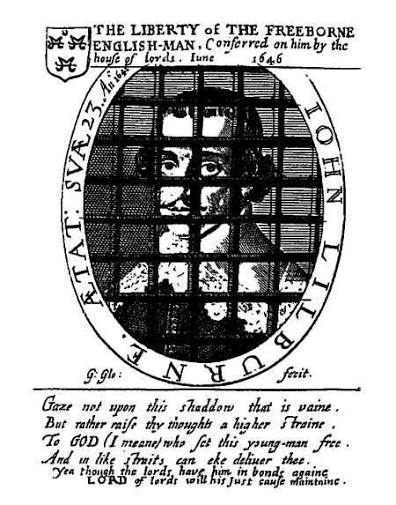
Celebrated 1646 engraving by George Glover showing Leveller leader John Lilburne behind the prison bars of the Tower of London.
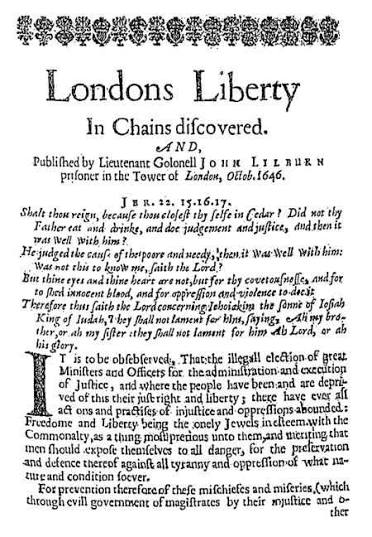
First page of John Lilburne's October 1646 constitutional pamphlet attacking the corporate monopoly and oligarchy of the City of London.
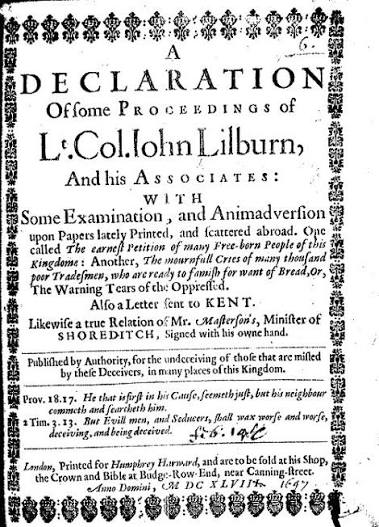
Parliamentary report examining Leveller petitions distributed across London and Kent, with testimony from minister Masterson of Shoreditch.
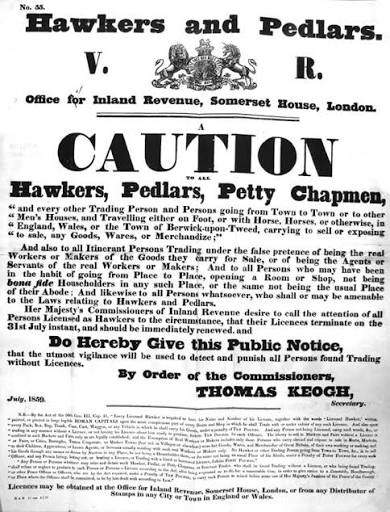
Victorian government broadside issued from Somerset House warning street hawkers and chapmen that licenses must be renewed under pain of prosecution.
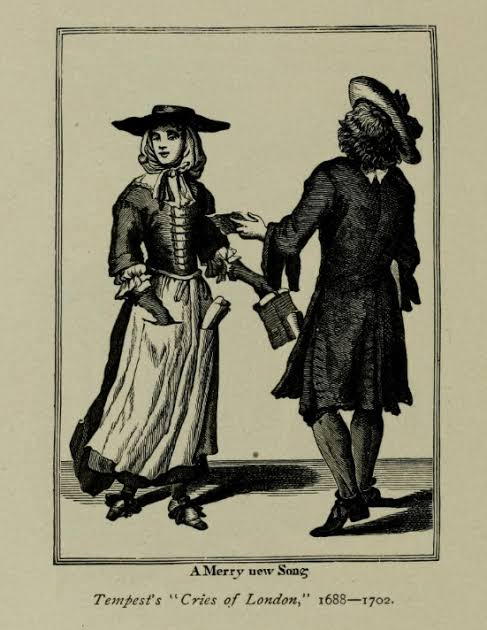
Late 17th-century engraving by Marcellus Laroon portraying a female itinerant street singer selling broadside ballads to a passing London gentleman.
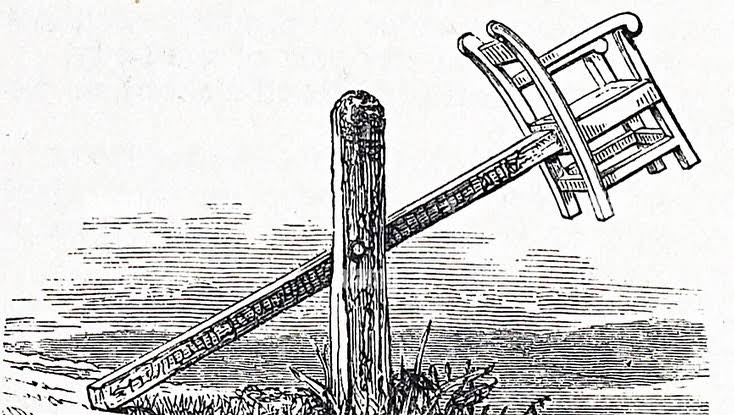
Historical wood engraving illustrating the pivoted wooden beam and armchair mechanism used in early modern England to punish scolds and brawlers.
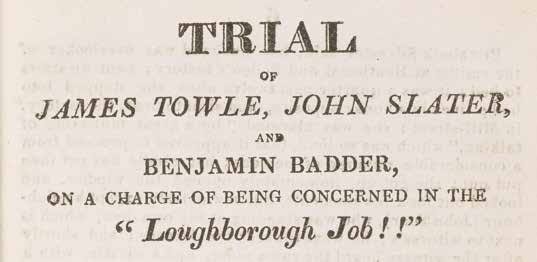
Title heading of the 1816 trial proceedings against James Towle, John Slater, and Benjamin Badder for the famous raid on Heathcoat and Boden's lace factory.
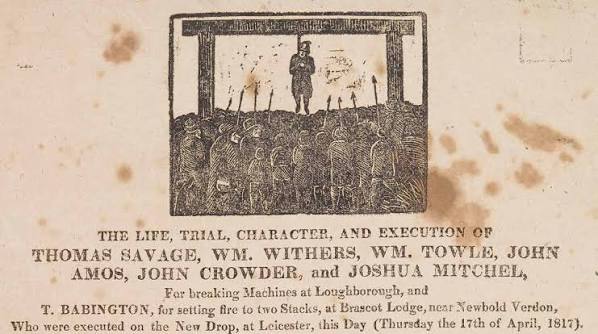
Execution broadside with gallows woodcut recording the hanging of six Loughborough Luddites on the New Drop at Leicester Prison for breaking lace machinery.
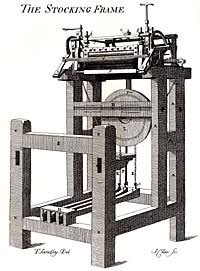
Detailed mechanical plate of the William Lee stocking frame knitting machine that was methodically targeted and dismantled by Nottinghamshire Luddites.
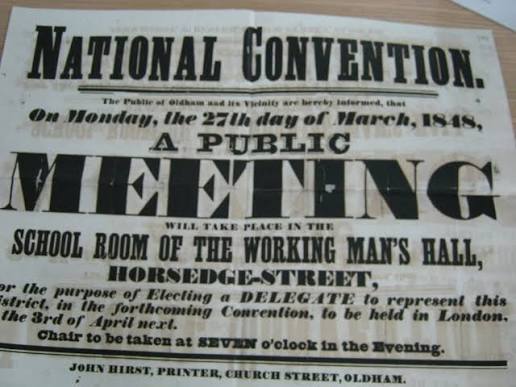
1848 Chartist placard calling an assembly at the Working Man's Hall in Oldham to elect a delegate for the historic National Convention in London.
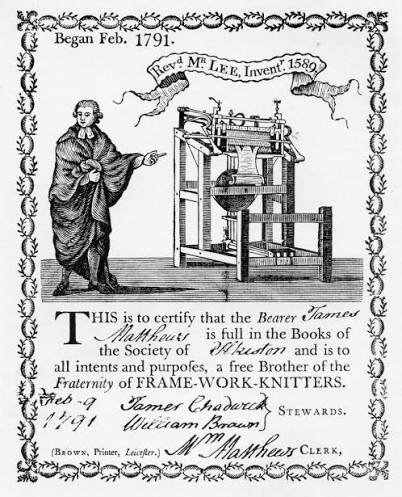
Engraved 1791 trade union certificate of the Ilkeston Society of Framework-Knitters featuring Rev. William Lee demonstrating his 1589 stocking knitting machine.
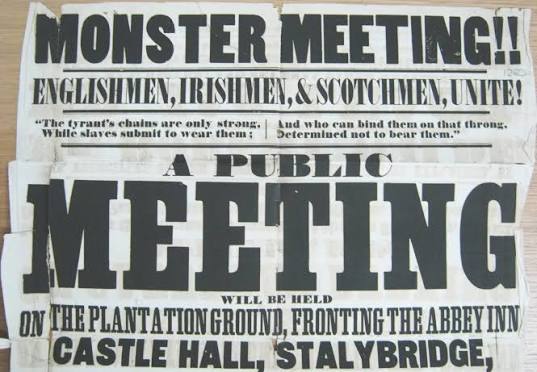
Chartist broadside calling for solidarity across English, Irish, and Scottish workers at the Abbey Inn in Stalybridge during the spring of 1848.
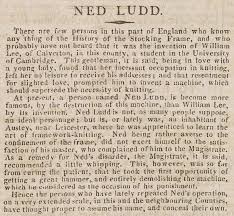
Contemporary 1812 newspaper article recounting the Leicestershire origin story of apprentice Ned Ludd smashing his master's knitting frame with a hammer.
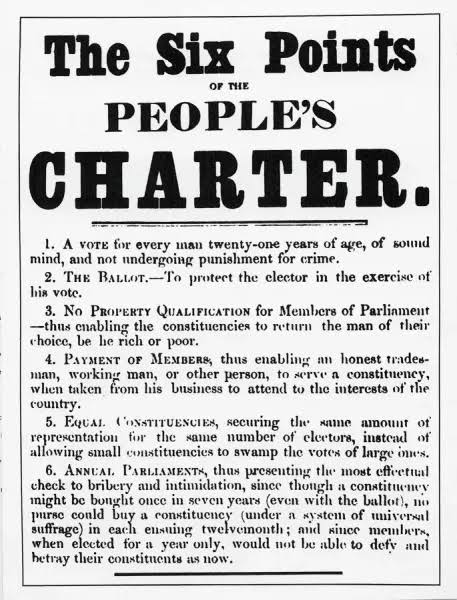
Complete, uncropped 1838 Chartist broadside clearly displaying the top banner title 'The Six Points of the People's Charter' and all six democratic demands.
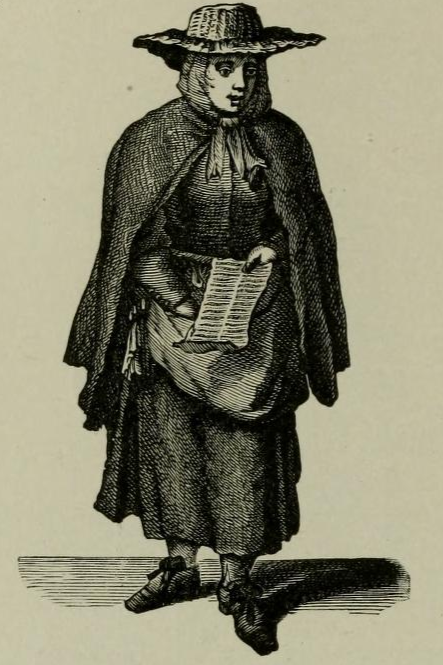
Marcellus Laroon engraving showing a Mercury Woman carrying printed news gazettes through the streets of London during the early news wars.
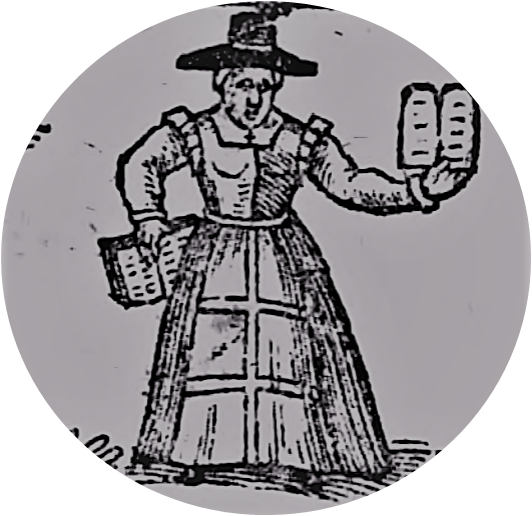
Curatorial presentation highlighting the dangerous underground network of couriers who smuggled Leveller pamphlets into parliamentary garrisons.
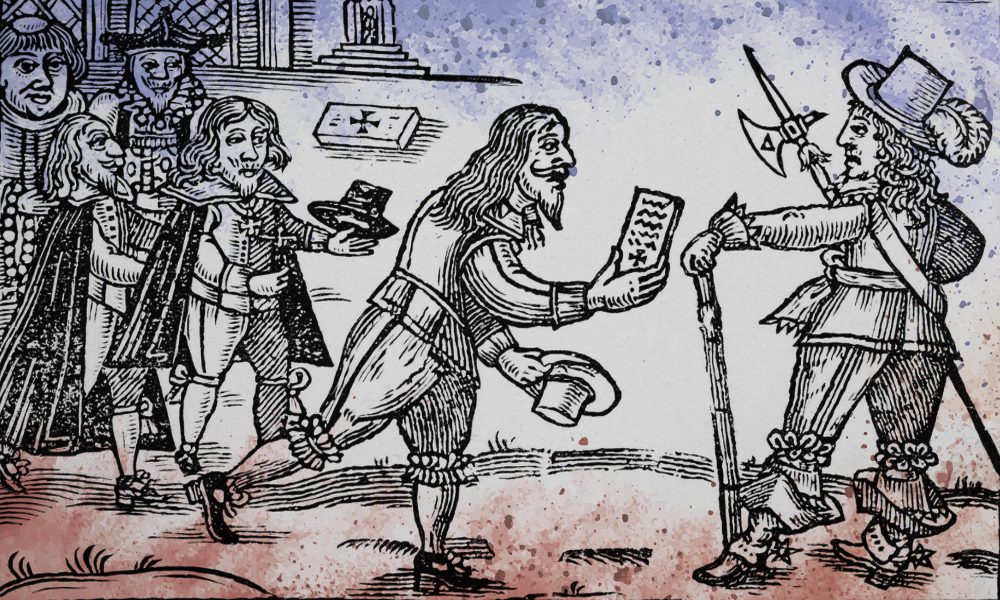
English Civil War political woodcut portraying the populist crowd as a mythical multi-headed beast confronting magistrates and bishops.
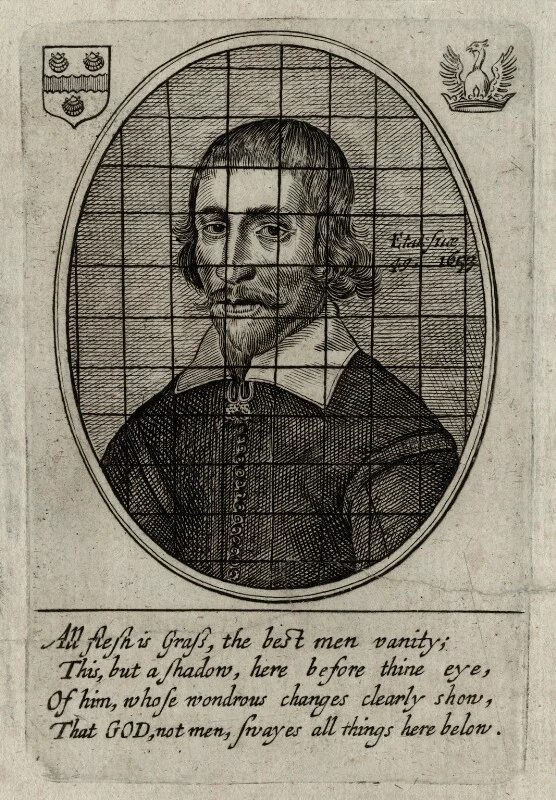
Wellcome Collection copperplate portrait of John Lilburne behind an iron grille during his 1653 trial at the Old Bailey, inscribed 'All flesh is Grass'.
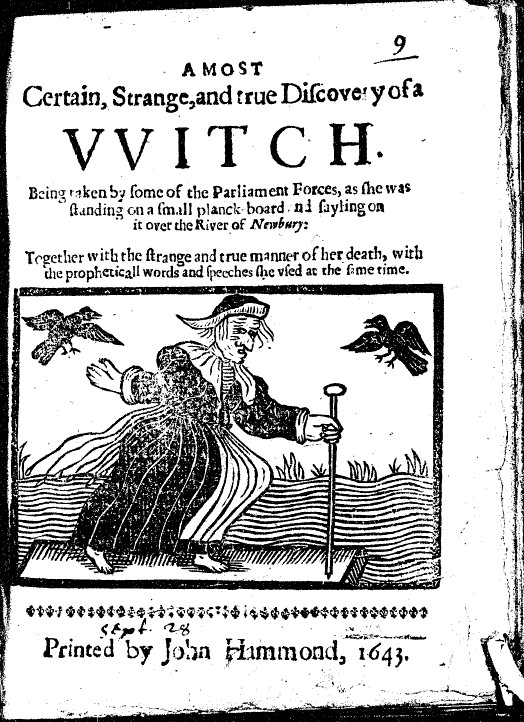
Sensational 1643 Civil War broadside depicting a royalist woman alleged to surf upon a wooden plank across the river Thames at Newbury.
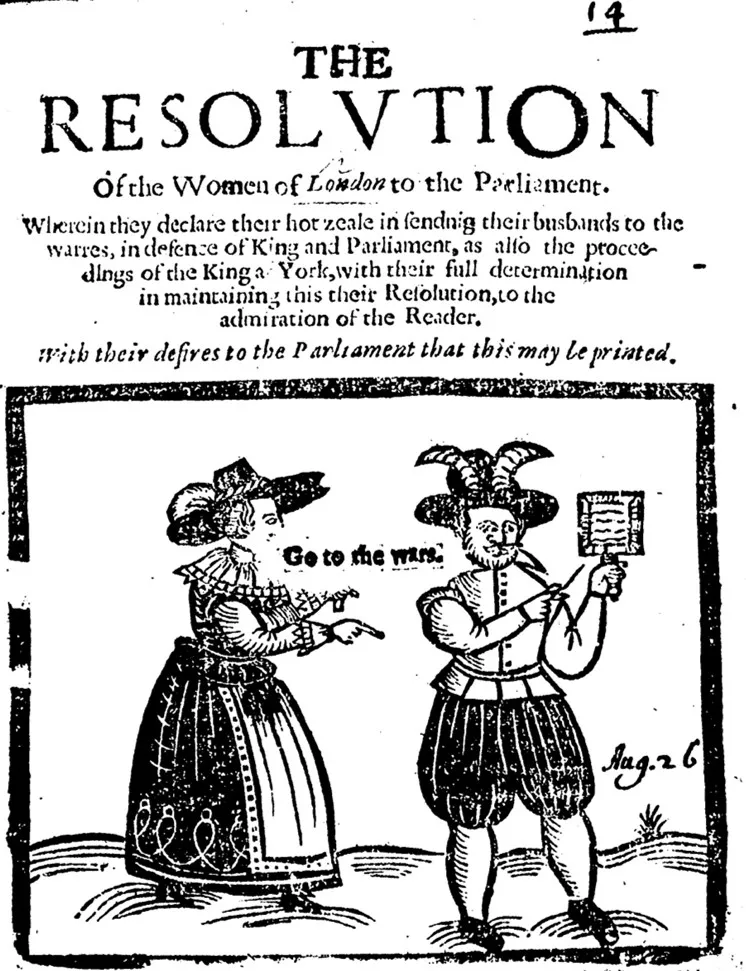
Civil War broadside with woodcut showing a London woman urging her husband with pike and knapsack to march to the wars for King and Parliament.
Satirical woodcut illustrating monopolies over wine, soap, and playing cards, with monopolists fleeing parliamentary investigation.
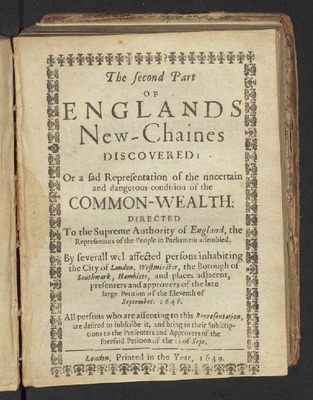
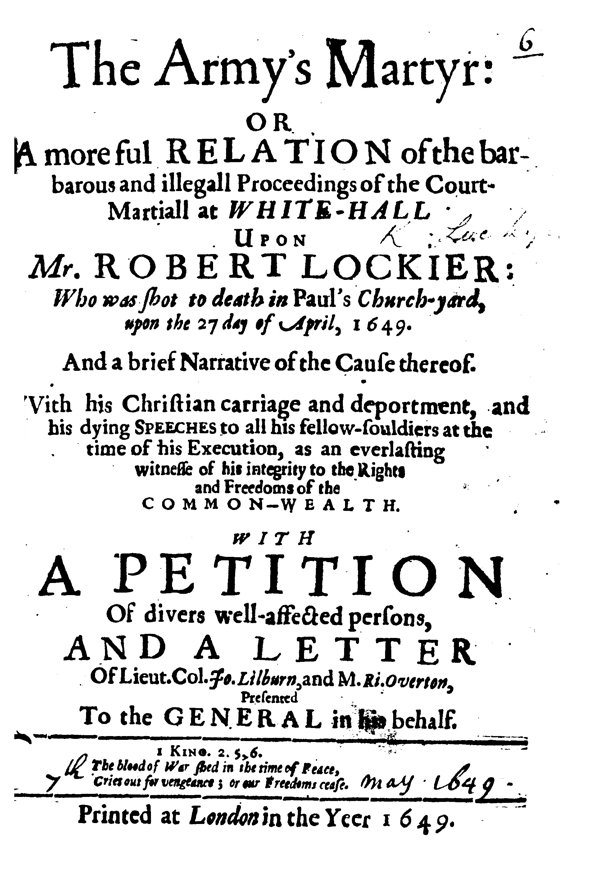
Full title page of Lilburne's 1649 petition directed to the Supreme Authority of England representing the dangerous condition of the Commonwealth.
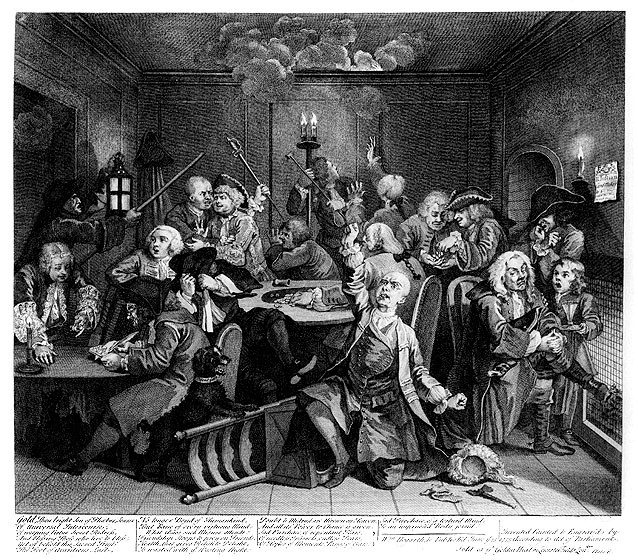
Plate VI of Hogarth's moral series: Tom Rakewell desperately curses his losses at White's gaming club as highwaymen count gold and fire breaks out.
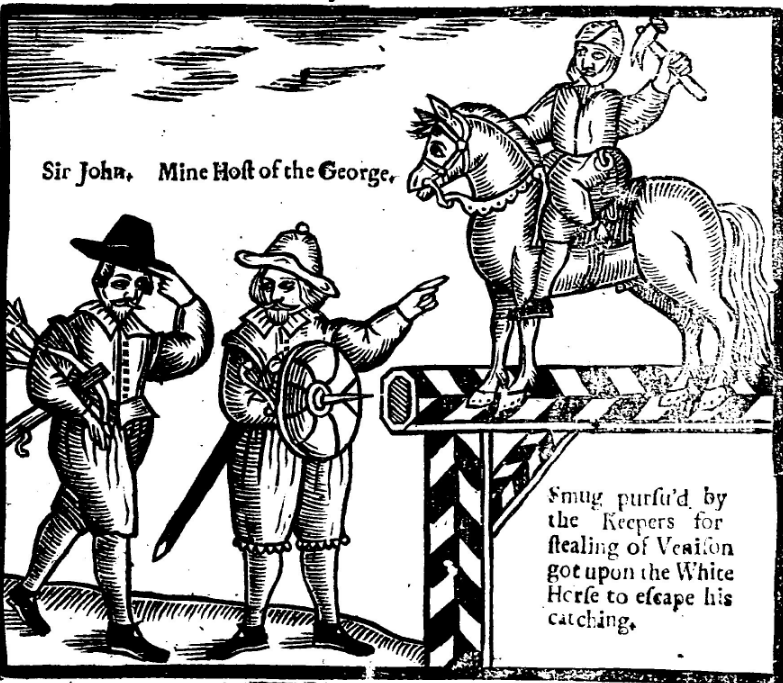
Early Stuart comic woodcut depicting Smug the smith escaping the deer-keepers by climbing upon the sign of the White Horse Inn.
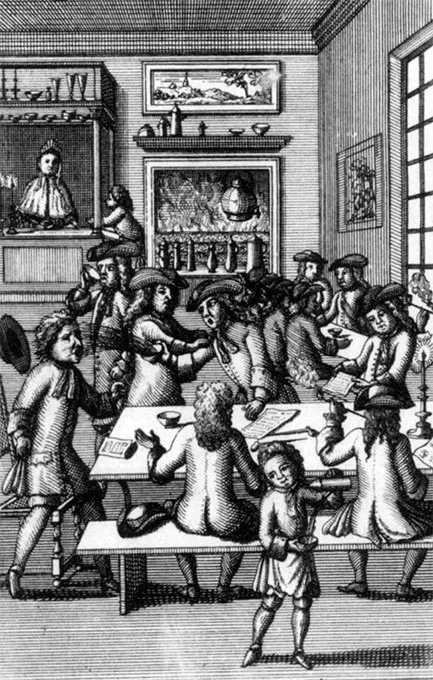
Famous 17th-century engraving of a bustling London coffeehouse with gentlemen in periwigs smoking clay pipes and reading news gazettes.
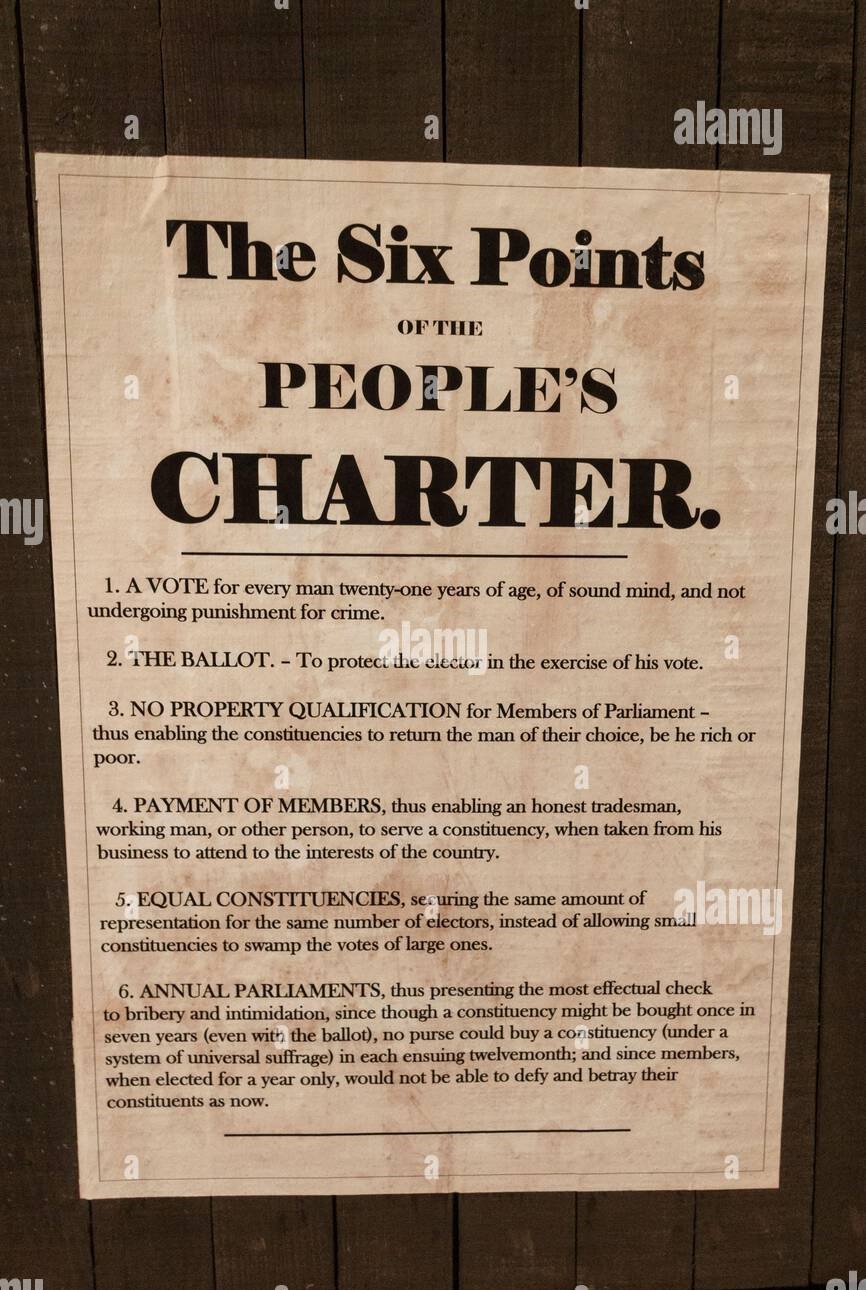
Display placard of the landmark petition calling for universal male suffrage, equal constituencies, vote by secret ballot, and payment of MPs.
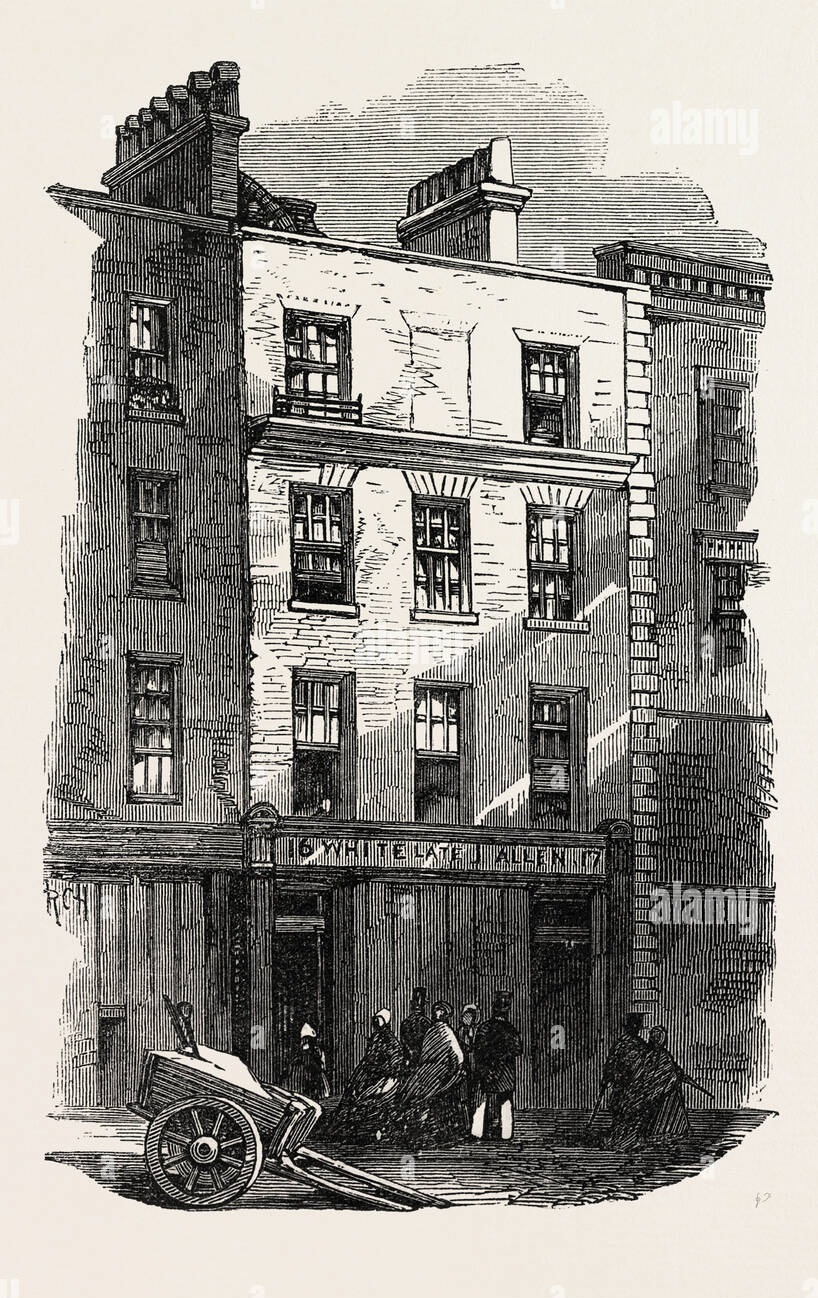
1865 architectural lithograph of Tom's Coffee House in Covent Garden, established in 1700 and frequented by Dr. Johnson, Garrick, and Reynolds.
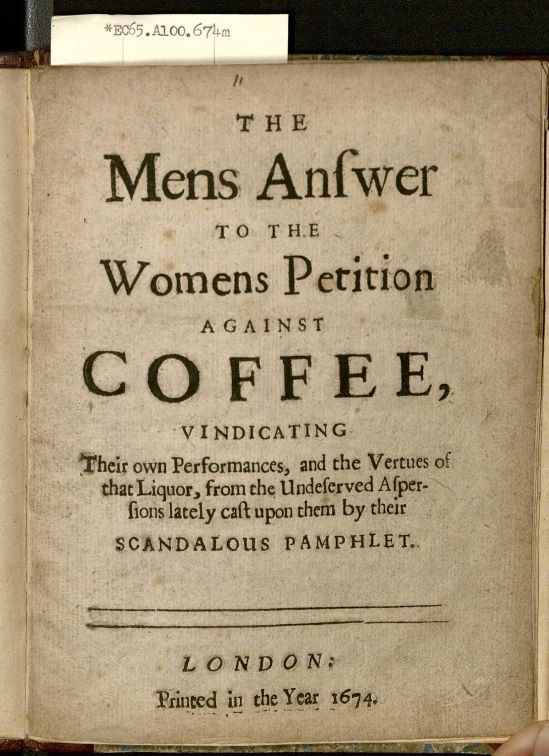
Title page of the 1674 London pamphlet rebutting the Women's Petition, defending the virility of London men and praising coffee as sober and wholesome.
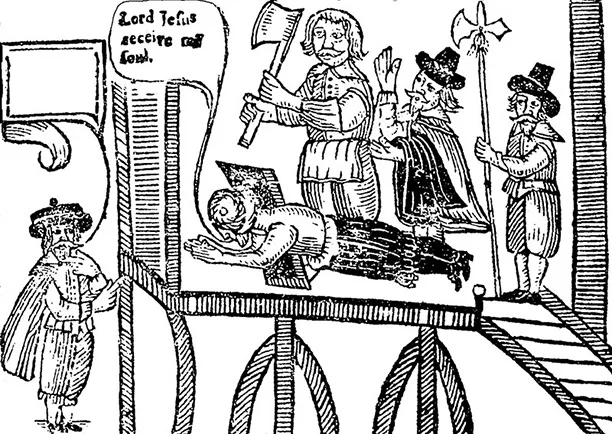
Allegorical woodcut satire mocking opportunistic politicians and clergymen who rapidly flipped allegiances between King, Parliament, and Protectorate.
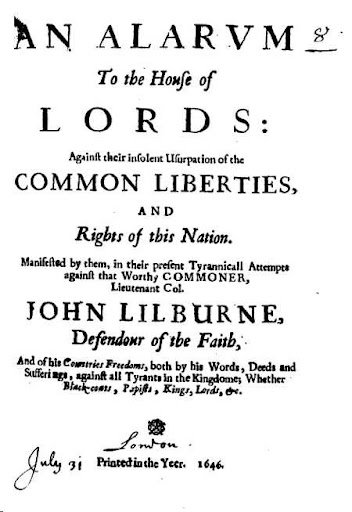
Title page of Richard Overton's fiery July 1646 Leveller tract defending 'that Worthy COMMONER, Lieutenant Col. JOHN LILBURNE' against the peers.
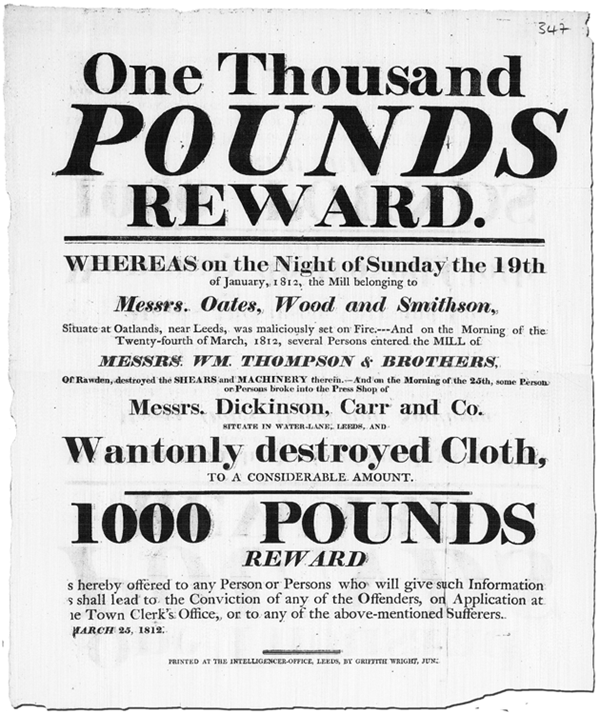
Archival document explaining the socio-economic context of northern cloth workers resisting mechanical wide-frame wage cuts.
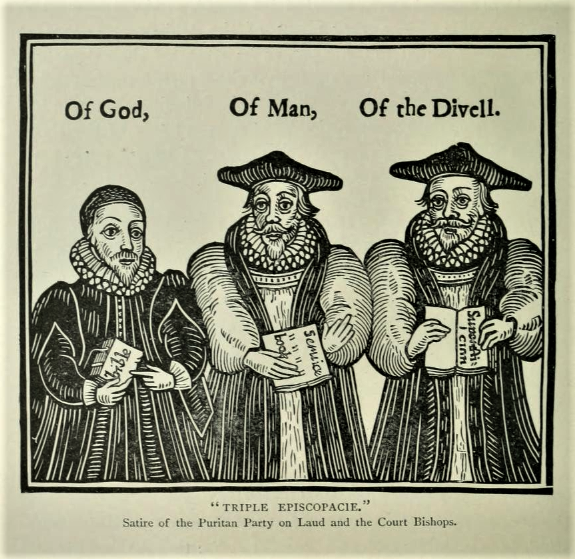
Anti-episcopal broadside satirizing the downfall and imprisonment of Archbishop Laud in the Tower of London.
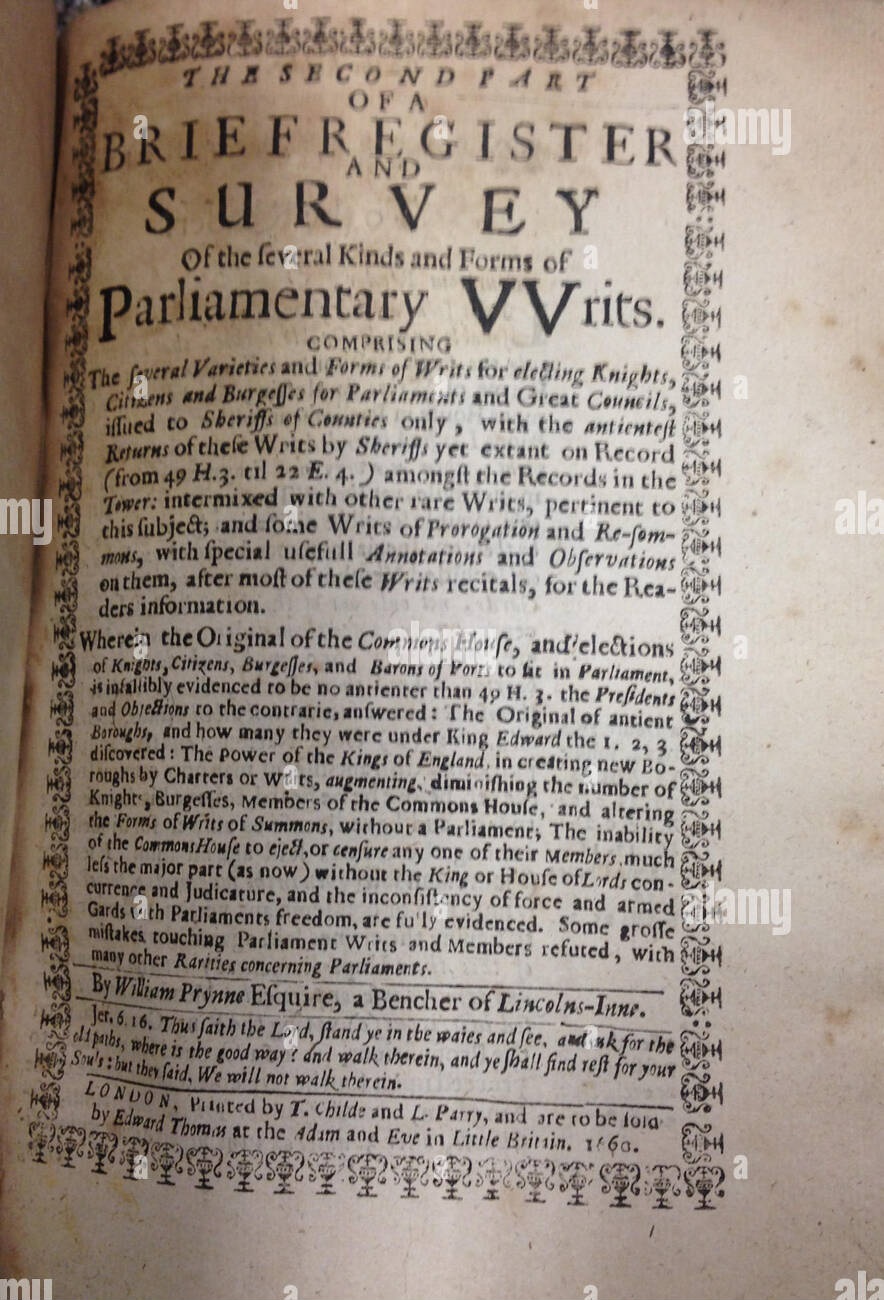
Title page of Prynne's monumental 1660 survey of parliamentary records, ancient statutes, and constitutional liberties.
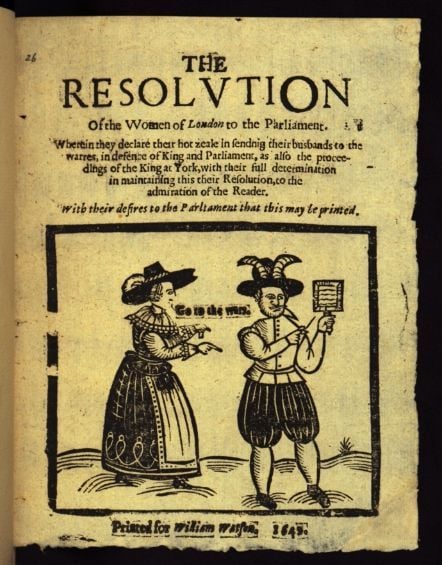
Title page and woodcut of Wing R1156: The Resolution of the Women of London to Parliament printed for William Watson in 1642.
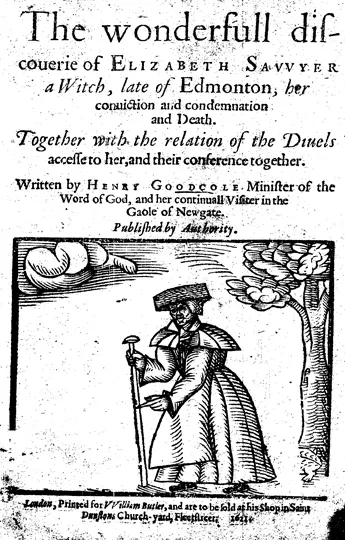
Early modern woodcut illustrating folk demonology, familiars, and nocturnal gatherings from a contemporary witchcraft pamphlet.
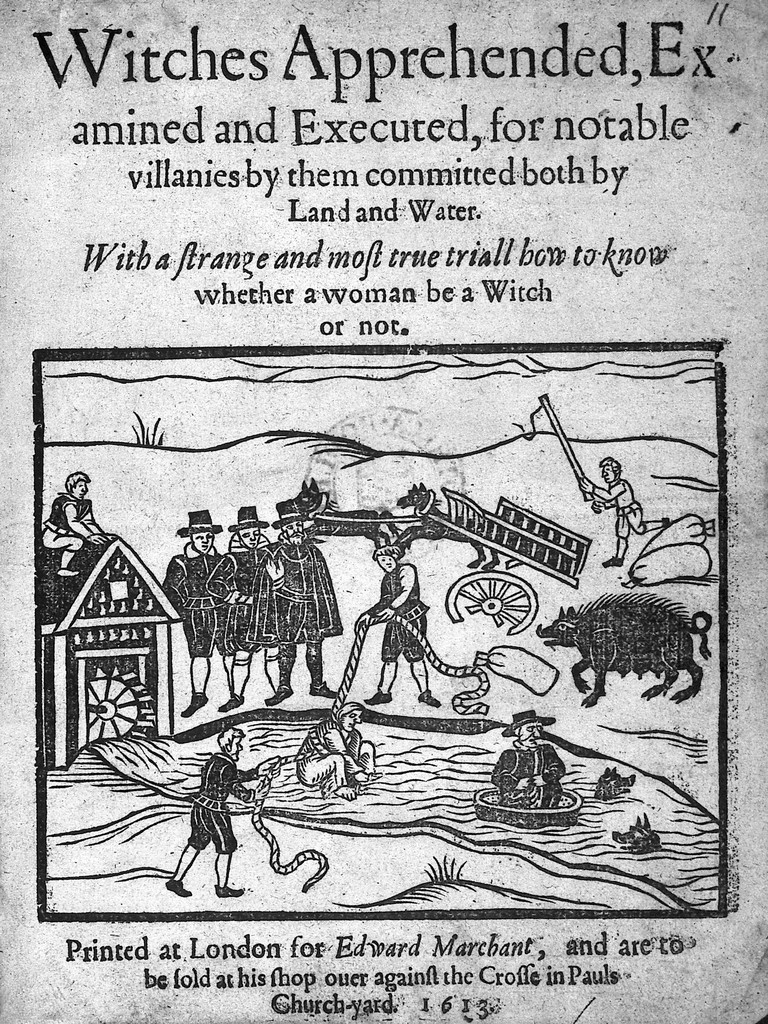
Rare 1613 pamphlet woodcut depicting Mother Sutton and Mary Sutton of Milton Miles, tried and executed for witchcraft in Northamptonshire.