⛪ The Seven Bishops' Case, 1688

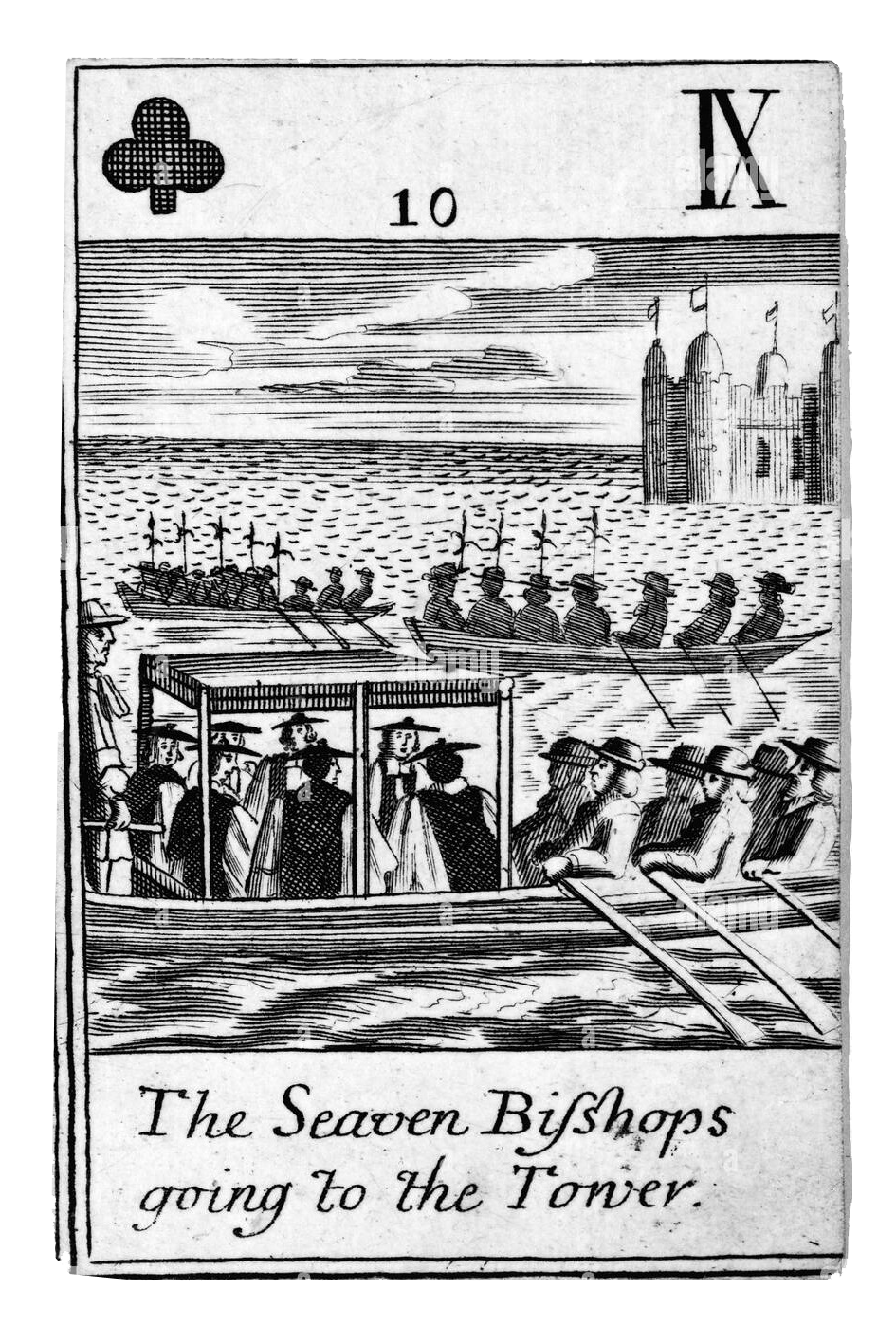
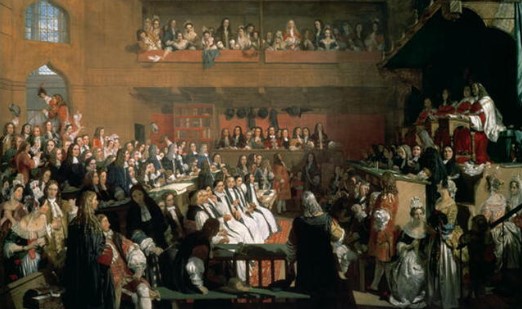
In June 1688, Archbishop of Canterbury William Sancroft and six of his fellow bishops were tried before the Court of King's Bench, accused of publishing a seditious libel. Their crime: petitioning King James II, humbly asking to be excused from reading his Declaration of Indulgence in their churches, on the grounds that it rested on a royal "dispensing power" the bishops believed had no basis in law. What follows is the record of that trial — the arguments of counsel, the opinions of the four judges, and the jury's verdict.
Serj. Levinz (for the defence). Now, my lord, if your lordship pleases, the charge is a charge for a libel, and there are two things to be considered.
First, Whether the bishops did deliver this paper to the king? But that we leave upon the evidence that has been given; only we say, there has been no direct proof of that.
In the next place, supposing they did deliver this petition to the king, Whether this be a libel upon the matter of it, the manner of delivering it, or the persons that did it?
And with submission, my lord, this cannot be a libel, although it be true that they did so deliver it.
First, my lord, there is little disingenuity offered to my lords the bishops, in only setting forth part, and not the whole; in only reciting the body, and not the prayer.
But, my lord, with your lordship's favour, taking the petitionary part, and adding it to the other, it quite alters the nature of the thing; for it may be, a complaint without seeking redress might be an ill matter; but here taking the whole together, it appears to be a complaint of a grievance, and a desire to be eased of it.
With your lordship's favour, the subjects have a right to petition the king in all their grievances, so say all our books of law, and so says the statute of the thirteenth of the late king; they may petition, and come and deliver their petition under the number of ten, as heretofore they might have done, says the statute; so that they all times have had a right so to do, and indeed if they had not, it were the most lamentable thing in the world, that men must have grievances upon them, and yet they not to be admitted to seek relief in an humble way.
Now, my lord, this is a petition setting forth a grievance, and praying his majesty to give relief. And what is this grievance? It is that command of his, by that order made upon my lords the bishops, to distribute the declaration, and cause it to be read in the churches: and pray, my lord, let us consider what the effects and consequences of that distribution and reading is: it is to tell the people, that they need not submit to the Act of Uniformity, nor to any act of parliament made about ecclesiastical matters, for they are suspended and dispensed with. This my lords the bishops must do, if they obey this order; but your lordship sees, if they do it, they lie under an Anathema by the statute of 1 Eliz., for there they are under a curse if they do not look to the preservation and observation of that act: but this command to distribute and read the declaration, whereby all these laws are dispensed with, is to let the people know, they will not do what the act requires of them.
Now, with your lordship's favour, my lords the bishops lying under this pressure, the weight of which was very grievous upon them, they by petition apply to the king to be eased of it, which they might do as subjects: besides, my lord, they are peers of the realm, and were most of them sitting as such in the last parliament, where, as you have heard, it was declared, such a dispensation could not be; and then in what a case should they have been, if they should have distributed this declaration, which was so contrary to their actings in parliament? What could they have answered for themselves, had they thus contributed to this declaration, when they had themselves before declared, that the king could not dispense?
And that this was no new thing, for it had been so declared in a parliament before, in two sessions of it, in the late king's reign within a very little time one of another; and such a parliament that were so liberal in their aids to the crown, that a man would not think they had had such a power, they would have appeared so earnest against it.
But, my lord, if your lordship pleases, these are not the beginnings of this matter; for we have shewed you from the fifteenth of Richard the second, that there was a power granted by the parliament to the king to dispense with a particular act of parliament, which argues, that it could not be without an act of parliament: and in 1662, it is said expressly, that they could not be dispensed with but by an act of parliament. It is said so again in 1672. The king was then pleased to assume to himself such a power as is pretended to in this declaration; yet upon information from his houses of parliament, the king declared himself satisfied that he had no such power, cancelled his declaration, and promised that it should not be drawn into consequence or example. And so the Commons, by their protestation, said in Richard the second's time, that it was a novelty, and should not be drawn into consequence or example.
Now, my lord, if your lordship pleases, if this matter that was commanded the bishops to do, were something which the law did not allow of, surely then my lords the bishops had all the reason in the world to apply themselves to the king, in an humble manner to acquaint him why they could not obey his commands: and to seek relief against that which lay so heavy upon them.
Truly, my lord, Mr. Attorney was very right in the opening of the cause at first, that is, That the government ought not to receive affronts, no, nor the inferior officers are not to be affronted; a justice of the peace, so low a man in office, is not. For a man to say to a justice of the peace, when he is executing his office, that he does not right in it, is a great crime, and Mr. Attorney said right in it: but suppose a justice of the peace were making of a warrant to a constable, to do something that was not legal for him to do, if the constable should petition this justice of the peace, and therein set forth, Sir, you are about to command me to do a thing which, I conceive, is not legal; surely that would not be a crime that he was to be punished for: for he does but seek relief, and shew his grievance in a proper way, and the distress he is under.
My lord, this is the bishops' case with submission; they are under a distress being commanded to do a thing which they take not to be legal, and they with all humility, by way of petition acquaint the king with this distress of theirs, and pray him, that he will please to give relief.
My lord, there is no law but is either an act of parliament, or the common law; for an act of parliament there is none for such a power; all that we have of it in parliamentary proceedings is against it; and for the common law, so far as I have read it, I never did meet with anything of such a nature, as a grant or dispensation that pretended to dispense with any one whole act of parliament; I have not so much as heard of any such thing mentioned by any of the king's counsel; but here, my lord, is a dispensation that dispenses with a great many laws at once, truly I cannot take upon me to tell how many, there may be forty or above, for aught I know.
Therefore, my lord, the bishops lying under such a grievance as this, and under such a pressure, being ordered to distribute this declaration in all their churches, which was to tell the people they ought to be under no law in this case, which surely was a very great pressure, both in point of law and conscience too, they lying under such obligations to the contrary as they did; with submission to your lordship, and you gentlemen of the jury, if they did deliver this petition (publishing of it I will not talk of, for there has been no proof of a publication, but a delivering of a petition to his majesty in the most secret and decent manner that could be imagined), my lords the bishops are not guilty of the matter charged upon them in this information.
Mr. Somers. My lord, I would only mention the great case of Thomas and Sorrel in the Exchequer-chamber, upon the validity of a dispensation of the statute of Edward the 6th, touching selling of wine. There it was the opinion of every one of the judges, and they did lay it down as a settled position, that there never could be an abrogation, or a suspension (which is a temporary abrogation) of an act of parliament, but by the legislative power. That was a foundation laid down quite through the debate of that case. Indeed it was disputed how far the king might dispense with the penalties in such a particular law, as to particular persons; but it was agreed by all, that the king had no power to suspend any law: and, my lord, I dare appeal to Mr. Attorney General himself, whether, in the case of Godden and Hales, which was lately in this court, to make good that dispensation, he did not use it as an argument then, that it could not be expounded into a suspension: he admitted it not to be in the king's power to suspend a law, but that he might give a dispensation to a particular person, was all that he took upon to justify him at that time.
My lord, by the law of all civilised nations, if the prince does require something to be done, which the person who is to do it takes it to be unlawful, it is not only lawful, but his duty, rescribere principi. This is all that is done here, and that in the most humble manner that could be thought of. Your lordship will please to observe how far it went, how careful they were that they might not any way justly offend the king; they did not interpose by giving advice, as peers; they never stirred till it was brought home to themselves. When they made their petition, all they beg is, that it may not so far be insisted upon by his majesty, as to oblige them to read it. Whatever they thought of it, they do not take upon them to desire the declaration to be revoked.
My lord, as to matters of fact alleged in the said petition, that they are perfectly true, we have shewn by the journals of both houses. In every one of those years which are mentioned in the petition, this power of dispensation was considered in parliament, and, upon debate, declared to be contrary to law: there could be no design to diminish the prerogative, because the king hath no such prerogative. Seditious, my lord it could not be, nor could possibly stir up sedition in the minds of the people, because it was presented to the king in private and alone: false it could not be, because the matter of it is true: there could be nothing of malice, for the occasion was not sought: the thing was pressed upon them; and a libel it could not be, because the intent was innocent, and they kept within the bounds set by the act of parliament, that gives the subject leave to apply to his prince by petition, when he is aggrieved.
The Solicitor-General, for the Crown. Then, my lord, let us take this case as it is, upon the nature of the petition, and the evidence that they have given, and then consider whether it will justify all that is done: for the business of petitioning, I would distinguish and inquire, whether my lords the bishops out of parliament can present any petition to the king? I do agree, that in parliament the lords and commons may make addresses to the king, and signify their desires, and make known their grievances there; and there is no doubt but that is a natural and proper way of application: for in the beginning of the parliament, there are receivers of petitions appointed, and upon debates, there are committees appointed to draw up petitions and addresses; but to come and deduce an argument, that because the lords in parliament have done thus (there being such methods of proceedings usual in parliament) therefore my lords the bishops may do it out of parliament, that is certainly a non sequitur, no such conclusion can be drawn, from those premises.
My lord, I shall endeavour to lay the fact before you as it really is, and then consider what is proper for the court to take notice of as legal proof or evidence: and I take it, all those precedents that they have produced of what the lords did, and what the commons did in parliament, is no warrant for them to shelter themselves under, against the information here in question.
[Here Mr. Justice Powell spake aside to the Lord Chief Justice thus.]
Mr. Just. Powell. My Lord, this is strange doctrine! Shall not the subject have liberty to petition the king but in parliament? If that be law, the subject is in a miserable case.
L.C.J. Brother, let him go on, we will hear him out, though I approve not of his position.
Sol. Gen. The Lords may address to the king in parliament, and the commons may do it, but therefore that the bishops may do it out of parliament, does not follow.
I dare say it will not be denied me, that the king may, by his prerogative royal, issue forth his proclamation; it is as essential a prerogative as it is to give his assent to an act of parliament to make it a law. And it is another principle, which I think cannot be denied, that the king may make constitutions and orders in matters ecclesiastical; and that these he may make out of parliament, and without the parliament. If the king may do so, and these are his prerogatives, then suppose the king do issue forth his royal proclamation (and such in effect is this declaration under the great seal) in a matter ecclesiastical, by virtue of his prerogative royal; and this declaration is read in the council, and published to the world, and then the bishops come and tell the king, Sir, you have issued out an illegal proclamation or declaration, being contrary to what has been declared in parliament, when there is no declaration in parliament; is not this a diminishing the king's power and prerogative in issuing forth his proclamation or declaration, and making constitutions in matters ecclesiastical? Is not this a questioning his prerogative? Do not my lords the bishops in this case raise a question between the king and the people? Do not they, as much as in them lies, stir up the people to sedition? For who shall be judge between the king and the bishops? Says the king, I have such a power and prerogative to issue forth my royal proclamation, and to make orders and constitutions in matters ecclesiastical, and that without the parliament, and out of parliament. Say my lords the bishops, you have done so, but you have no warrant for it. Says the king, every prince has done it, and I have done no more than what is my prerogative to do. But this, say the bishops, is against law. How shall this be tried? Should not the bishops have had the patience to have waited until a parliament came and complained there, and sought redress. The question in this case is not whether the king may dispense with the law, but whether he may issue out his proclamation in matters ecclesiastical.
Now my lord, I come to that which is very plain from the case of De Libellis Famosis, in lord Coke's Reports: if any person have slandered the government in writing, you are not to examine the truth of that fact in such writing, but the slander which it imports to the king or government; and be it never so true, yet if slanderous to the king or the government, it is a libel, and to be punished: in that case, the right or wrong is not to be examined, or if what was done by the government be legal or no; but whether the party have done such an act. If the king have a power (for still I keep to that) to issue forth proclamations to his subjects, and to make orders and constitutions in matters ecclesiastical, if he do issue forth his proclamation, and make an order upon the matters within his power and prerogative; and if any one would come and bring that power in question otherwise than in parliament, that the matter of that proclamation be not legal, I say that is sedition, and you are not to examine the legality or illegality of the order or proclamation, but the slander and reflexion upon the government; for it says, If a person do a thing that is libellous, you shall not examine the fact, but the consequence of it; whether it tended to stir up sedition against the public, or to stir up strife between man and man, in the case of private persons: as if a man should say of a judge, he has taken a bribe, and I will prove it; this is not to be sent in a letter, but they must take a regular way to prosecute it according to law.
If it be so in the case of an inferior magistrate, what must it be in the case of a king? To come to the king's face, and tell him, as they do here, that he has acted illegally, doth certainly sufficiently prove the matter to be libellous. What do they say to the king? They say and admit, that they have an averseness for the declaration, and they tell him from whence that averseness doth proceed: and yet they insinuate that they had an inclination to gratify the king, and embrace the dissenters, that they were averse to them as could be, with due tenderness, when it should be settled by parliament and convocation. Pray what hath their convocation to do in this matter?
L.C.J. Mr. Solicitor General, I will not interrupt you; but pray come to the business before us. Shew us that this is in diminution of the king's prerogative, or that the king ever had such a prerogative.
Sol. Gen. I will, my lord, I am observing what it is they say in this petition—They tell the king it is inconsistent with their honour, prudence and conscience, to do what he would have them to do: And if these things be not reflective upon the king and government, I know not what is. This is not in a way of judicature; possibly it might have been allowed to petition the king to put it into a course of justice, whereby it may be tried; but alas! there is no such thing in this matter.
It is not their desire to put it into any method for trial, and so it comes in the case de Libellis Famosis; for by this way they make themselves judges, which no man by law is permitted to do. My lords the bishops have gone out of the way, and all that they have offered does not come home to justify them; and therefore I take it, under favour, that we have made it a good case for the king: We have proved what they have done, and whether this be warrantable or not, is the question, gentlemen, that you are to try. The whole case appears upon record; the declaration and petition are set forth, and the order of the king and council. When the verdict is brought in, they may move anything what they please in arrest of judgment. They have had a great deal of latitude, and taken a great deal of liberty; but truly, I apprehend, not so very pertinently. But I hope we have made a very good case of it for the king, and that you, gentlemen, will give us a verdict.
Just. Holloway. Mr. Solicitor, there is one thing I would fain be satisfied in: You say the bishops have no power to petition the king.
Sol. Gen. Not out of parliament, Sir.
Just. Holloway. Pray give me leave, Sir: Then the king having made such a declaration of a general toleration and liberty of conscience, and afterwards he comes and requires the bishops to disperse this declaration; this, they say, out of a tenderness of conscience, they cannot do, because they apprehend it is contrary to law, and contrary to their function: What can they do, if they may not petition?
Sol. Gen. I'll tell you what they should have done, Sir. If they were commanded to do anything against their consciences, they should have acquiesced till the meeting of the parliament. [At which some people in the court hissed.]
Wright, L.C.J. Gentlemen, thus stands the case: it is an information against my lords the bishops, his grace my lord of Canterbury, and the other six noble lords; and it is for preferring, composing, making, and publishing, and causing to be published, a seditious libel: the way that the information goes is special, and it sets forth, that the king was graciously pleased, by his royal power and prerogative, to set forth a declaration of indulgence for liberty of conscience, in the third year of his reign; and afterwards upon the 27th of April, in the fourth year he comes and makes another declaration; and afterwards in May, orders in council that this declaration should be published by my lords the bishops in their several dioceses; and after this was done, my lords the bishops present a petition to the king in which were contained the words you have seen.
Now, gentlemen, the proofs that have been upon this, you will see what they are. The two declarations are proved by the clerks of the council, and they are brought here under the great seal. The next question that did arise was about the publishing of it, whether my lords the bishops had published it?
Gentlemen, after this was proved, then the defendants came to their part; and these gentlemen that were of counsel for my lords, let themselves into their defence, by notable learned speeches, telling you that my lords the bishops are guardians to the church, and great peers of the realm, and were bound in conscience to take care of the church. They have read you a clause of a statute made in queen Elizabeth's time, by which they say, my lords the bishops were under a curse, if they did not take care of that law. Then they shew you some journals of parliament; first in the year 1662, where the king had granted an indulgence, and the house of commons declared it was not fit to be done, unless it were by act of parliament: and so likewise that in 1672—which is all nothing but addresses, or orders of the house, or discourses. A declaration in parliament is a law, and that must be by the king, lords, and commons; but a vote of the house cannot be said to be a declaration in parliament. Then they come to that in 1685, where the commons take notice of something about the soldiers in the army that had not taken the test, and make an address to the king about it: but in all these things (as far as I can observe) nothing can be gathered out of them one way or the other; it is nothing but discourses. Sometimes this dispensing power has been allowed, as in Richard the 2nd's time, and sometimes it has been denied, and the king did once waive it; Mr. Solicitor tells you the reason, there was a lump of money in the case; but I wonder indeed to hear it come from him.
Sol. Gen. My lord, I never gave my vote for money, I assure you.
L.C.J. But those concessions which the king sometimes makes for the good of the people, and sometimes for the profit of the prince himself (but I would not be thought to distinguish between the profit of the prince and the good of the people, for they are both one; and what is the profit of the prince is always for the good of the people), but I say, those concessions must not be made law, for that is reserved in the king's breast, to do what he pleases in it at any time.
The truth of it is, the dispensing power is out of the case, it is only a word used in the petition; but truly, I will not take upon me to give my opinion in the question, to determine that now, for it is not before me: the only question before me is, and so it is before you, gentlemen, it being a question of fact, whether here be a certain proof of a publication? And then the next question is a question of law indeed, whether, if there be a publication proved, it be a libel?
Gentlemen, upon the point of the publication, I have summed up all the evidence to you; and if you believe that the petition which these lords presented to the king was this petition, truly, I think, that is a publication sufficient: if you do not believe it was this petition, then my lords the bishops are not guilty of what is laid to their charge in this information, and consequently there needs no inquiry whether they are guilty of a libel: but if you do believe that this was the petition they presented to the king, then we must come to inquire whether this be a libel.
Now, gentlemen, any thing that shall disturb the government, or make mischief and a stir among the people, is certainly within the case of "Libellis Famosis"; and I must in short give you my opinion, I do take it to be a libel. Now, this being a point of law, if my brothers have anything to say to it, I suppose they will deliver their opinions.
Just. Holloway. Look you, gentlemen, it is not usual for any person to say anything after the Chief Justice has summed up the evidence; it is not according to the course of the court: but this is a case of an extraordinary nature, and there being a point of law in it, it is very fit that everybody should deliver their own opinion. The question is, Whether this petition of my lords the bishops be a libel or no. Gentlemen, the end and intention of every action is to be considered; and likewise, in this case, we are to consider the nature of the offence that these noble persons are charged with; it is for delivering a petition, which, according as they have made their defence, was with all the humility and decency that could be: so that if there was no ill intent, and they were not (as it is not, nor can be pretended they were) men of evil lives, or the like, to deliver a petition cannot be a fault, it being the right of every subject to petition. If you are satisfied there was an ill intention of sedition, or the like, you ought to find them guilty: but if there be nothing in the case that you find, but only that they did deliver a petition to save themselves harmless, and to free themselves from blame, by shewing the reason of their disobedience to the king's command, which they apprehended to be a grievance to them, and which they could not in conscience give obedience to, I cannot think it is a libel: it is left to you, gentlemen, but that is my opinion.
L.C.J. Look you, by the way, brother, I did not ask you to sum up the evidence (for that is not usual) but only to deliver your opinion, whether it be a libel or no.
Just. Powell. Truly I cannot see, for my part, any thing of sedition, or any other crime, fixed upon these reverend fathers, my lords the bishops.
For, gentlemen, to make it a libel, it must be false, it must be malicious, and it must tend to sedition. As to the falsehood, I see nothing that is offered by the king's counsel, nor any thing as to the malice: It was presented with all the humility and decency that became the king's subjects to approach their prince with.
Now, gentlemen, the matter of it is before you; you are to consider of it, and it is worth your consideration. They tell his majesty, it is not out of averseness to pay all due obedience to the king, nor out of a want of tenderness to their dissenting fellow subjects, that made them not perform the command imposed upon them; but they say, because they do conceive that the thing that was commanded them was against the law of the land, therefore they do desire his majesty, that he would be pleased to forbear to insist upon it, that they should perform that which they take to be illegal.
Gentlemen, we must consider what they say is illegal in it. They say, they apprehend the declaration is illegal, because it is founded upon a dispensing power, which the king claims, to dispense with the laws concerning ecclesiastical affairs.
Gentlemen, I do not remember, in any case in all our law (and I have taken some pains upon this occasion to look into it), that there is any such power in the king, and the case must turn upon that. In short, if there be no such dispensing power in the king, then that can be no libel which they presented to the king, which says, that the declaration, being founded upon such a pretended power, is illegal.
Now, gentlemen, this is a dispensation with a witness: it amounts to an abrogation and utter repeal of all the laws; for I can see no difference, nor know of none in law, between the king's power to dispense with laws ecclesiastical, and his power to dispense with any other laws whatever. If this be once allowed of, there will need no parliament; all the legislature will be in the king, which is a thing worth considering, and I leave the issue to God and your consciences.
Just. Allybone. The single question that falls to my share is, to give my sense of this petition, whether it shall be in construction of law a libel in itself, or a thing of great innocence. I shall endeavour to express myself in as plain terms as I can, and as much as I can, by way of proposition.
And I think, in the first place, that no man can take upon him to write against the actual exercise of the government, unless he have leave from the government, but he makes a libel, be what he writes true or false; for if once we come to impeach the government by way of argument, it is the argument that makes it the government or not the government. So that I lay down that, in the first place, the government ought not to be impeached by argument, nor the exercise of the government shaken by argument; because I can manage a proposition in itself doubtful, with a better pen than another man: this, say I, is a libel.
Then I lay down this for my next position, that no private man can take upon him to write concerning the government at all; for what has any private man to do with the government, if his interest be not stirred or shaken? It is the business of the government to manage matters relating to the government; it is the business of subjects to mind only their own properties and interests. If my interest is not shaken, what have I to do with matters of government? They are not within my sphere. If the government does come to shake my particular interest, the law is open for me, and I may redress myself by law: and when I intrude myself into other men's business that does not concern my particular interest, I am a libeller.
These I have laid down for plain propositions; now then, let us consider further, whether, if I will take upon me to contradict the government, any specious pretence that I shall put upon it shall dress it up in another form, and give it a better denomination? And truly I think it is the worse, because it comes in a better dress; for by that rule, every man that can put on a good vizard, may be as mischievous as he will to the government at the bottom: so that whether it be in the form of a supplication, or an address, or a petition, if it be what it ought not to be, let us call it by its true name, and give it its right denomination—it is a libel.
Then, gentlemen, consider what this petition is: this is a petition relating to something that was done and ordered by the government. Whether the reasons of the petition be true or false, I will not examine that now, nor will I examine the prerogative of the crown, but only take notice that this relates to the act of the government. The government here has published such a declaration as this that has been read, relating to matters of government; and shall, or ought anybody to come and impeach that as illegal, which the government has done? Truly, in my opinion, I do not think he should, or ought: for by this rule may every act of the government be shaken, when there is not a parliament de facto sitting.
I do agree, that every man may petition the government, or the king, in a matter that relates to his own private interest, but to meddle with a matter that relates to the government, I do not think my lords the bishops had any power to do more than any others. When the house of lords and commons are in being, it is a proper way of applying to the king: there is all that openness in the world for those that are members of parliament, to make what addresses they please to the government, for the rectifying, altering, regulating, and making of what law they please; but if every private man shall come and interpose his advice, I think there can never be an end of advising the government. I think there was an instance of this in king James' time, when by a solemn resolution it was declared to be a high misdemeanour, and next to treason, to petition the king to put the penal laws in execution.
Just. Powell. Brother, I think you do mistake a little.
Just. Allybone. Brother, I dare rely upon it that I am right: it was so declared by all the judges.
Sol. Gen. The Puritans presented a petition to that purpose, and in it they said, if it would not be granted, they would come with a great number.
Just. Powell. Aye, there it is.
Just. Allybone. I tell you, Mr. Solicitor, the resolution of the judges is, That such a petition is next door to treason, a very great misdemeanour.
Just. Powell. They accompanying it with threats of the people's being discontented.
Just. Allybone. As I remember… the resolution of the judges is, That to frame a petition to the king, to put the penal laws in execution, is next to treason; for, say they, no man ought to intermeddle with matters of government without leave of the government.
Serj. Pemberton. That was a petition against the penal laws.
Just. Allybone. Then I am quite mistaken indeed, in case it be so.
Serj. Trinder. That is not material at all which it was.
Mr. Pollexfen. They there threatened, unless their request were granted, several thousands of the king's subjects would be discontented.
Just. Powell. That is the reason of that judgment, I affirm it.
Just. Allybone. But then I'll tell you, brother, again, what is said in that case that you hinted at, and put Mr. Solicitor in mind of; for any man to raise a report that the king will or will not permit a toleration, if either of these be disagreeable to the people, whether he may or may not, it is against law; for we are not to measure things from any truth they have in themselves, but from that aspect they have upon the government; for there may be every tittle of a libel true, and yet it be a libel still: so that I may put no stress upon that objection, that the matter of it is not false; and for sedition, it is that which every libel carries in itself; and as every trespass implies vi et armis, so every libel against the government carries in it sedition, and all the other epithets that are in the information. This is my opinion as to the law in general. I will not debate the prerogatives of the king, nor the privileges of the subject; but as this fact is, I think these venerable bishops did meddle with that which did not belong to them: they took upon them in a petitionary, to contradict the actual exercise of the government, which I think no particular persons, or singular body, may do.
Not Guilty.
The jury's verdict, delivered 30 June, 1688
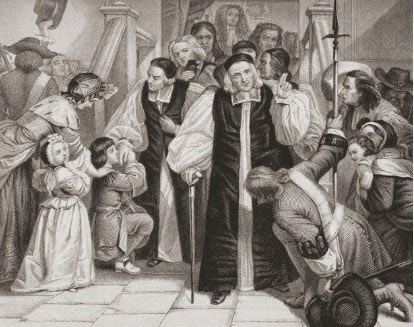
News of the acquittal spread through London within hours. Crowds cheered in the streets, bonfires were lit, and the verdict was seen as a decisive public rebuke of King James II's use of the royal prerogative. Within months, James had fled the country and the Glorious Revolution had begun — a turning point in which the boundaries of the Crown's power over Parliament and the law were redrawn for good.
- 📖 en.wikipedia.org/wiki/Seven_Bishops
- 📖 Court proceedings: The Seven Bishops' Case, 1688, in the Court of King's Bench — State Trials, xii.