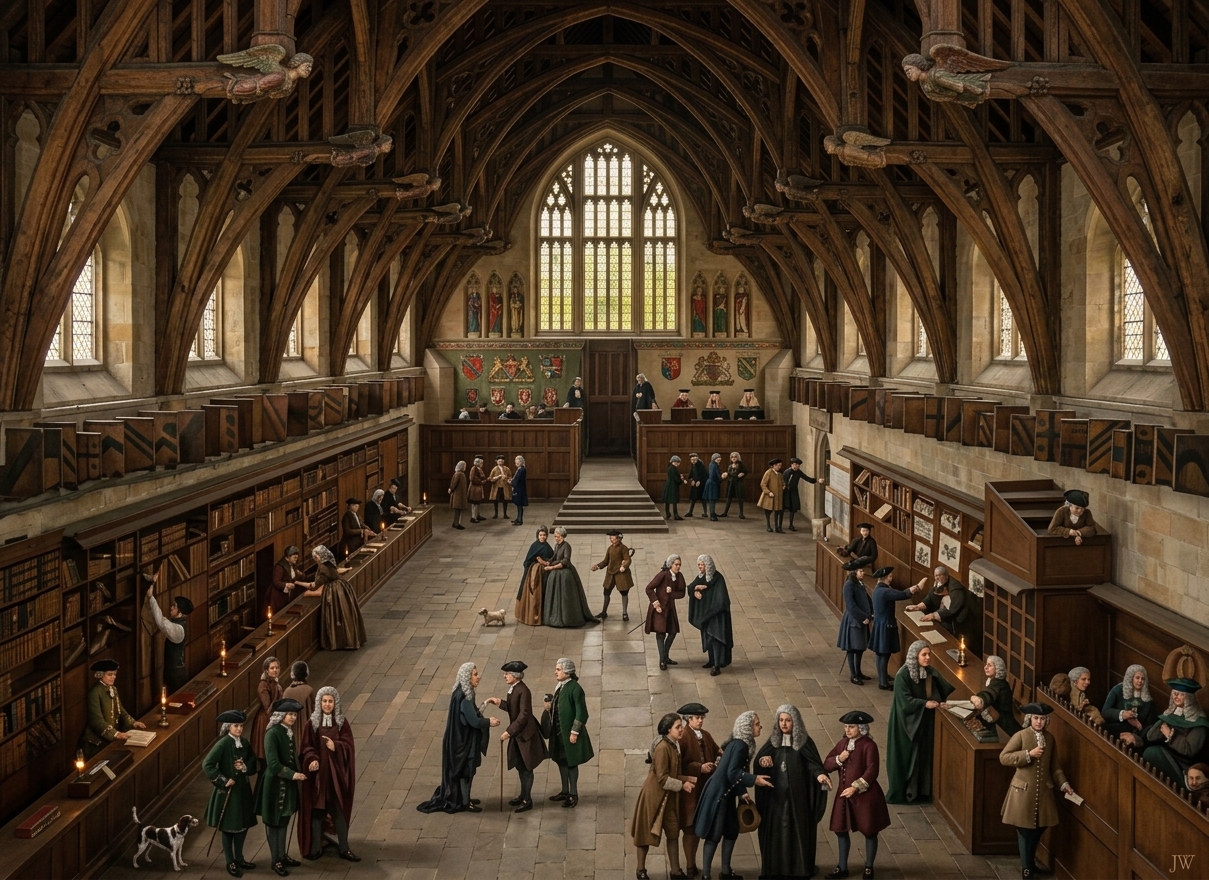
⚖️ The Case of John Biggs & Mr. Hesse the Magistrate (1768) Parliamentary Privilege, The Wilkes Riots & The Bar of the House
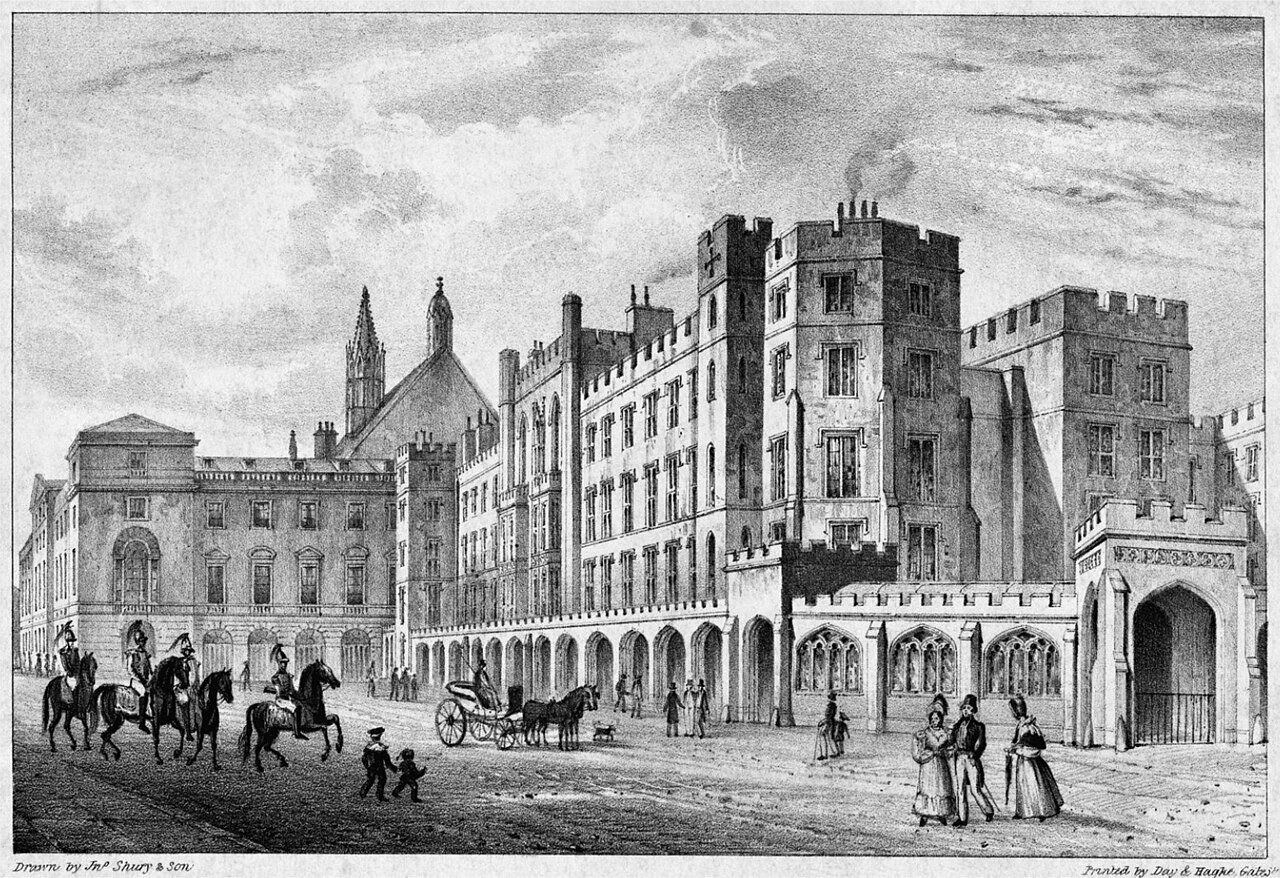
The Palace Yard Tumult, Soldiers Opening Fire & The Forced Release at the Bar
On 10 May 1768, the opening day of Parliament, London erupted in the explosive Wilkes Riots. As radical politician John Wilkes was detained in the King's Bench Prison following his contentious election for Middlesex, thousands of "Wilkes and Liberty" demonstrators surrounded both Westminster and Southwark. Across the river at St. George's Fields, government troops opened fire with muskets, killing several demonstrators. At the doors of Parliament in Old Palace Yard, an angry multitude obstructed peers entering the House.
Acting on an imperative Standing Order of the House of Lords to clear the precinct, Westminster Justice of the Peace Mr. Hesse seized protester John Biggs and committed him to the Tothill Fields Bridewell for four to five days. When Biggs and his attorney Edward Aylett sued Magistrate Hesse for false imprisonment in the Court of Common Pleas in Westminster Hall, the House of Lords intervened with summary power—arresting both plaintiff and attorney by Black Rod, committing the attorney to Newgate, dragging Biggs to the Bar on his knees, subjecting him to a severe reprimand from Lord Chancellor Camden, and forcing him under duress to sign a complete legal release abandoning the lawsuit.
The Official Verbatim Proceedings in Biggs's Case
The following is the complete, unabridged verbatim transcript of the proceedings of the House of Lords in the Case of John Biggs, attorney Edward Aylett, and Justice John Hesse (28 November – 9 December 1768), as formally reviewed and entered into the Journals by the Lords Select Committee on Precedents:
Ordered, That the proper Officer do lay before this House Copies of the original Declarations in the said Action, and all Proceedings relative thereto.
Ordered, That the said John Biggs, Mr. Aylett, his Attorney, and the said Mr. Hesse, do attend this House on Thursday next; and that the Lords be summoned.”
Then John Biggs was called in, and examined in relation to his being taken up by the said Mr. Hesse for his riotous Behaviour, and also in relation to his bringing an Action against the said Mr. Hesse for false Imprisonment, and who it was that advised him to bring the said Action.
He is directed to withdraw.
Ordered, That the Gentleman Usher of the Black Rod do forthwith attach the Body of the said John Biggs, and keep him in safe Custody till the further Order of this House, and this shall be a sufficient Warrant in that Behalf.
Then Edward Aylett, an Attorney employed by the said John Biggs in bringing the said Action against the said Mr. Hesse, was called in, and examined in relation thereto; and, upon several Questions being asked him by several of the Lords, prevaricated very much.
He is directed to be taken from the Bar.
Ordered, That the Gentleman Usher of the Black Rod attending this House do forthwith attach the Body of the said Edward Aylett, and keep him in safe Custody till the further Order of this House, and this shall be a sufficient Warrant in that Behalf.
Resolved, That the said Edward Aylett, having been guilty of a notorious Breach of the Privilege of this House, and having prevaricated in his Examination at the Bar, be for his said Offences committed to Newgate.
Ordered, That the Gentleman Usher of the Black Rod, in whose Custody the said Edward Aylett now is, do convey or cause him to be conveyed to the Prison of Newgate, and delivered to the Keeper thereof accordingly, and this shall be a sufficient Warrant in that Behalf.
Then it was moved, That John Biggs be called in, and at the Bar, on his Knees, reprimanded by the Lord Chancellor, and directed to stop all further Prosecution against Mr. Hesse; and that upon his signing a Release to the said Mr. Hesse he be discharged out of Custody.
The same was agreed to.
And the said John Biggs was accordingly called in, and, on his Knees at the Bar, reprimanded by the Lord Chancellor, and directed to stop all further Prosecution against Mr. Hesse; and upon his signing a Release to the said Mr. Hesse he was ordered to be discharged out of Custody.
Then it was moved to resolve, That John Hesse, Esquire, One of His Majesty’s Justices of the Peace for the County of Middlesex and City of Westminster, did his Duty on the 10th of May last, in obedience to the Orders and immediate Commands of this House, by him received at the Bar of this House, for dispersing the Mob then assembled before the Doors of this House, and preventing the like riotous Proceedings for the future.
The same was agreed to; and Ordered accordingly.”
Chapter I: The Middlesex Election, Wilkes Riots & The St. George’s Fields Massacre
The tumult outside Parliament on Tuesday, 10 May 1768 was neither an isolated street scuffle nor a casual disturbance. It was the epicenter of a national constitutional crisis triggered by radical journalist and outlaw politician John Wilkes. Wilkes had returned from exile in France, won a sweeping election victory as Member of Parliament for Middlesex, and was promptly arrested on an outlawry capias and committed to the King’s Bench Prison in Southwark for seditious libel against King George III (published in The North Briton No. 45).
On the morning Parliament was summoned to open, an estimated 15,000 citizens swarmed Westminster and Southwark chanting "Wilkes and Liberty!" demanding his release and admission to his seat. The government met the protest with military violence: across the Thames at St. George’s Fields, magistrates read the Riot Act and ordered soldiers of the 3rd Regiment of Foot Guards to fire with live ball into the unarmed gathering. Several demonstrators—including an innocent bystander, young William Allen—were shot dead in what became immortalized as the St. George's Fields Massacre.
Simultaneously, a massive contingent besieged Old Palace Yard, blocking carriages, pelting officials, and threatening an armed incursion into the chambers of Parliament.

Chapter II: Riot Act 1714 vs. Tumultuous Petitioning Act 1661 — A Standing Order Precinct
A central legal question that troubled Biggs and later constitutional writers was the precise legal character of the crowd's assembly outside the doors of the House:
- The Riot Act 1714 (1 Geo. 1, St. 2, c. 5): Permitted magistrates to disperse assemblies of 12 or more persons with military force only after formally reading the statutory proclamation and waiting one full hour.
- The Tumultuous Petitioning Act 1661 (13 Car. 2, St. 1, c. 5): Specifically enacted after the Civil War to prevent intimidation of Parliament, strictly forbidding more than ten persons from dynamically presenting any petition or grievance to the King or either House.
- The Standing Order of the Precinct: Most crucially, Parliament’s directive to clear Palace Yard was not an Act of Law enacted through the King-in-Parliament. It was a domestic Standing Order of the House asserting territorial sovereignty over the Palace precinct.
Because Wilkes's supporters claimed they were assembling to deliver a general petition of grievance concerning the Middlesex election, Biggs maintained he was a lawful petitioner or peaceful bystander. But to the House of Lords, any unauthorized gathering within their precinct was treated as an intolerable breach of privilege and a contempt of the High Court of Parliament.
— Journal of the House of Lords, 10 May 1768
Chapter III: The Bridewell Committal & The Missing Bar Warrant: Why Was Biggs Not Brought to the Bar First?
Answering the emergency summons, Westminster Justice of the Peace Mr. Hesse, Esq. took station at the Palace gates. Amid the pelting and shouting, Hesse singled out John Biggs as a principal ringleader inciting the crowd at the threshold of the Lords chamber.
Here lies the profound structural paradox of the entire incident:
- The Core Inconsistency: If Magistrate Hesse was truly acting under the direct, sovereign orders and commands of the House of Lords, why was Biggs not immediately brought before the Bar of the House on 10 May 1768? The House was sitting inside at that very moment. If the arrest was an execution of parliamentary authority within the precinct, the normal and lawful procedure was a summary production before the House under a Black Rod or Serjeant's warrant.
- The Street-Level Proxy: Instead, Hesse exercised his ordinary, everyday powers as an un-uniformed Justice of the Peace. He had Biggs seized by parish constables and committed him on his own magisterial warrant to the Tothill Fields Bridewell (the Westminster House of Correction) for four to five days without trial or bail.
- Selective Immunity: The authorities treated Biggs as a routine common-law rioter when jailing him in Bridewell. Yet the moment Biggs sued the magistrate in Common Pleas for that four-day imprisonment, Hesse ran to the Peers and demonstrated that invoking the Bar was fully within the boundaries of the incident. The House agreed—retroactively claiming exclusive jurisdiction to crush the lawsuit, while having denied Biggs the open justice of the Bar when he was originally seized.
Chapter IV: Why Biggs Sued in Common Pleas & The Role of Attorney General Sir William de Grey
Upon his discharge from Bridewell, John Biggs refused to concede that a magistrate could arbitrarily lock up a subject for five days without trial. Retaining attorney Edward Aylett, Biggs sued out a writ in Michaelmas Term 1768 against Mr. Hesse in the Court of Common Pleas for assault, battery, and false imprisonment.
The venue chosen was explosive: Westminster Hall. The Court of Common Pleas, the Court of King's Bench, and the High Court of Parliament all sat under the very same ancient roof of the Palace of Westminster!
- Biggs’s Rationale: Biggs was not a peer or an MP; he possessed no standing to raise a "matter of privilege" at the Bar. He viewed Hesse’s conduct as a classic street-level abuse of police power. Common Pleas was the premier common-law tribunal for private tort litigation between subjects. Biggs sought to put Hesse before an ordinary jury of twelve Englishmen.
- The Territorial Paradox: Biggs and attorney Aylett were using a common-law court sitting inside the Palace to challenge an executive arrest ordered by the Palace.
- Who Was the Attorney General? In 1768, the Attorney General of Great Britain was Sir William de Grey (later 1st Baron Walsingham and Chief Justice of the Common Pleas), assisted by Solicitor General John Dunning. De Grey was King George III’s chief law officer, actively prosecuting John Wilkes for seditious libel and outlawry. In cases where magistrates or Crown officers faced common-law civil suits for executing state and parliamentary commands, Crown law officers took the position that ordinary civil juries could not be permitted to penalize civil officers acting in obedience to higher orders. However, in this case, the House of Lords did not even require the Attorney General to defend Hesse in Common Pleas: the House acted as its own supreme judicature, completely bypassing the courts and quashing the action summarily at the Bar.
Chapter V: Black Rod, Kneeling at the Bar, The Camden Reprimand & Custody Fees
When Magistrate Hesse presented his petition in November 1768, the House of Lords responded with absolute fury. The Lords refused to permit the judges of Common Pleas to determine whether Hesse's arrest was lawful. Instead, they asserted that Parliament is the sole and supreme judge of its own privileges.
The proceedings reveal the summary humiliation inflicted upon both plaintiff and attorney:
- Arrest by Black Rod: The Gentleman Usher of the Black Rod was dispatched with warrants to attach both John Biggs and attorney Edward Aylett for high contempt and breach of privilege.
- Aylett Committed to Newgate: Because attorney Aylett "prevaricated very much" under interrogation by the peers, he was adjudged guilty of a notorious breach of privilege and cast directly into Newgate Prison.
- Suppression of Common Pleas: The lawsuit pending in Common Pleas was ordered to be stayed and discontinued immediately on pain of indefinite imprisonment.
- Brought to the Bar on Their Knees: Biggs and Aylett were escorted to the Bar of the House of Lords and compelled to kneel upon the floor in total submission.
- Lord Chancellor Camden’s Censure: Lord Chancellor Camden (Charles Pratt, 1st Earl Camden)—ironically celebrated in common-law circles for outlawing general warrants in Entick v. Carrington—severely reprimanded them from the Woolsack for their audacity in questioning parliamentary authority.
- The Forced Legal Release: Parliament refused to discharge Biggs from custody until he signed a formal legal release under duress, unconditionally releasing and discharging Magistrate Hesse from all actions, suits, and damages forever.
- House Fees vs. Public Business: While usage of the House’s jurisdiction for public business and petitions of grievance was theoretically supposed to be free, the 1700 and 1726 Table of Fees codified heavy custody per diems for Black Rod and the Serjeant-at-Arms. Both Biggs and attorney Aylett were only discharged upon paying their fees—forcing the citizen to bear the financial costs of their own coercive imprisonment.

— Journal of the House of Lords, Vol. XXXII, November 1768
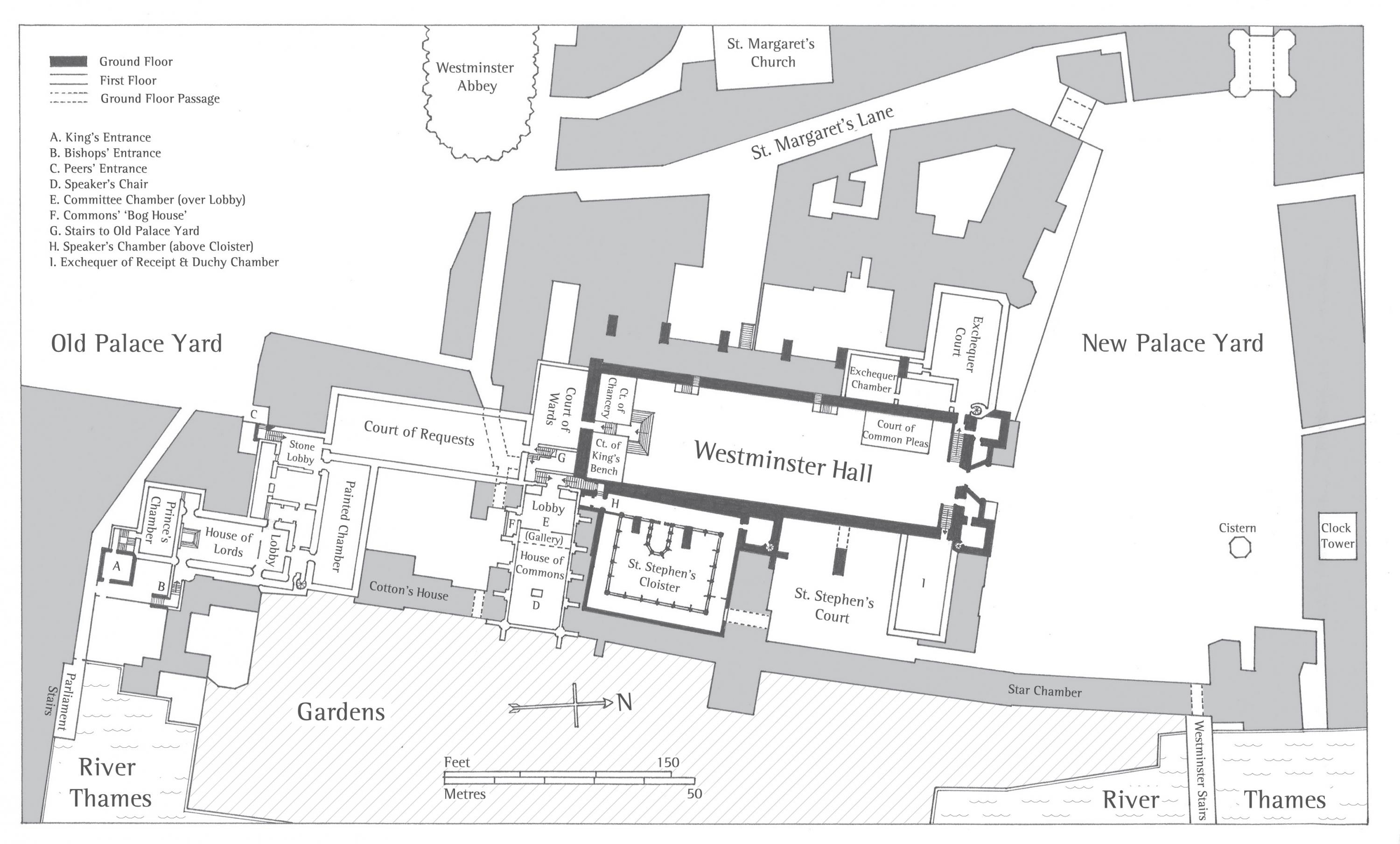
🏛️ Venue of Biggs’s Action: Westminster Hall
The physical seat of the Court of Common Pleas where Biggs sought a common-law remedy.
The physical layout of the 18th-century Palace of Westminster is central to understanding Biggs’s case. The Court of Common Pleas did not sit in an independent municipal courthouse; it occupied the western arcade inside Westminster Hall, immediately adjacent to the Court of King’s Bench and the corridor leading directly to the House of Lords.