The Bill of Rights 1688 / 1689
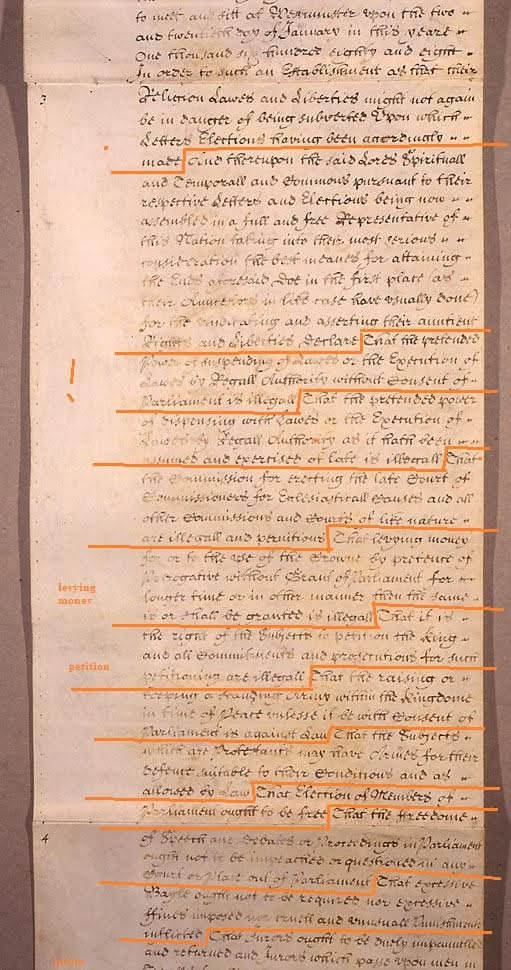
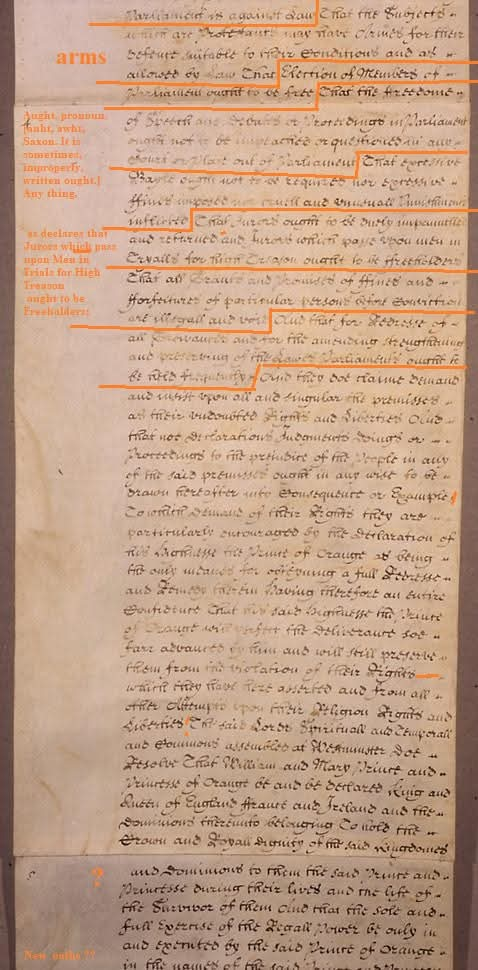
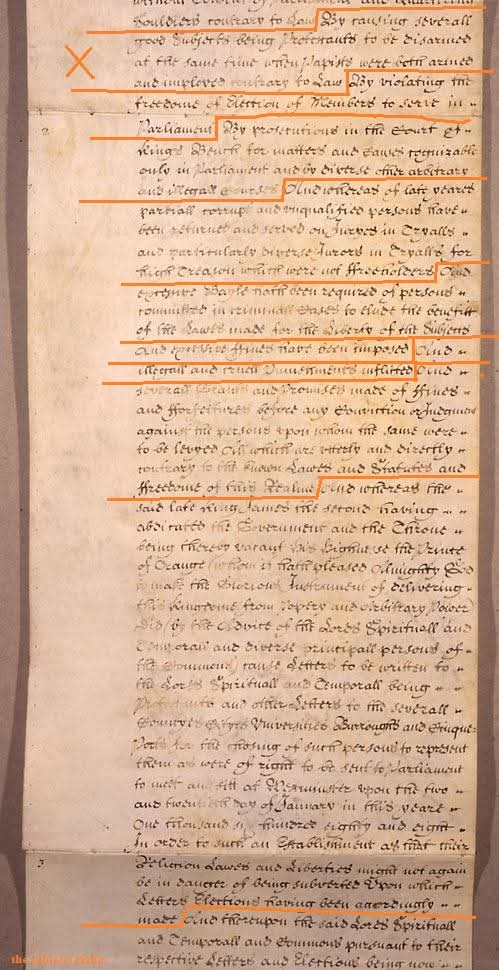
An archival examination of the original Parliamentary parchment rolls, documenting the exact ink inscription of Article 5 (The Right to Petition) and the chronological mapping of the 13 statutory articles of rights and liberties.
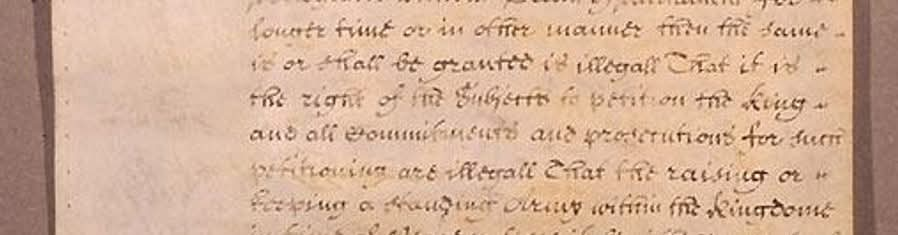
The Historical Context: In 1688, King James II issued his Second Declaration of Indulgence and ordered all bishops to read it from their pulpits. Seven bishops, led by Archbishop William Sancroft, submitted a humble petition requesting to be excused. In retaliation, the Crown had them arrested, sent to the Tower of London, and prosecuted in the Court of King's Bench for seditious libel. Their celebrated acquittal led directly to the Glorious Revolution, and Parliament codified Article 5 into the statutory roll to guarantee that no subject could ever again be prosecuted, arrested, or harassed for petitioning the Crown or Parliament.
📜 The Original Statute Rolls of 1689
The Bill of Rights was enacted by the Convention Parliament in December 1689 as An Act Declareing the Rights and Liberties of the Subject and Setleing the Succession of the Crown. Preserved in the Parliamentary Archives at the Victoria Tower, Palace of Westminster, the roll consists of attached vellum membranes inscribed in Chancery hand with the Royal Assent endorsed in Norman French: “Le Roy et la Reyne le veult”.
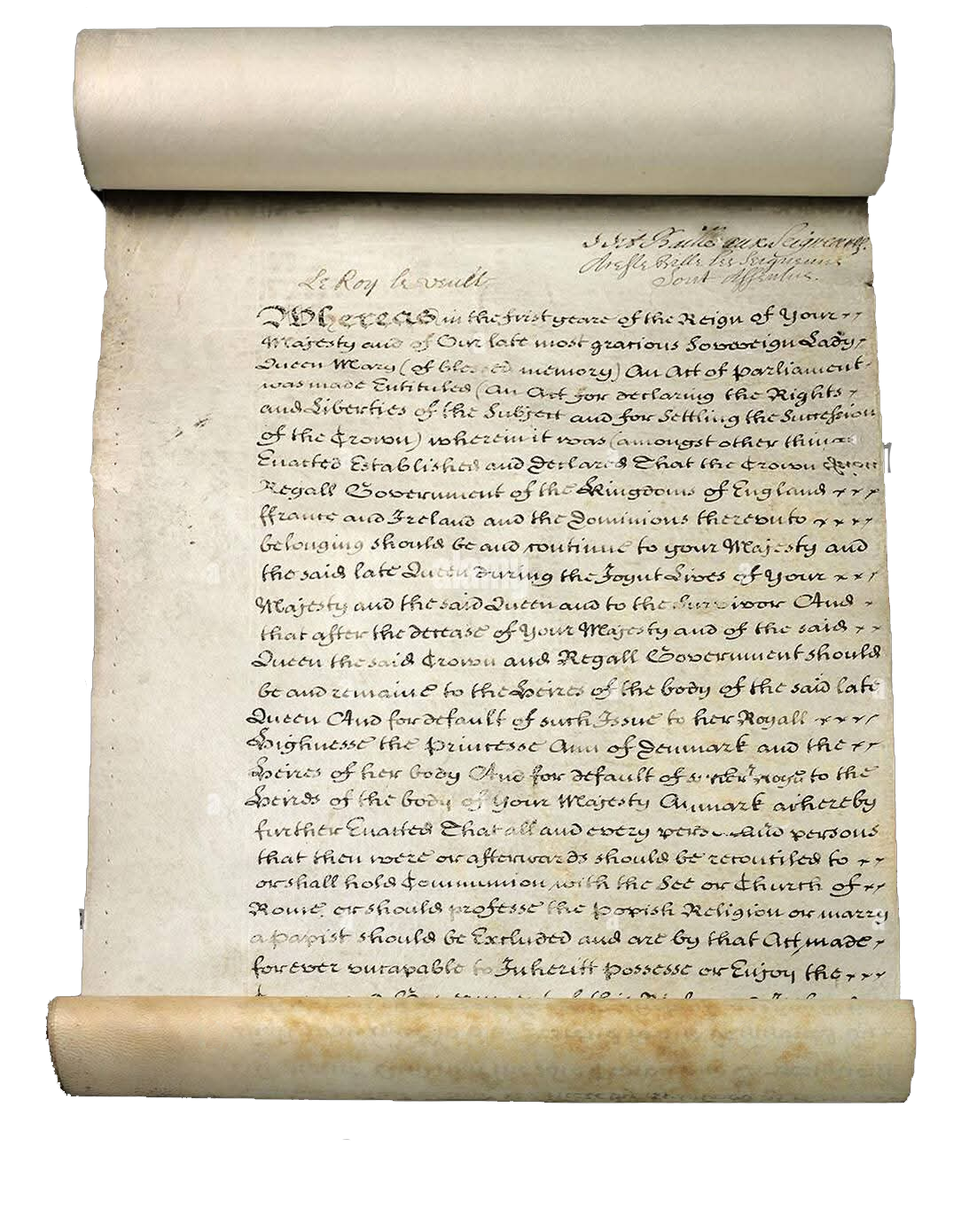
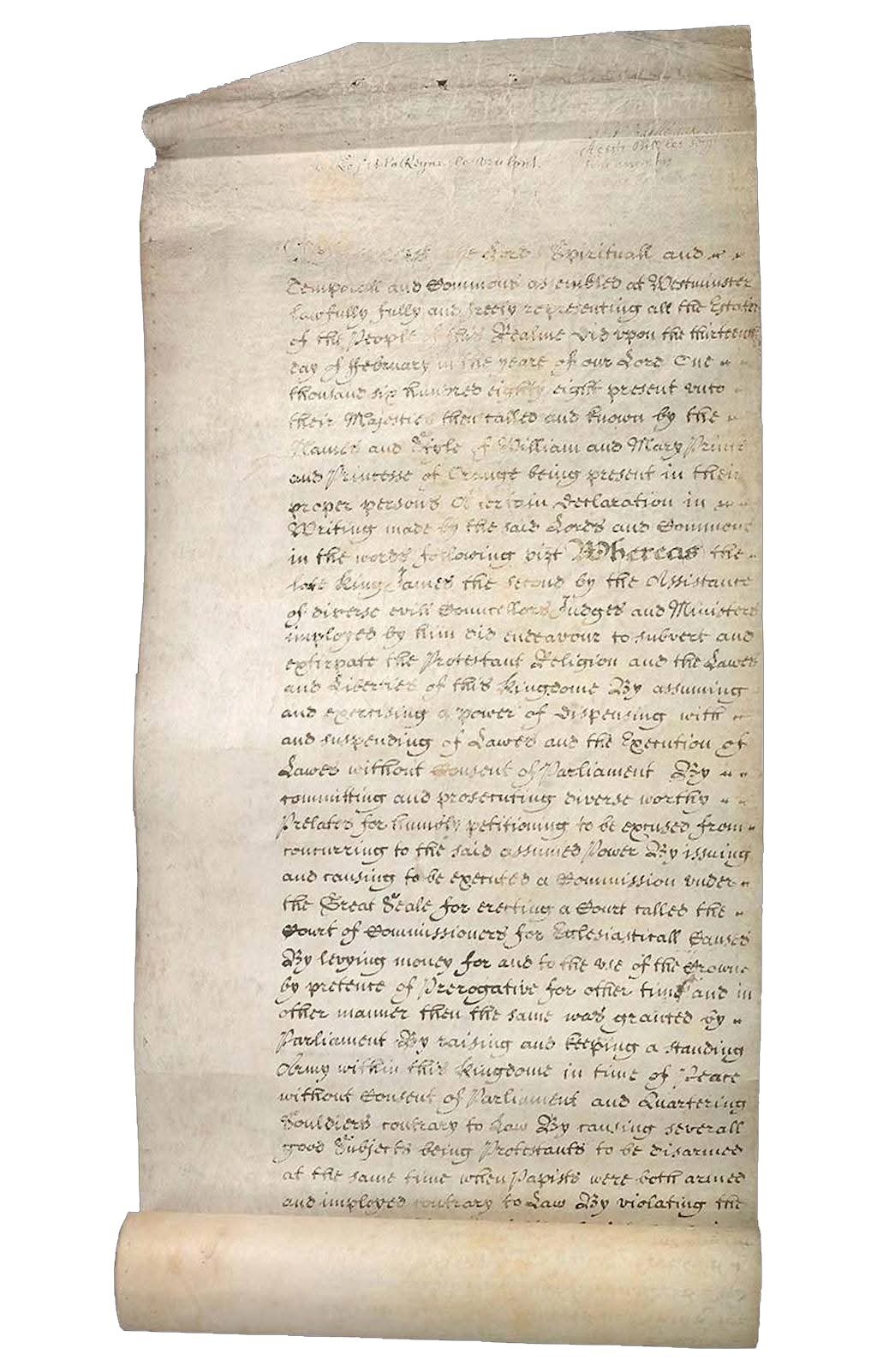
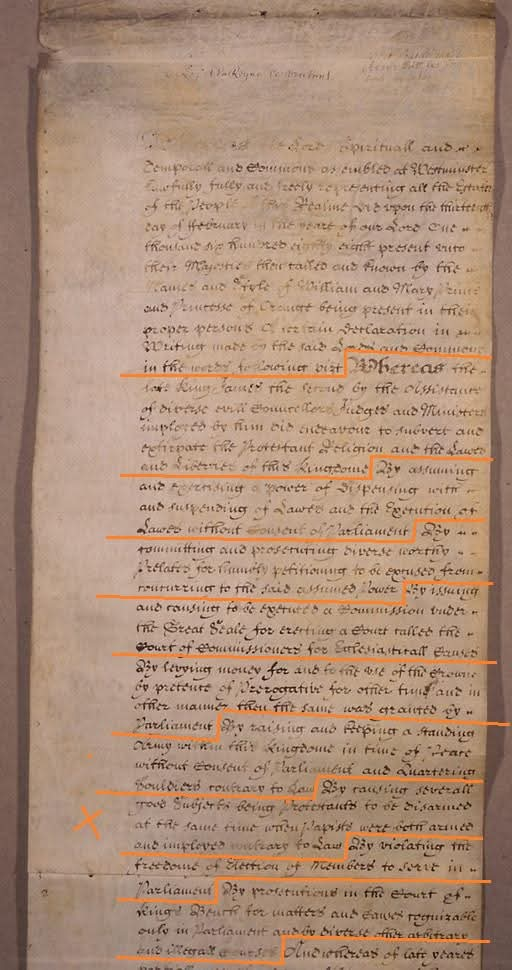
📑 Mapping the Articles on the Parchment Roll
These archival photographic studies show where the grievances, statutory articles, and parliamentary oaths were inked across each membrane of the official roll, marked with orange margin brackets identifying each specific constitutional clause:
🏛️ Authoritative Resources & Primary Sources
Official transcripts, historical commentaries, and digitized parliamentary records covering the 1688/1689 Bill of Rights: