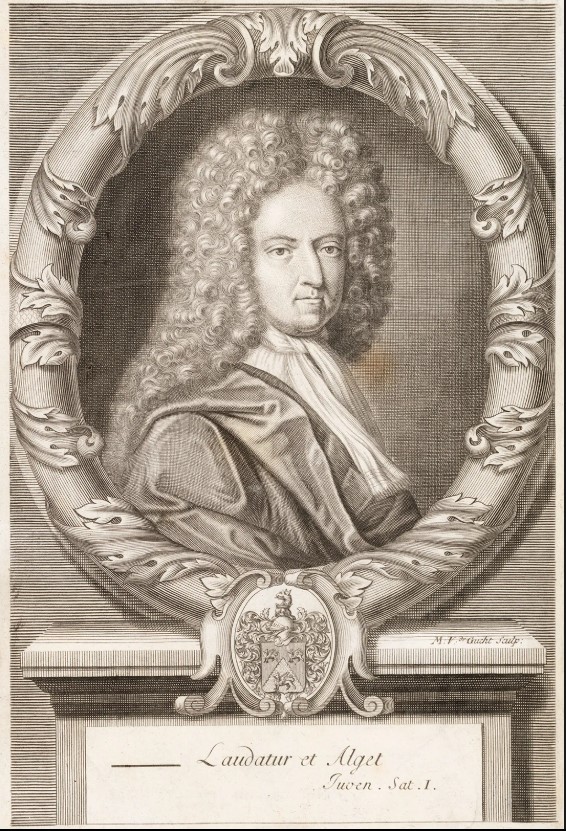
🖋️ Daniel Defoe & the Kentish Petition

Daniel Defoe was a vocal defender and historian of the Kentish Petition. In 1701, he authored the fiery Legion's Memorial, which demanded the release of the imprisoned petitioners and boldly asserted that the public holds ultimate power over Parliament.[1, 2, 3, 4]
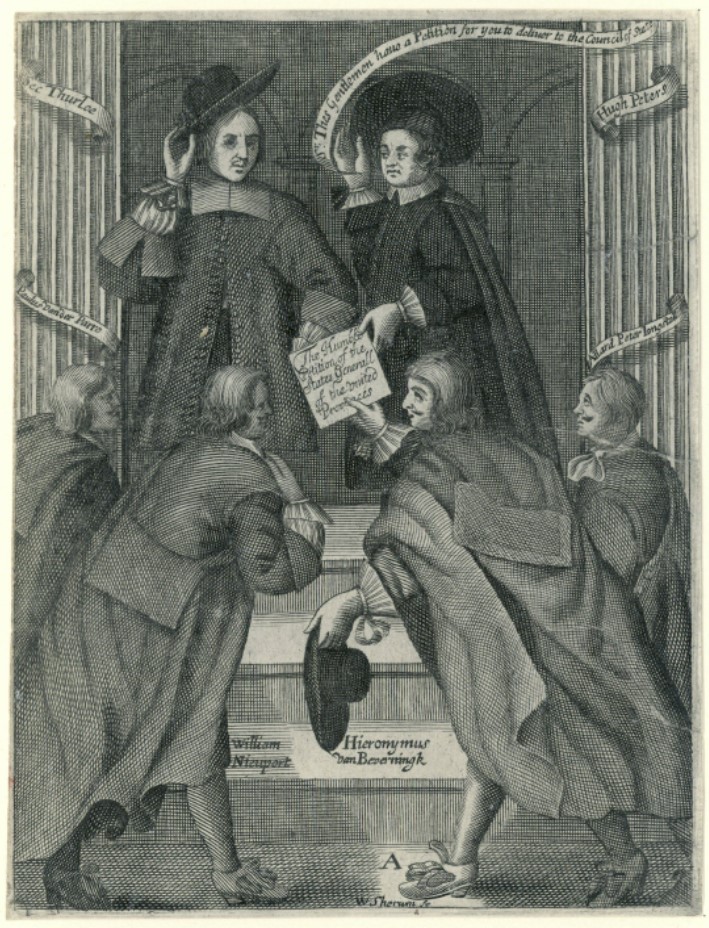
Five gentlemen from Kent presented a petition to Parliament urging them to fund King William III's army against France. The Tory-led House of Commons viewed this as an insult and imprisoned the men.[1, 2]
Outraged by the arrests, Defoe wrote the Legion's Memorial. It stated famously that "Englishmen are no more to be slaves to Parliaments than to a King".[1, 2, 3]
On May 14, 1701, Defoe marched to the House of Commons. Flanked by a guard of 16 gentlemen, he bravely handed the document directly to the Speaker of the House, Robert Harley.[1, 2, 3]
The Memorial shocked the Commons. Fearing public revolt, they released the Kentish men shortly after.[1, 2, 3, 4, 5]
Defoe later wrote The History of the Kentish Petition, which detailed how the petition began and praised the actions of the petitioners.[1, 2]
"His bitter pamphlet, Legion's Memorial, boldly told the Speaker that 'a serious regard to it is expected; nothing but justice, and their duty is required, and it is required by them who have both a right to require, and power to compel, viz., the People of...'"
— UK Parliament"...with his famous document 'Legion's Memorial,' which reminded the Commons in outspoken terms that 'Englishmen are no more to be slaves to Parliaments than to a King.'"
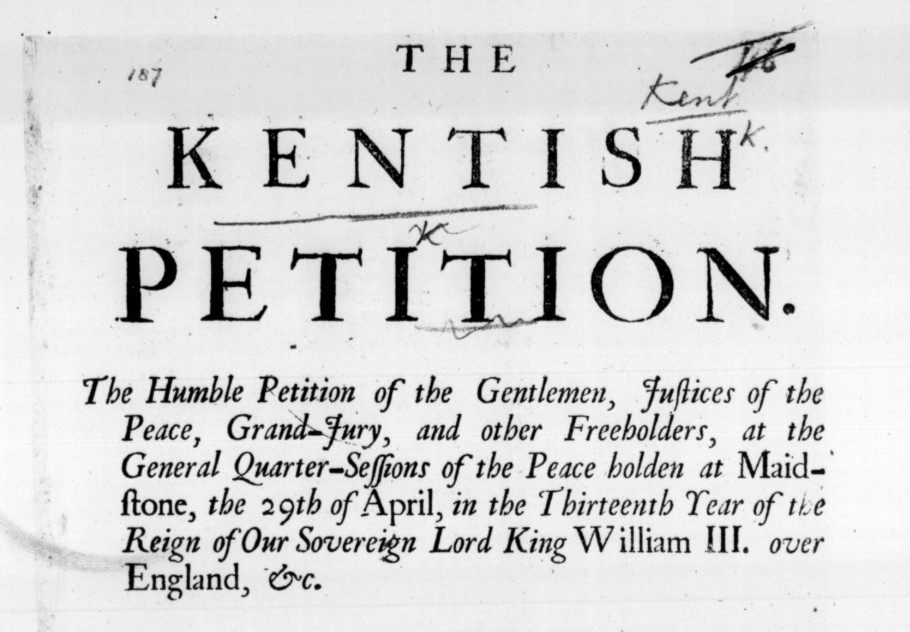
RIGHT OF PETITION
THE HOUSE OF COMMONS AND PETITIONS, 1701
RESOLUTIONS OF THE HOUSE OF COMMONS
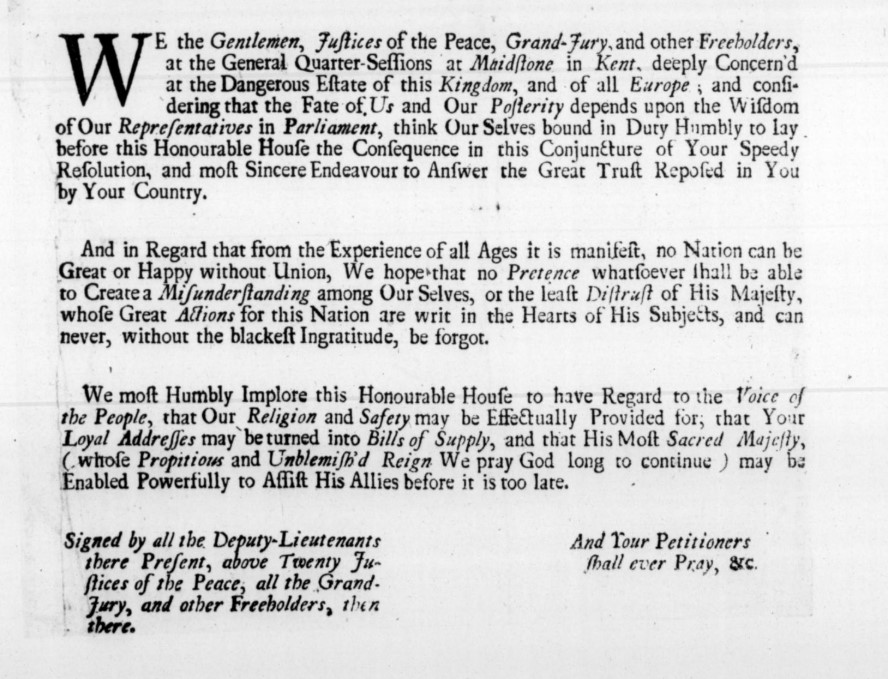
A Petition from several Gentlemen of the County of Kent being offered to the House; Ordered, That the said Petition be brought up to the Table. And it was brought up accordingly. And the House being informed, That several of the Gentlemen, who signed the said Petition, were at the Door, ready to own the same; They were called in accordingly; viz. Mr. William Colepeper, Mr. Thomas Colepeper, Mr. David Polhill, Mr. Justinian Champneys, and Mr. William Hamilton: And they, at the Bar, owned the same Petition, and their Hands to the same. And then they withdrew. And the Petition was read, intituled, The humble Petition of the Gentlemen, Justices of the Peace, Grand Jury, and other Freeholders, at the General Quarter Sessions of the Peace holden at Maidston, in Kent, the 29th Day of April, in the 13th Year of the Reign of our Sovereign Lord King William the Third, over England, etc.; setting forth, That they, deeply concerned at the dangerous Estate of this Kingdom, and of all Europe; and considering, that the Fate of them, and their Posterity, depends on the Wisdom of their Representatives in Parliament; think themselves bound in Duty humbly to lay before this Honourable House the Consequence, in this Conjuncture, of a speedy Resolution, and most sincere Endeavour, to answer the great Trust reposed in their said Representatives by the Country: And in regard that, from the Experience of all Ages, it is manifest no Nation can be great or happy without Union, they hope no Pretence whatsoever shall be able to create a Misunderstanding among ourselves, or the least Distrust of his Majesty, whose great Actions for this Nation are writ in the Hearts of his Subjects, and can never, without the blackest Ingratitude, be forgot: And praying, That this House will have Regard to the Voice of the People; that our Religion and Safety may be effectually provided for; that the loyal Addresses of this House may be turned into Bills of Supply; and that his Majesty may be enabled powerfully to assist his Allies, before it is too late.
PARLIAMENTARY PROCEEDINGS
Resolved, That the said Petition is scandalous, insolent, and seditious; tending to destroy the Constitution of Parliaments, and to subvert the established Government of this Realm. Resolved, That Mr. William Colepeper is guilty of promoting the said Petition. Ordered That the said Mr William Colepeper be, for the said Offence, taken into the Custody of the Serjeant at Arms attending the House [and similarly in respect of the other petitioners].[6]