Orders, Essential, Fundamental and Standing Orders, Reports, Declarations, Memorandums, Rules, Agreements and Resolutions of the Honourable House of Commons, relating to their Forms of Proceeding, Privileges, &c. &c.
A. Steward — the 1747 first edition, and the 1756 second edition
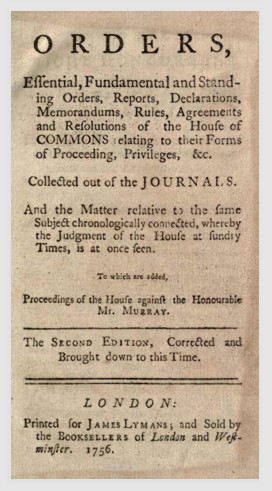
About the Book — the “A. Steward” Edition
The name “A. Steward” printed on the front of that 1747 book is actually a pseudonym — a fake name used to hide the true writer's identity. In the 18th century it was strictly illegal to publish the internal rules and records of Parliament without permission. The person behind the book chose “A. Steward” as a clever pun, because a steward is someone who manages an estate or a household — much like the book's contents managed the House of Commons.
Who wrote it?
Historians believe the book was actually written and leaked by one of two high-ranking parliamentary officials:
- Nicholas Hardinge — the official Clerk of the House of Commons until 1748.
- Jeremy Dyson — who took over as Clerk of the House of Commons right after Hardinge in 1748.
About the Book
- The Title: Orders, standing orders, and resolutions of the Honourable House of Commons, relating to their forms of proceeding, privileges, &c. &c.
- Why it Matters: This text is widely recognised by historians as the very first digest of Parliamentary Standing Orders ever published for the general public.
- The Goal: It was printed in London at Flower-de-luce-court (off Fleet Street). Experts think the real author leaked these secret rules in order to sell them to all the brand-new Members of Parliament who had just been elected in the massive Whig political landslide that same year.
You can view the digital record for this exact copy in the Wellcome Collection database.
Perplexity — discussion and data analysis. A close working-through of the chapter “Orders touching Privilege and Protections” from the 1756 compilation, examined line by line: what the contradictory resolutions actually say, where privilege was granted, where it was withheld, and whether a single coherent function of parliamentary privilege can be established from the record.
The Book Itself — the digitised volume on the Internet Archive. Open the original copy and read it page by page — the compilation of Orders, Standing Orders, Reports, Declarations and Resolutions of the House of Commons relating to its forms of proceeding and privileges.
📖 Open the Book (Internet Archive)